He Could Not Do A Pull-Up For 30 Years. Then He Changed His Grip.
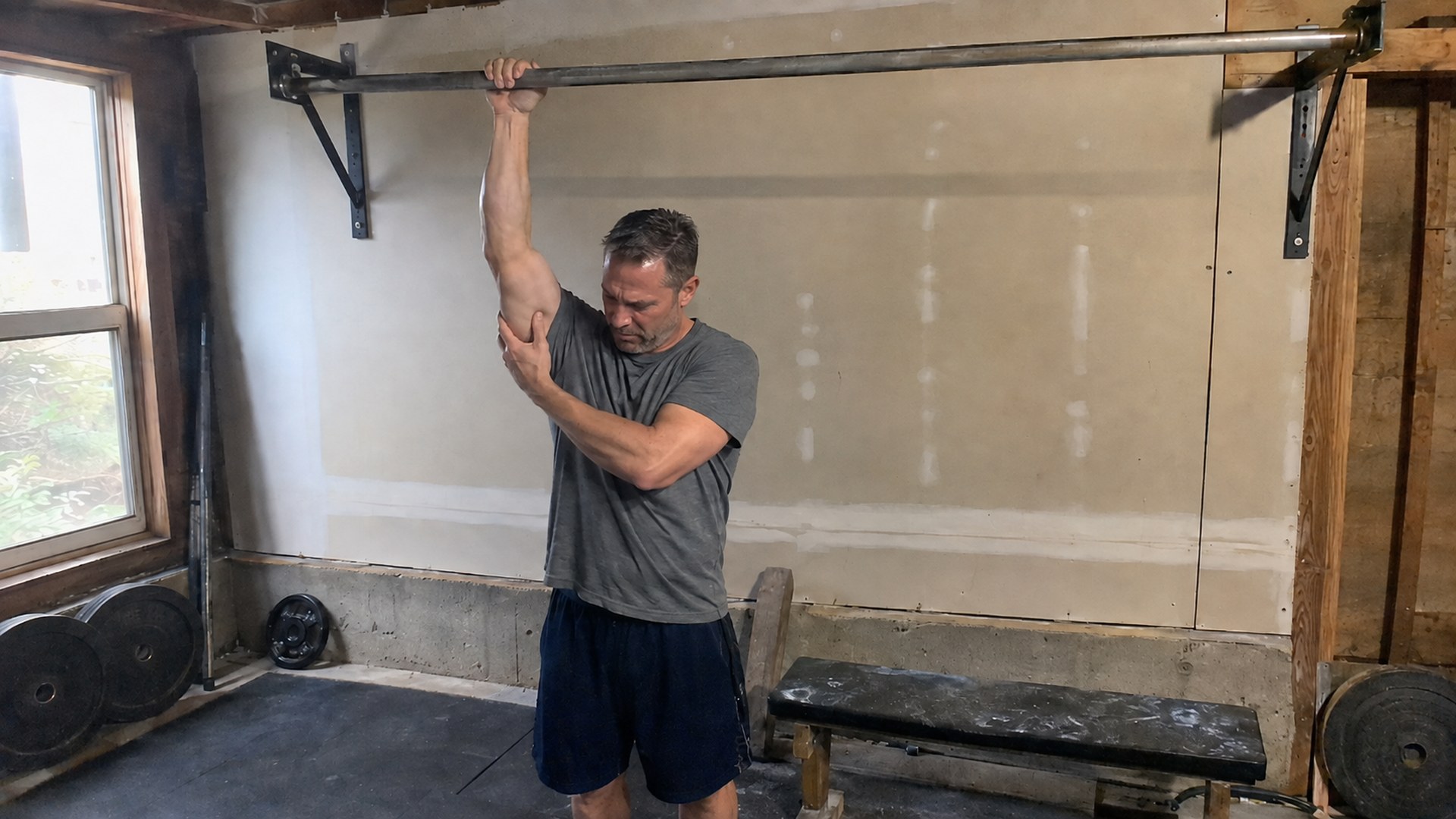
A $39 pair of hooks turns any bar into a neutral-grip bar. We read 1,614 owner reviews across the whole Swissies line to find out whether that matters, and the same sentence kept coming back from men who had quietly stopped doing pull-ups years ago.

Nothing in this article asks you to buy a rack, a machine or a bigger garage. The change costs less than a month of most gym memberships and takes about four seconds to install. All it alters is which direction your palms face, which sounds far too small to be worth 2,000 words. The reason it is not small is buried in the reviews.
The Short Version
Swissies V2 are a pair of hard nylon fiberglass hooks that drop over a bar you already own. Once they are on, your hands hang below the bar with the palms facing each other instead of gripping the bar itself. That is the entire product.
They are not rings. Rings hang on straps and swing. These clamp onto the bar and stay where you put them, which is the whole reason people with cranky joints keep mentioning them.
| Swissies V2$39 a pair · our pick | Swissies V2 MAX$49 a pair | Original Swissies$29 a pair | |
|---|---|---|---|
| Max bar diameter | 50 mm | 55 mm | 34 mm |
| Angle adjustment | ±15° / ±30° | ±15° / ±30° | None |
| Cable and carabiner loop | Yes | Yes | No |
| Where the hand rests | Knurled 32 mm handle | Knurled handle plus a fin-shaped palm support | Knurled handle |
| Weight per pair | 1.3 lb | 1.5 lb | Not published |
| Best for | Almost every home and commercial bar | Fat rig tubing and long cable sessions | A skinny bar and the tightest budget |
| Learn More | Learn More | Learn More |
The Same Sentence, Over And Over
Read enough gear reviews and you learn to skim. People praise the packaging, complain about shipping, and say the thing feels solid. Useful, but not interesting.
This product’s reviews break that pattern. A large share of them are not written by people chasing a better workout. They are written by people who had quietly stopped doing an exercise, and who are surprised to be doing it again.
Two of them describe exactly the arc in the headline above. A man who stopped, and a man who started again, with a grip change in between.
“After 50+ years of weight lifting and wrist fusion surgery, wrists are wrecked. The Swissies45 allow me to do chin ups/ pull ups again. Now I just need something for my knees!”
“Tore my right shoulder two and a bit years ago and haven’t been able to do any overhead pulling without pain. These handles are taking the pressure off my shoulder and I can finally do pull ups without any pain at all.”
Neither man is unusual in that pool. The pattern repeats on the V2 itself.
“I bought these due to me having issue with tennis/golfer elbow on both arms and so far they’ve been great, I can finally do pull ups and other pulling exercises pain free!”
“I bought these because I was dealing with elbow tendon issues with pull-ups. These feel really good ... I have no pain with pull-ups now.”
“Really nice set of handles. Knurling is spot on. They let me do pull ups pain free with a bad labrum tear.”
“I have a severe wrist injury that makes a pronated wrist position impossible. These guys help me pendlay row, deadlift, chin up and shrug easily.”
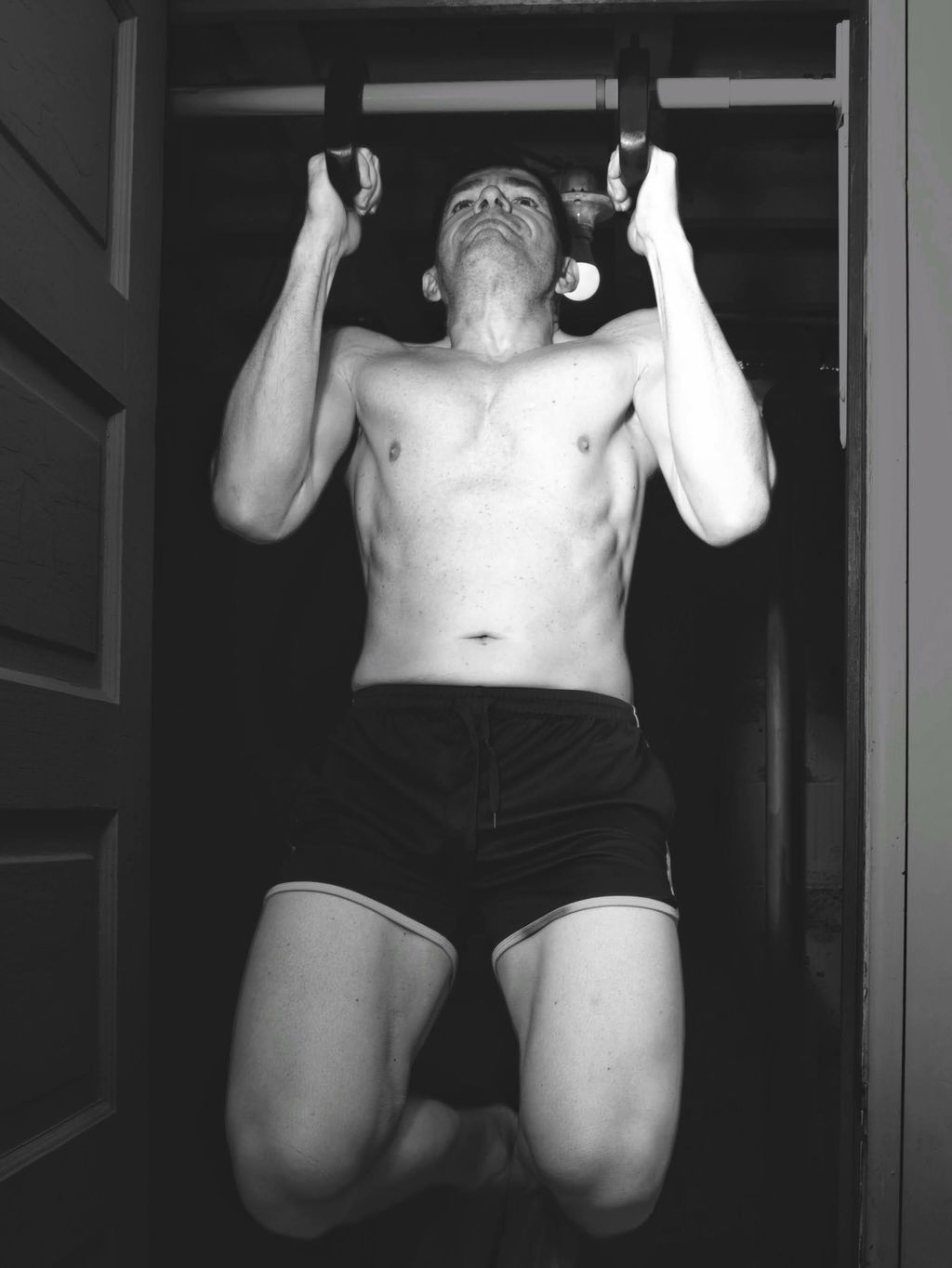
None of those people are describing a training breakthrough. They are describing an exercise coming back onto the list after it had come off. Four separate joints show up in that handful alone.
Worth saying plainly, because the reviews will not: a pair of plastic hooks does not treat anything. What the people above changed was the position their arm was held in while loaded. Whether that is enough for your particular joint is a question for you and whoever looks after it, not for a review site.
As a 53-year-old calisthenics practitioner the Swissies V2 have been a real saver for my shoulder and elbow joints.★★★★★ Max, verified buyer, December 2025
Your Forearm Has A Second Setting
Grab a normal pull-up bar overhand and look at your forearms. The two bones in each one are crossed over each other. That is pronation, and holding it under bodyweight for a few sets is a position most people never think about because the bar gave them no choice.
Turn your palms to face each other and those bones uncross. Your wrist stops being twisted, your elbow tracks in a slightly different line, and the load arrives at the joint from a different angle. Nothing about the exercise changes. Only the geometry does.

Commercial gyms have sold this idea for decades in the shape of a multi-grip bar bolted to a rack. It works. That version also costs several times what a pair of handles costs, it lives in one building, and the grip width was decided at the factory.
The handles do the same job by moving the hand off the bar instead of moving the bar. Because they slide, you also choose the width, which the reviews suggest matters more than anyone expects.

What You Are Actually Buying For $39
Here is where a gear review earns its keep. The mechanism above is free. What matters now is whether this particular piece of hardware is any good, because the idea has been sold before in worse forms.

They are moulded from nylon fiberglass, the same material Kensui uses in the EZ-VEST PRO and the EZ-BOOT. That is the honest answer to the first question everybody asks, which is whether plastic belongs anywhere near your bodyweight. The pair is tested to 800 lb, and the whole pair weighs 1.3 lb.
Three details separate them from the first generation, and all three are the kind of thing you only notice once you have used a worse version:
- The hook is rubber lined. It grips the bar instead of sliding along it, and it does not chew up the knurling or the paint on a bar you care about.
- The handle is knurled, not smooth. Most reviewers rate it as the grippy kind rather than the sharp kind. A 32 mm handle is thicker than a standard bar, so expect your grip to be the thing that quits first for a session or two.
- There is a carabiner loop on top. That single hole is why these leave the pull-up bar and end up on cable stacks, which is most of their value once the novelty wears off.


Measure Your Bar Before You Order
This is the one number that decides whether the rest of the article applies to you. Kensui’s spec table puts the V2’s maximum bar diameter at 50 mm, which is just under two inches and covers the overwhelming majority of home pull-up bars and commercial rigs.
Owners of genuinely fat tubing back that up. One buyer this month reported them fitting a 2 inch bar with room left over, which also happens to be the upgrade the V2 was built for.
V1s were great, but these are even better. The handle is no longer hollow like the V1s. The carabiner look is also very sturdy. These also fit the Baseblocks 2in bars with room to spare.★★★★★ Edgar C., verified buyer, August 2026
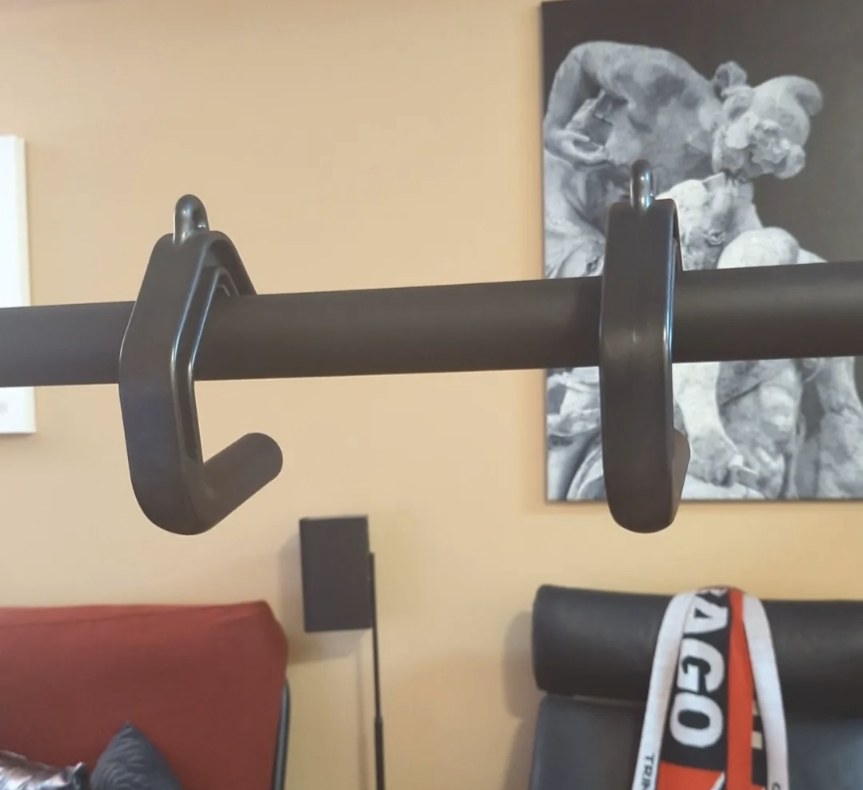
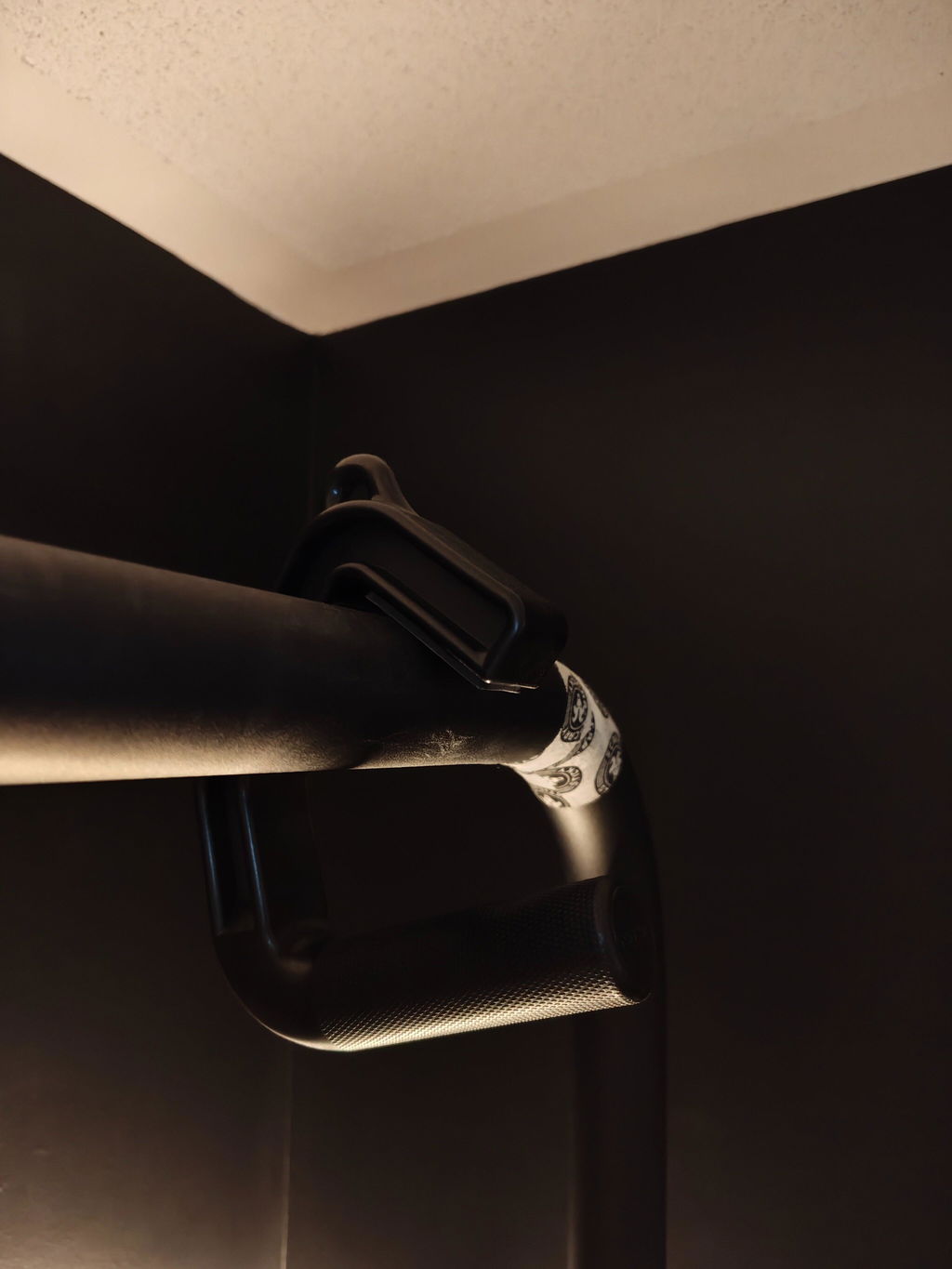
One caveat on Kensui’s own page, and we would rather flag it than pretend we did not see it. The marketing copy says the hook is compatible with bars up to 2.5 inches, while the spec table on the same page says 50 mm, which is about 1.97 inches. Those are not the same claim. We have used the spec table number throughout, because it is the conservative one and it is the one the compare table publishes.
If your bar is genuinely fatter than two inches, the MAX version lists 55 mm and is the safer $10.
One Pair, Five Stations
Most people buy these for the pull-up bar. Judging by what owners actually write about, the pull-up bar is where they spend the least of their time.
The carabiner loop turns them into cable handles. That same hook drops onto a barbell for rows and deadlifts. They clip to bands, and they sit on the grab handles of plate-loaded machines. A pair weighs less than a water bottle, so they travel in the same bag as your shoes.


That range is the quiet argument for buying a pair of handles rather than bolting a fixed neutral-grip bar to your rack. A rack attachment gives you one station. Two hooks in a gym bag give you whichever station is free.
I previously used rings, but setting them up was often time-consuming. The Swissies V2 are much more convenient, you just hook them up, and that’s it.★★★★★ Max, verified buyer, December 2025
Where They Fall Short
The average sits at 4.88 across 181 reviews, which is high enough that the critical ones are worth more of your attention than the glowing ones. Three complaints come up repeatedly, and all three are fair.
- They are plastic, and some people want metal. One five-star reviewer still wrote that it “would be cool if next time they were more of a metal/steel.” The nylon fiberglass tests to 800 lb, so this is a preference rather than a failure, but it is a real preference.
- The handle has no padding. “I do wish, however, that they had some rubber padding,” wrote one four-star buyer. The knurling is grip, not comfort. If your hands want cushioning, the MAX and its palm support is the version to look at.
- $39 is not nothing for two pieces of moulded plastic. A four-star reviewer put it flatly: “Just wish they were a bit cheaper.” The counter-argument is what a rack-mounted multi-grip bar costs, but if you are only ever going to use one bar in one room, that comparison is doing a lot of work.
We would add a fourth that nobody wrote down. A 32 mm knurled handle is a real jump in thickness from a bar, so your first few sessions will end with your hands giving out before your back does. That evens out, but it is worth knowing before you assume something is wrong.
Who Should Skip These
Three groups, honestly.
If your bar is fatter than two inches, buy the MAX or measure again before ordering anything. Anyone who already owns a rack with a welded neutral-grip attachment and never trains anywhere else has bought this outcome once already. And if you want a grip that rotates freely through the pull, rings do that and these do not. They stay where you set them, which is a feature for some people and a limit for others.
What is left is a large group: anyone whose pulling comes from a straight bar, a barbell or a cable stack, and whose wrists or elbows have opinions about it.
Same Bar. Different Angle.
A pair of hooks, four seconds to fit, and the palms end up where your forearm would rather have them.
If your bar is 50 mm across or less, yes, and that covers most home bars and most commercial rigs. Measure the tube rather than guessing. Anything fatter needs the MAX, which lists 55 mm.
They are nylon fiberglass, the same material as the EZ-VEST PRO and the EZ-BOOT, and Kensui tests the pair to 800 lb. Reviewers who arrived sceptical about the material generally stop mentioning it after the first session.
No. Rings hang from straps and rotate freely, which is a different skill and a different setup every session. These clamp to the bar and hold their position, so the grip width and angle you pick are the ones you get.
How we checked this
Every quote on this page is a live customer review on a Kensui Swissies product page, reproduced with the reviewer name exactly as it displays there. Quotes from a different model in the line say so. The 4.88 average and the 181 review count are the Swissies V2’s own, read off that page on August 28, 2026 and not rounded. Across the whole Swissies line there are 1,614 reviews.
Specifications come from Kensui’s own published spec and compare tables on the Swissies V2 and Swissies V2 MAX pages, read the same day. Where the marketing copy and the spec table disagree on maximum bar diameter, we used the spec table and said so in the text.
Nothing on this page is a medical claim. Reviewers describe their own conditions in their own words. Our own writing is about grip angle, hardware and comfort, which is all a pair of handles can honestly speak to.
Strength Gear Guide earns a commission when you buy through some of the links on this page. It never changes which products we recommend or how they score.
