MIT Engineer Invents a Weird Weight Vest. Then Uses It To Rebuild His Own Physique.

We ranked 23 weight vests. The winner was not built by a gear brand, and the man who drew it had never worked in the fitness industry.

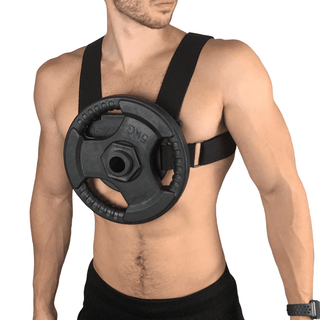
This vest looks wrong the first time you see it. A short black post sticks out of the chest, with a collar screwed onto the end. That post turns out to be the whole invention, and the reason no major brand has copied it.
The short version
Most weight vests are a nylon shell full of sand pouches, a design that has barely moved since the early 1980s. An engineer with two MIT degrees got annoyed at a broken one, taught himself CAD, printed hundreds of parts on a dining room table, and ended up with a vest that loads the plates already sitting on your gym floor. We scored it against 24 others and it came out on top.
| This vest | A typical carrier | A sand-filled vest | |
|---|---|---|---|
| Maximum load | 300 lb | 40 lb | 20 to 40 lb |
| Where the weight comes from | Plates you already own | The brand’s own plates | Sewn-in sand pouches |
| Smallest jump | 2.5 lb | Whatever a block weighs | Whatever a pouch weighs |
| Do you know the number you are lifting | Yes, plates are stamped | Usually | No |
| Still useful in five years | Yes | No | No |
Capacities for the comparison columns come from our own scoring of 23 vests, 25 scorecards counting Kensui's three frames separately. Kensui figures verified on the product page, August 18, 2026.
It Started With the Worst Weight Vest in the Building
Remy Mock had just paid for a membership at a new gym, and he found something most gyms do not have. There was a weight vest sitting on the rack. In five years of training he had never once had access to one.
It was in pieces. The velcro that held it shut had given up, half the pockets that carry the sand bags were torn open, and most of the bags were gone.
What was left hung off his shoulders like a weighted blanket. Worse, he had no idea how heavy it was. Every sand bag weighs whatever it happens to weigh, so the thing carried no honest number at all.
He went home and spent a few days looking for a better one. At no price could he find a single well-designed vest.


The Design Nobody Had Touched Since 1980
Here is the part that made him stop. Weight vests have barely changed since around 1980, when the iron-block vest arrived. Buy one today and you are mostly buying a forty year old idea wrapped in newer fabric.
Our own testing says the same thing. We ranked 23 vests you can buy right now, and most of them cannot pass 40 lb at any price. Rogue stops at 40. REP stops at 40. Both 5.11 carriers stop at 40, and the standard GORUCK carrier stops at 30.
Seven of the 25 pass 60 lb. Only four pass 100 lb. Add a little weight to your pull-ups every couple of weeks and a 40 lb vest is finished inside about two years, at which point you are shopping again.
The Engineer Who Had No Business Fixing This
Mock is not a gear designer. He holds two engineering degrees from MIT and swam at an All-American level, and while he was building this he was working as a digital nomad, moving between countries with whatever training equipment he could carry.
That travelling is where the idea actually came from. For weighted calisthenics he had been using a dip belt, which hangs ordinary gym plates off a chain.
“I was thinking it would be nice to have a vest that does the same. That’s how I decided to make the EZ-VEST.”
Remy Mock, speaking to calisthenics.com, January 2026None of his degrees were in industrial design, so he taught himself CAD from scratch and started drawing.
Hundreds of Prints on a Dining Room Table
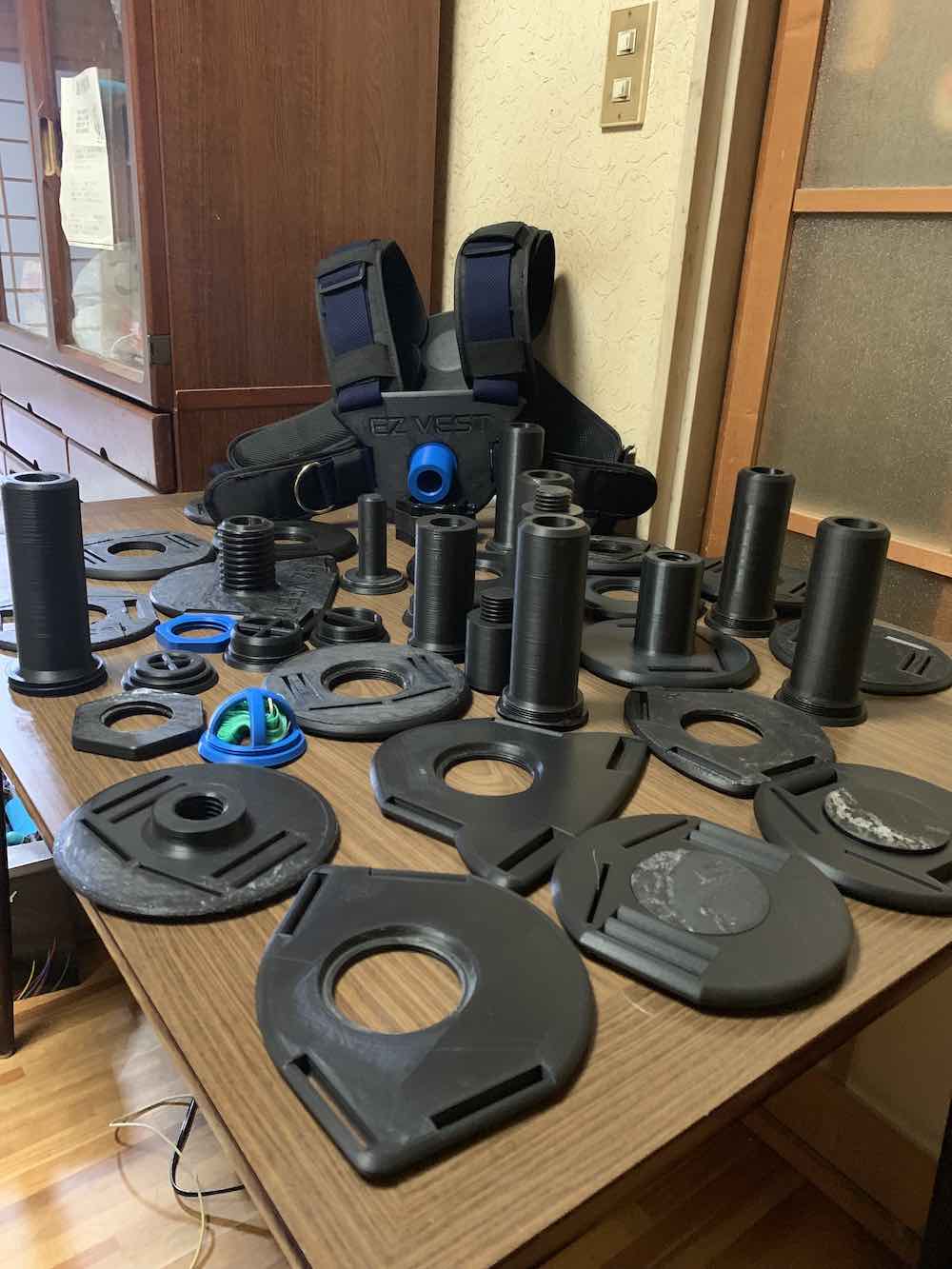
Then came the boring stretch nobody photographs. In this case somebody did, and that photograph is the one near the top of this story.
Go back and look at that pile for a moment. Mock ran hundreds of designs through rapid 3D printing before landing on geometry that sat flat against a human ribcage and did not dig in. What is on the table is everything that got him there.
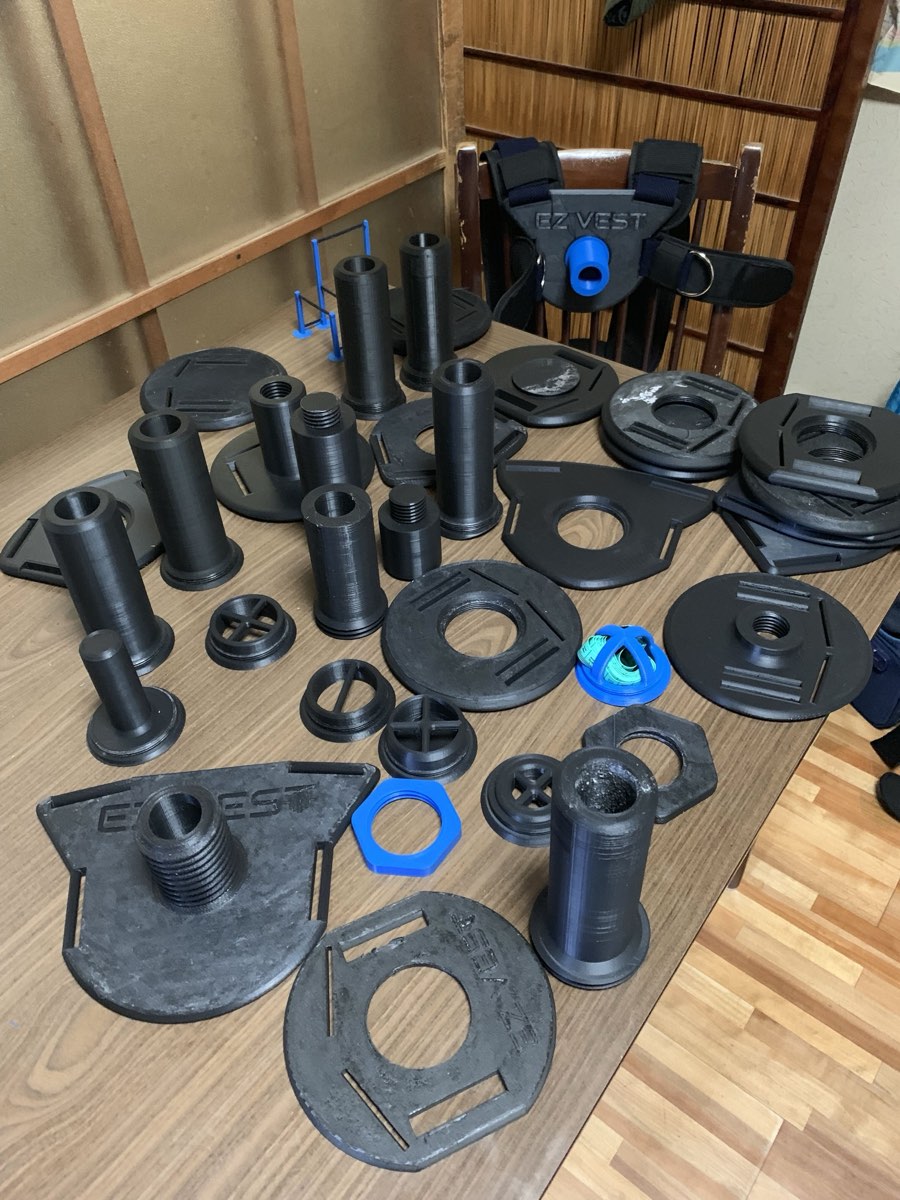
He was not building a product line. His goal was one vest, for himself, because the thing he wanted was not for sale.
The Bolt on the Chest
Back to the strange looking part.
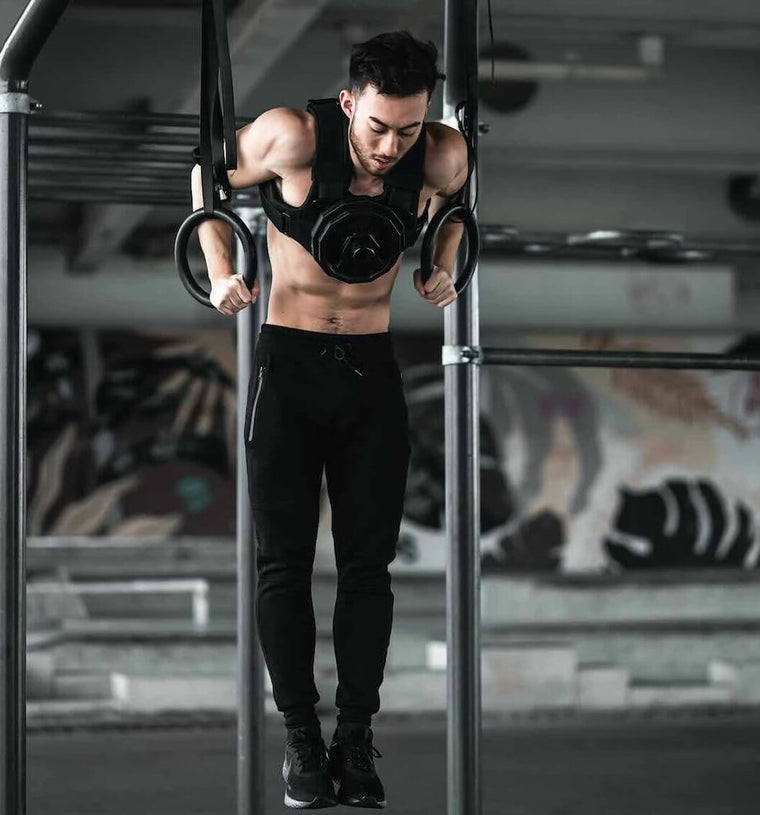
Instead of pockets, the vest carries a short threaded post on the chest and a second one on the upper back. You slide standard Olympic plates on and screw a collar down against them. That is the whole mechanism.

Three things fall out of that, and together they explain the score.
- The weight is already in the room. Any Olympic plate on your gym floor fits, so there are no proprietary blocks to buy and nothing to reorder.
- You always know the number. Plates are stamped. Sand is not, which is why a pouch vest can never tell you what you actually lifted.
- The ceiling moves with you. More capacity just means more plates. That is how the top model reaches 300 lb while most of the market stops at 40, and how the smallest jump gets down to 2.5 lb.
A fourth effect is less obvious. Loaded plates are rigid and sit tight against your center of mass, so they do not swing on you. Sand shifts on every rep. Bolted plates stay put.
“A 100lb standard vest is much harder to use than a 100lb EZ-VEST.”
Remy Mock, speaking to calisthenics.com, January 2026

Then Strangers Started Asking
The vest was a personal tool and Mock intended to leave it that way.
Strangers changed his mind. Friends started asking for one, then people at his gym began walking over mid-session to ask where they could buy it, and it kept happening.
So he made it available. The company that grew around it is called Kensui, which means pull-ups in Japanese.

The Physique in the Headline
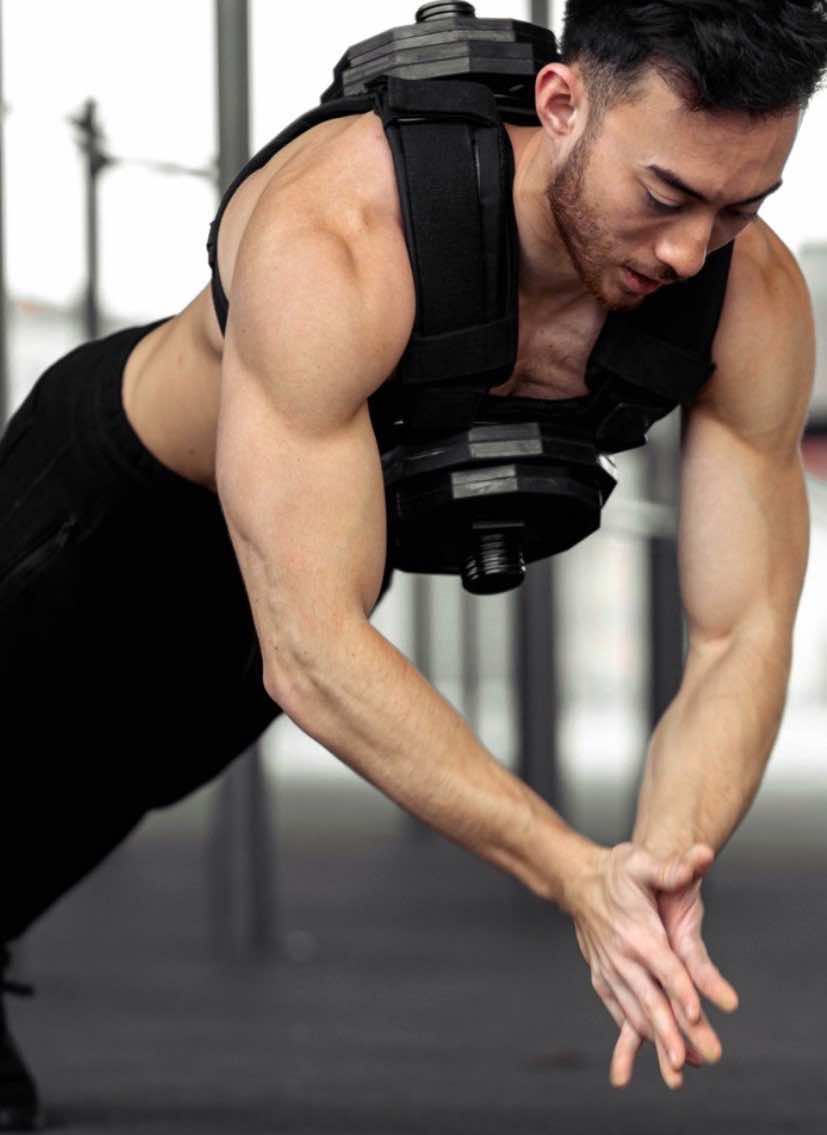
We should be straight about the photograph at the top of this page. It belongs to Mock, it was published by the company he owns, and we have not verified any number attached to it.
What we can say is narrower and more useful. He trained weighted calisthenics with the vest he designed, across years rather than weeks, and the progression a photo like that represents is exactly what a 40 lb ceiling makes impossible. Nobody keeps adding weight to a vest that has run out of room.
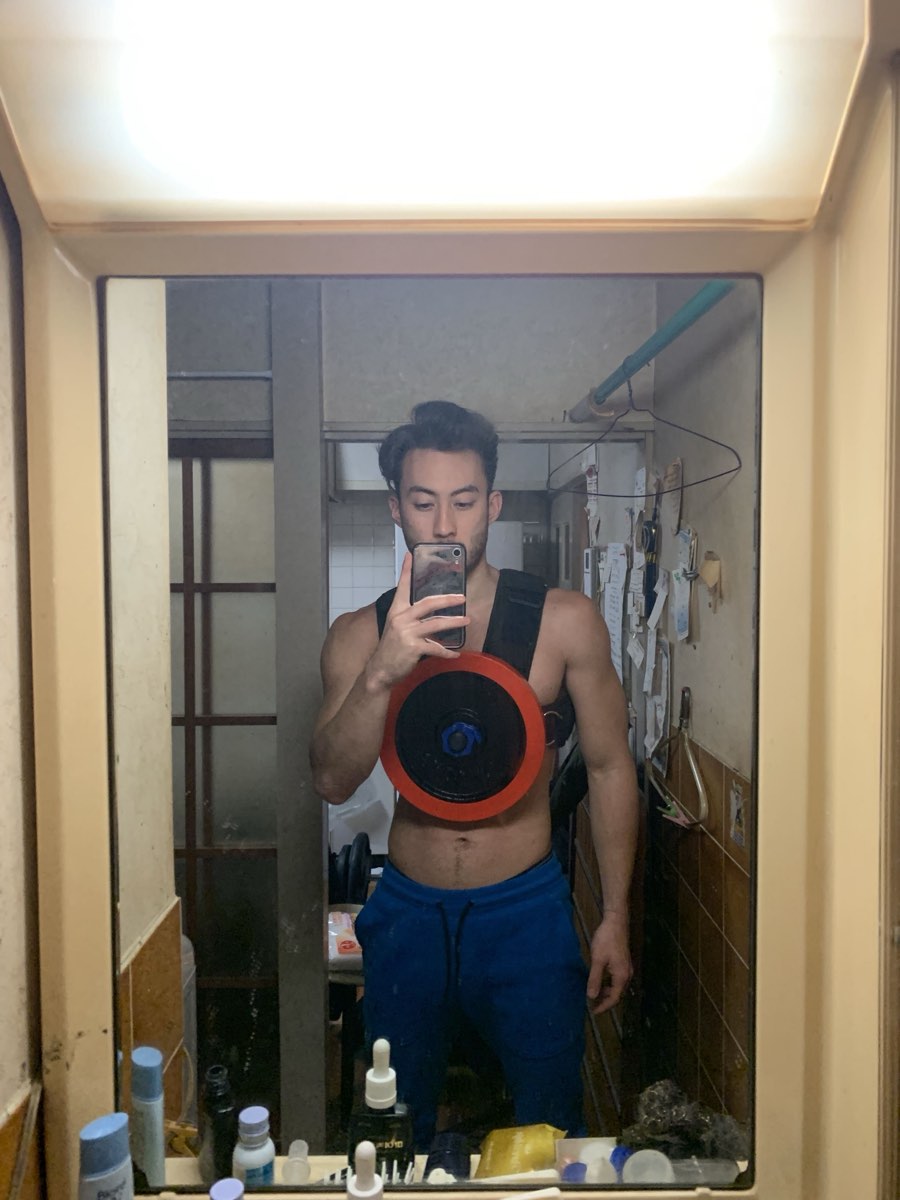
Judge the picture the way you would judge any founder’s before and after. Judge the vest on the ceiling.
What We Found When We Scored It
Enthusiasm for a good origin story is not a review, so here is where the vest sits against the rest of the field, and where it loses.
| Kensui EZ-VEST | Rogue Echo | Ironmaster Ultimate 70 | CAP Barbell Adjustable | |
|---|---|---|---|---|
| Maximum load | 300 lb | 40 lb | 70 lb | 150 lb |
| Uses plates you already own | Yes | No | No | No |
| Smallest jump | 2.5 lb | Fixed blocks | Fixed blocks | Fixed blocks |
| Passes 100 lb | Yes | No | No | Yes |
| Our verdict | Highest score of the 25 we tested | Best-built 40 lb carrier on the board | Cheapest honest route to 70 lb | One of only two non-Kensui vests that clear 100 lb |
Capacities and verdicts from our 25-vest scoring. Rogue’s site blocks automated price checks, so treat any figure quoted elsewhere as a snapshot and confirm on the brand’s own page before buying.
Each of those competitors wins something outright. The Rogue Echo is the best-made 40 lb carrier we handled, and if 40 lb is honestly all you will ever want, it will outlast you. Ironmaster gets you to 70 lb for less money than anyone. CAP and the MiR Pro are the only vests outside Kensui on our board that clear 100 lb.
Where this is the wrong buy
Running. A rigid plate bolted to your chest is a strength tool, not a rucking or 5k tool, and a soft weighted vest is the better instrument for anything with a lot of impact in it. Our tier list says the same, and it is worth saying twice.
Space is the other one. The vest assumes you have plates. Without a plate collection somewhere in your life, the cost calculation changes completely and a fixed-weight vest may simply be simpler.

What You Pay Today
Three versions, all in stock when we checked. Lite carries 80 lb, Pro carries 150 lb, and Max carries 300 lb. Every one of them loads standard Olympic plates.
Lite $99 · Pro $179 · Max $299. Prices confirmed on the product page, August 18, 2026.
No. It takes standard Olympic plates, the ones already on most gym floors, and Kensui sells no proprietary weight for it.
We would not. This is built for pull-ups, dips, push-ups and squats. For running and rucking, buy a soft weighted vest instead.
There is a 100-day risk-free trial, so the fit question is answerable at home rather than in a comments section.
Sources
- Andy Toth, “Inside KENSUI Fitness with Founder Remy Mock,” calisthenics.com, January 28, 2026. Interview.
- Strength Gear Guide, weight vest tier list, 23 vests ranked, 25 scorecards counting Kensui's three frames separately.
- Kensui EZ-VEST product page, specifications, pricing and review count checked August 18, 2026.
Disclosure: Strength Gear Guide earns a commission when readers buy through our links. It does not change what we score or how we score it, and the trade-offs above are the same ones we published in our tier list.
