Home Gyms · 9 Min Read
The #1 Reason Home Gyms Stop Working (It's Not Motivation)
Most home gyms do not fail because you quit. They fail because the weights run out. A 52.5 pound adjustable set covers about the first four months of serious training, and I found out what happens after that the expensive way: $1,375 in fixes that moved my ceiling by 17.5 pounds.

Week 19: Same Weight, Same Reps, Nothing Moving
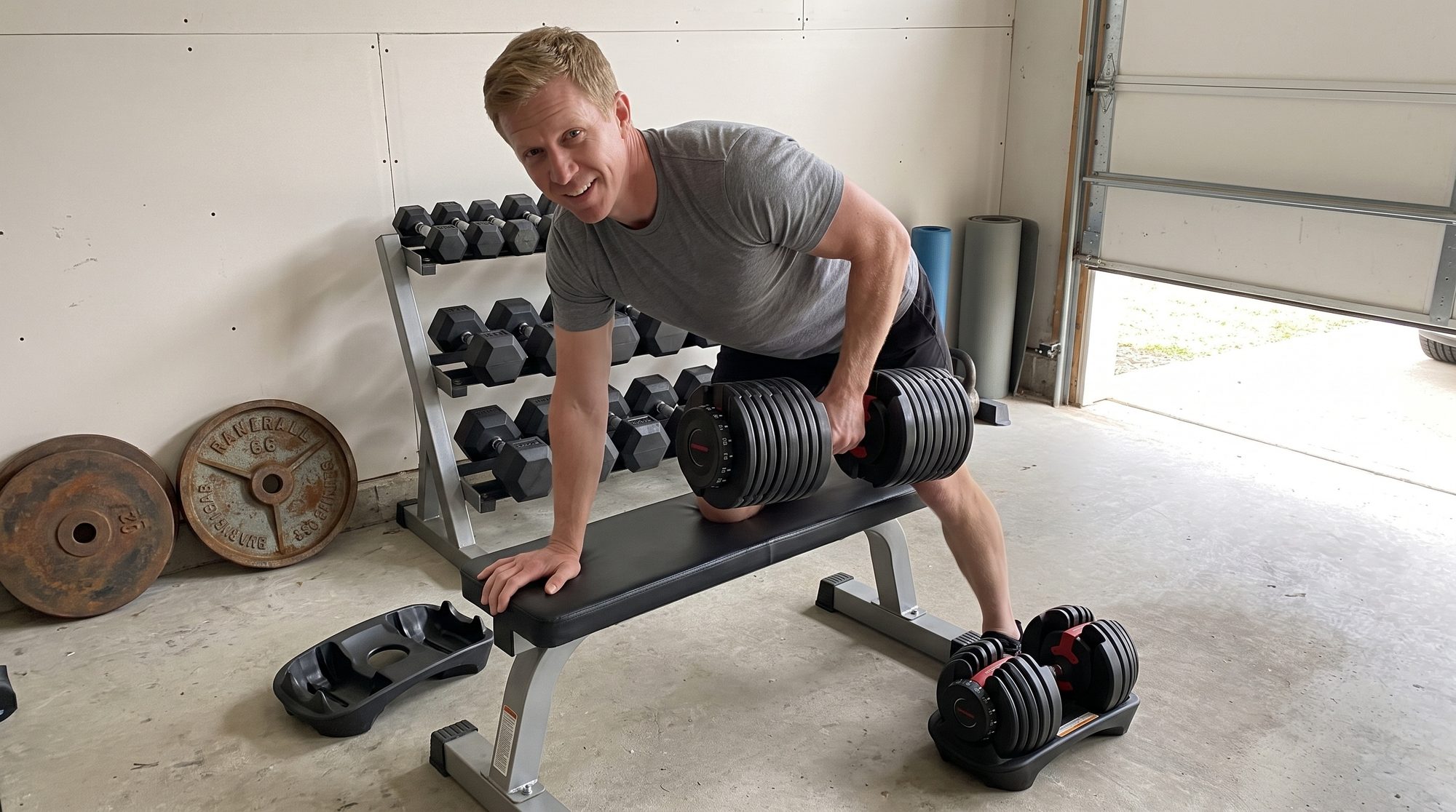
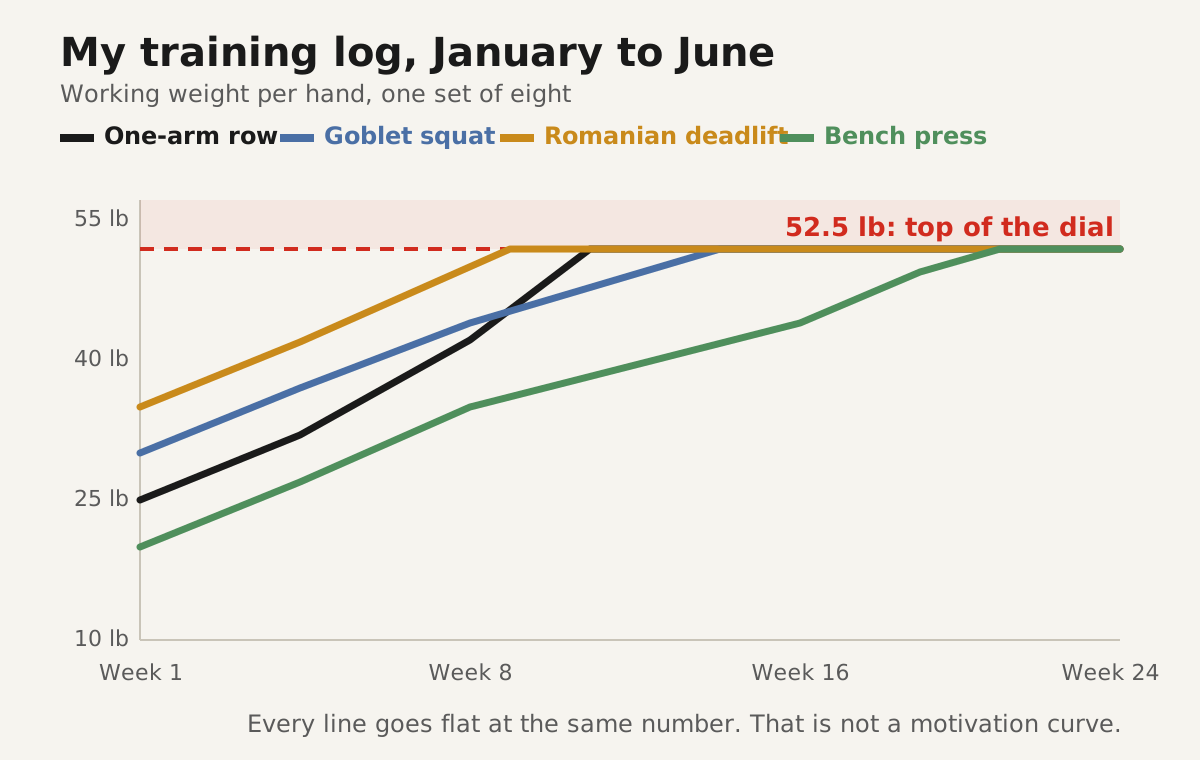
I set the garage up in January. A flat bench, a rubber mat, a rack of hex dumbbells up to 30 pounds and a pair of dial-adjustable dumbbells that go to 52.5 pounds a hand. Three sessions a week, every set written down. For four months it worked exactly the way the internet said it would. My one-arm row went from 25 pounds to the top of the dial. Goblet squat, Romanian deadlift, bench press, same story.
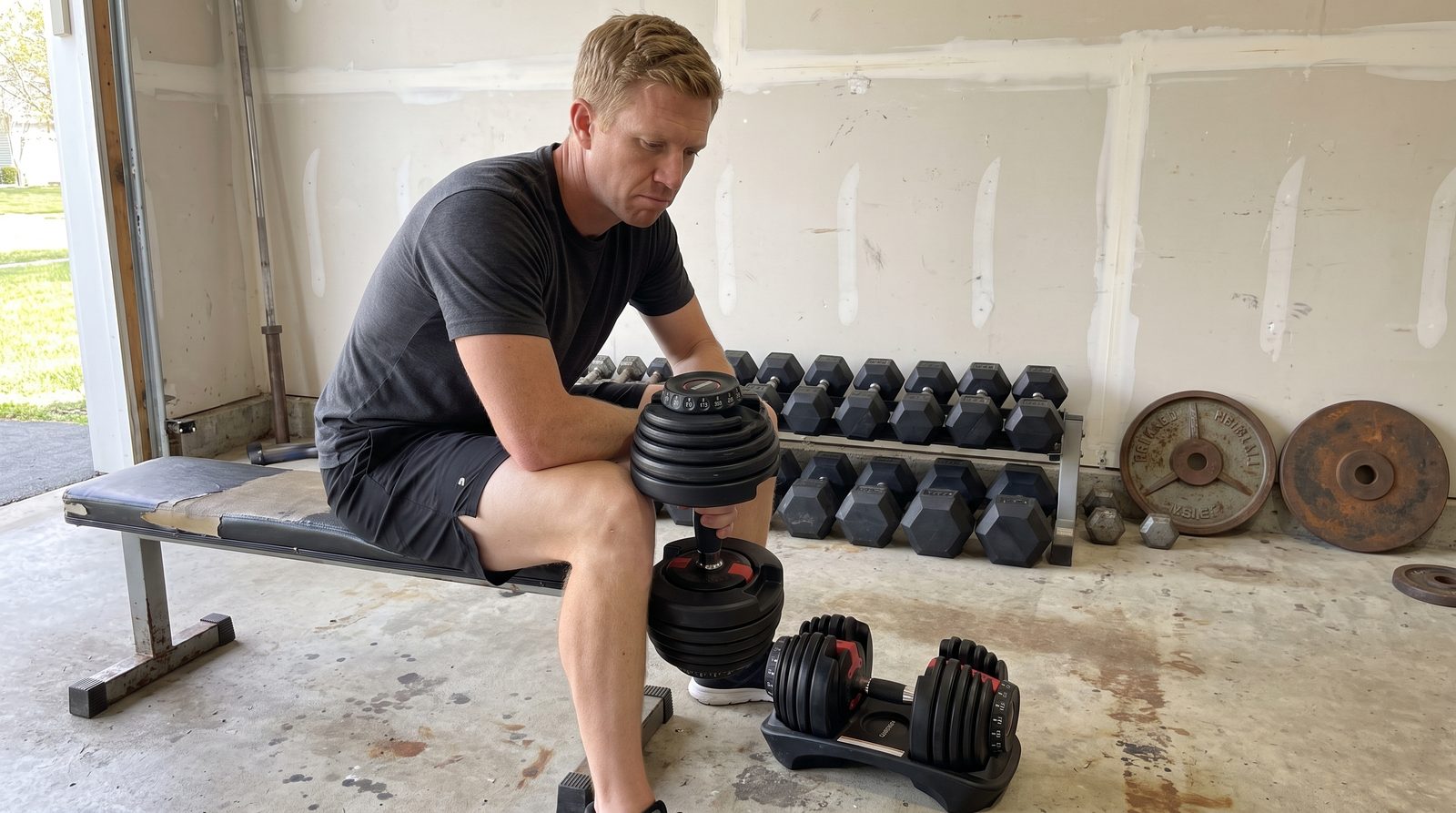
Then the log went flat. Not because I skipped sessions. I have the notebook and there are no gaps. Every lift had simply arrived at the same number, 52.5, and sat there. Week 19, week 20, week 24. Same weight, same eight reps, and after a while, no soreness, no change in the mirror, and a growing feeling that the whole garage had stopped doing anything.
Here is the mechanism, in plain terms. A muscle grows when you ask it to do a little more than last time. The American College of Sports Medicine's position stand on progression puts the number at a 2 to 10 percent load increase once you can do a rep or two past your target. That is the entire engine of a strength program. When the "little more" is no longer available, the same workout stops being training and becomes maintenance. You still sweat. You still show up. Nothing happens.
I had not stopped. The weights had.
That is the part nobody tells you when you buy the set. A 52.5 pound dumbbell is plenty for a curl for the rest of your life. It is not plenty for a row, a goblet squat or a Romanian deadlift, which are the lifts that actually change how you look, and most people outgrow it in one season. The rest of this article is what I spent trying to get past that ceiling, and the cheap thing that finally did it.
What the ceiling cost me, January to July
The Four Ways Out, and What Each One Costs
When you hit the top of an adjustable set, there are four things the market will sell you. I bought two of them and priced the other two, and each one wins something real. None of them fixes the actual problem, which is that every one of them has its own ceiling built in.
The next dial set up $668 to $867
A PowerBlock Elite USA runs $469 for the 50 pound version, $668 for 70 and $867 for 90. If you already own the 50, the Stage 2 kit that takes it to 70 is $199 and Stage 3 to 90 is another $199. It wins on speed: nothing changes weight faster than a pin. But the kits only fit a PowerBlock, so a Bowflex owner starts from zero, and 90 pounds is a ceiling too, it just costs $867 to reach it.
The quick-adjust pair with add-ons $575.99 plus $40 per step
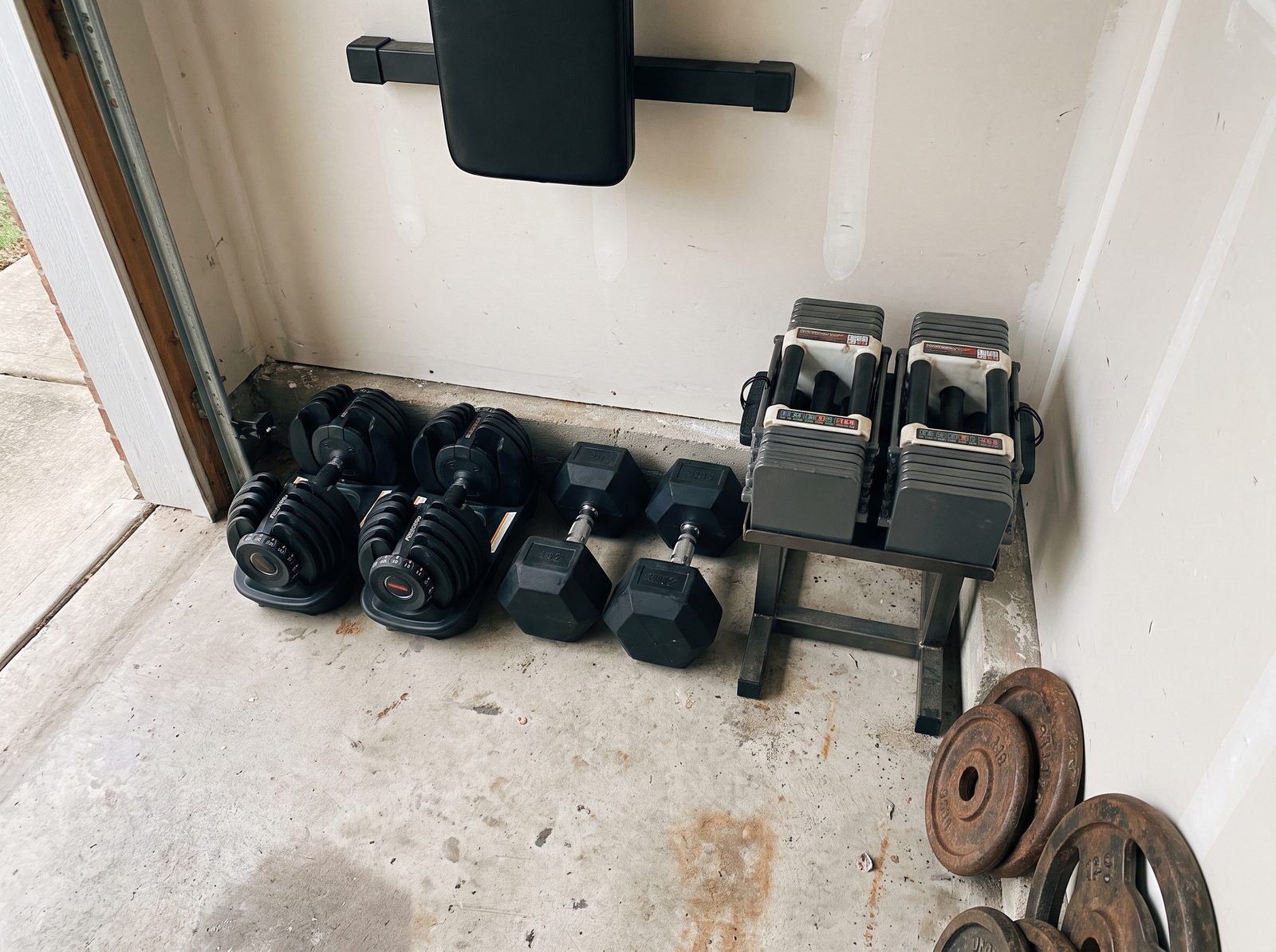
This is the one I bought. REP's QuickDraw is $495.99 for a 50 pound pair and $575.99 for 60, and you can grow it with $40 add-on weights. It wins on feel: a real steel dumbbell that happens to adjust. What it loses is the arithmetic. The add-ons are proprietary, so every extra pound is bought from one company at their price, and my 60 became my ceiling by autumn.
Fixed rubber hex pairs $259.99 to $319.99 a pair
The gym-floor answer. REP sells a 55 pound pair for $259.99, 60 for $279.99, 65 for $299.99, 70 for $319.99. They win on everything except money and floor: no adjusting, nothing to break, they feel perfect. But walking a lift from 55 to 70 in five pound jumps is four pairs and $1,159.96, plus a rack, and then you are standing at 70 wondering about 75.
The premium quick-change set $845
Nüobell's 80 pound pair is $845 and it is the nicest-feeling adjustable dumbbell I have handled. It wins on that alone. It is also the same problem with a higher number on it: 80 pounds, then nothing, and a mechanism you cannot add to.
Add it up and the pattern is obvious. Every product on that list sells you a ceiling with the price of the next ceiling hidden inside it. The dial set costs $479 and the way past it costs $600 to $900. That is the number one reason home gyms stop working: not the person, the plan. The equipment is built to top out, and the top is closer than the marketing suggests.
The Four Things a Home Gym Has to Get Right to Keep Working
By July I had stopped shopping and started writing down what a fix would actually have to do. Not features. Requirements. If a piece of gear fails one of these, it will stall you again, just later and for more money.
- A ceiling you will not hit in year one. For rows, presses, lunges and goblet squats, 60 to 70 pounds a hand covers most people for years. The lifts that go past that, heavy deadlifts and farmer carries, belong on a barbell or a trap bar anyway. Anything that tops out at 50 is a season, not a gym.
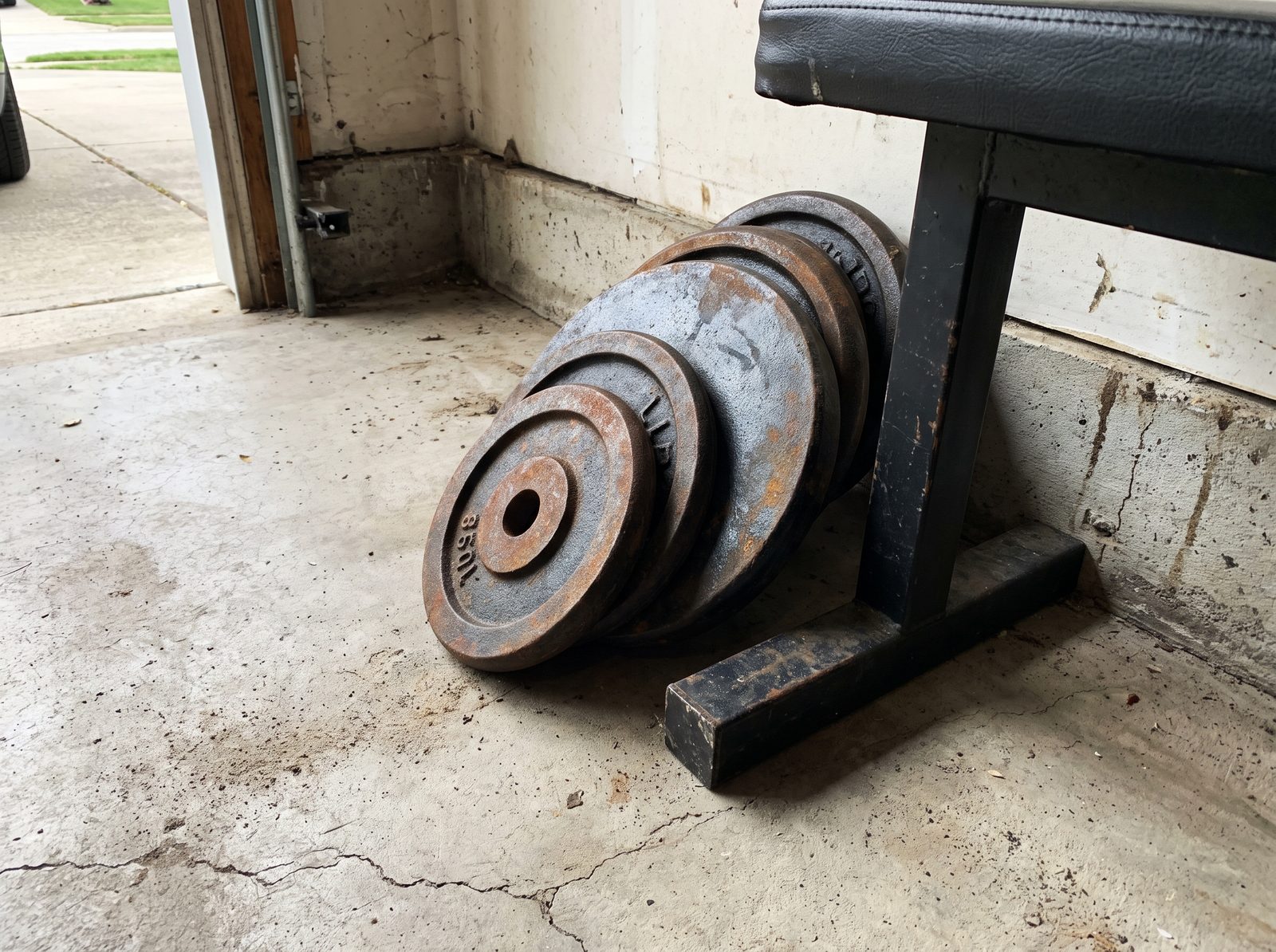
- Cheap pounds after the first purchase. The first set is never the expensive part. The upgrade is. A fix has to let you add weight from the open market, not from one brand's accessory page. Cast iron plates are the cheapest pound of weight in the sport, used ones more so, and I already owned a stack of them for a barbell that mostly gathered dust.
- Small jumps at the heavy end. A dial set like the 552 jumps 5 pounds once you are past 25. The ACSM range above works out to roughly 2.5 pounds at a time when you are rowing 50. If the smallest step you can take is a 10 percent leap, you skip weeks where the weight is too easy and then miss weeks where it is too hard.
- The same corner. A home gym that has to grow sideways stops being a home gym. Whatever fixes the ceiling has to live in the space the current set lives in, which for me is one shelf and a bench.
Read that list against the four ways out. The dial set fails one and two. The quick-adjust fails two. The hex pairs fail two and four. The premium set fails one, two and three at once. I was not looking for a better dumbbell. I was looking for a dumbbell that used the plates already sitting on my floor.
The $49 Handle That Passed All Four

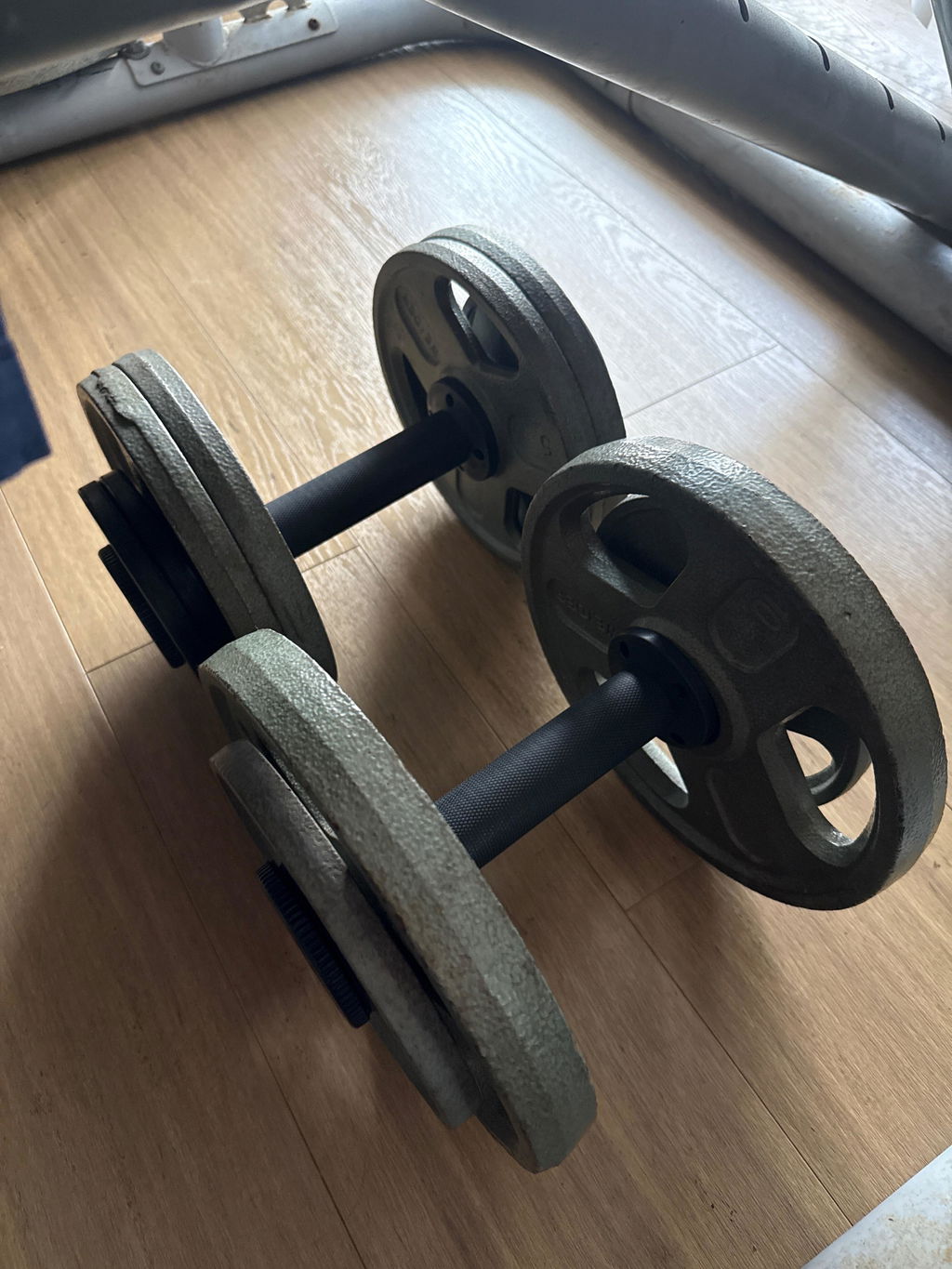
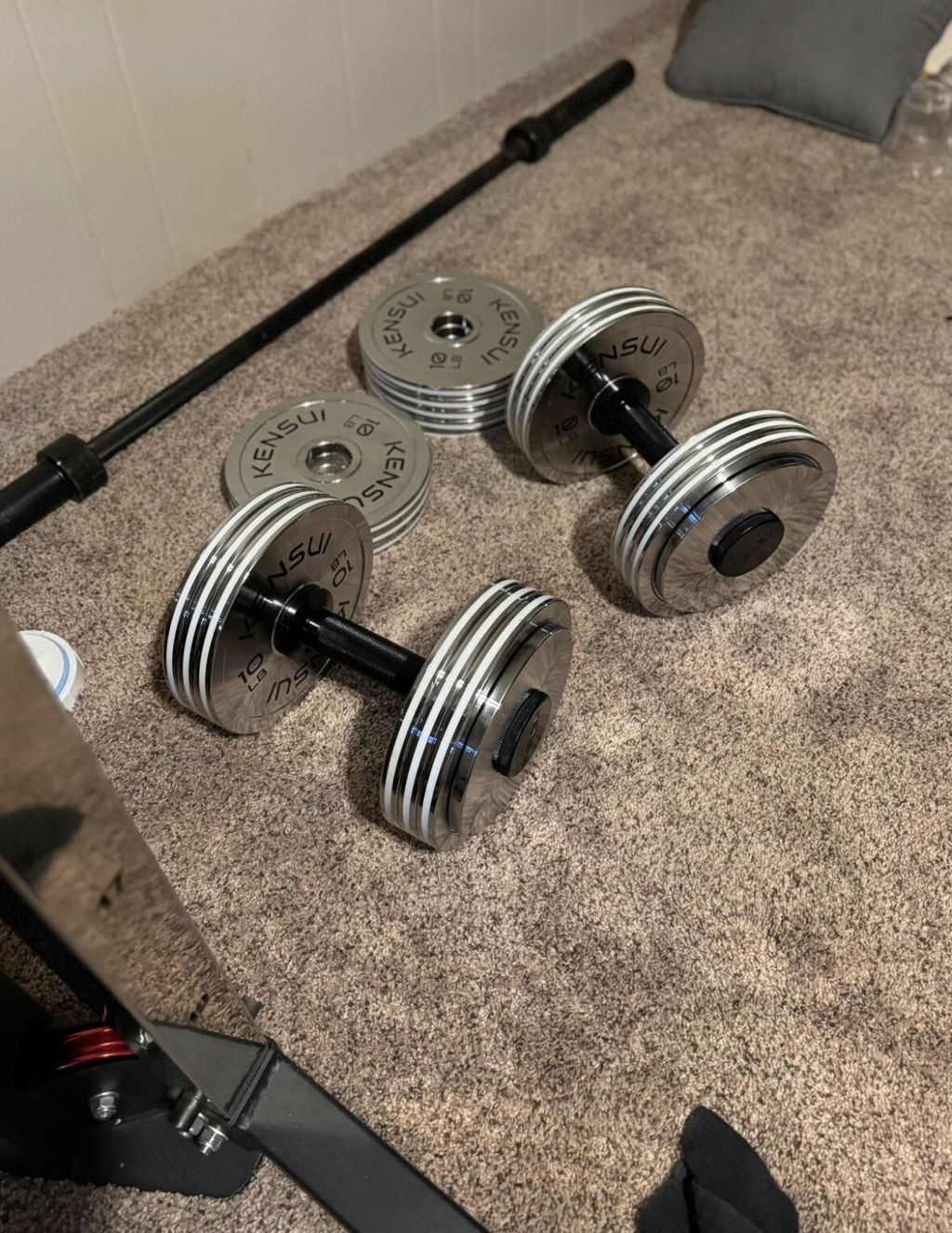
The thing that ended my stall is a pair of plate-loaded dumbbell handles called the Kensui AdaptaBELL. Nothing about the idea is new. Loadable dumbbell handles have existed for a century. What is new is that these ones take both the 1 inch standard plates most home lifters own and the 2 inch Olympic plates from a barbell set, on the same handle, and they lock the plates with a threaded end cap that sits flush instead of a spinlock collar that sticks out past the plate and hits your shoulder on a press.
There are two versions. The PRO is a reinforced polymer handle at $49 a pair, rated to 140 pounds across the pair, which is 70 pounds in each hand. A metal MAX version rated to 300 pounds across the pair is $149, but it was out of stock the day I checked, so this review is about the PRO, the one you can actually buy. Against my list: 70 a hand clears the year-one ceiling. Pounds come from any plate on the market. A 2.5 pound plate is the smallest jump. The pair lives in a drawer.
Kensui AdaptaBELL PRO
$49 a pair
4.51 out of 5 across 620 reviews on the product page, 140 lb rated across the pair (70 lb a hand)
- Loads 1 inch standard and 2 inch Olympic plates, from any brand, on the same handle
- Flush threaded end caps: no collar overhang to catch your shoulder on a press
- Every step from 5 lb to 70 lb a hand, in whatever plate increments you own
15% off with code SGGDBVIP at checkout.
15% reader discount, applied automatically at checkout.
15% off with code SGGDBOCT at checkout, through October 10.
$8 off with code SGGDB8 at checkout.
The honest part first, because it is the thing I would want told to me. Changing weight on a plate-loaded handle takes 30 to 60 seconds, not three. You unscrew the cap, swap plates, screw it back. On a superset day that matters. On a normal day you do it during the rest you were taking anyway, and after a month I stopped noticing. If your training is dumbbell-only circuits with weight changes every set, a dial set is genuinely the better tool and I would not talk you out of one.
The thing I did not expect was how the cost changed shape. My row went from 52.5 to 65 pounds over the autumn on plates I already had, two and a half pounds at a time. The receipt for that progress, after the $49, was zero.

What Owners Say, and the Part That Annoyed Me
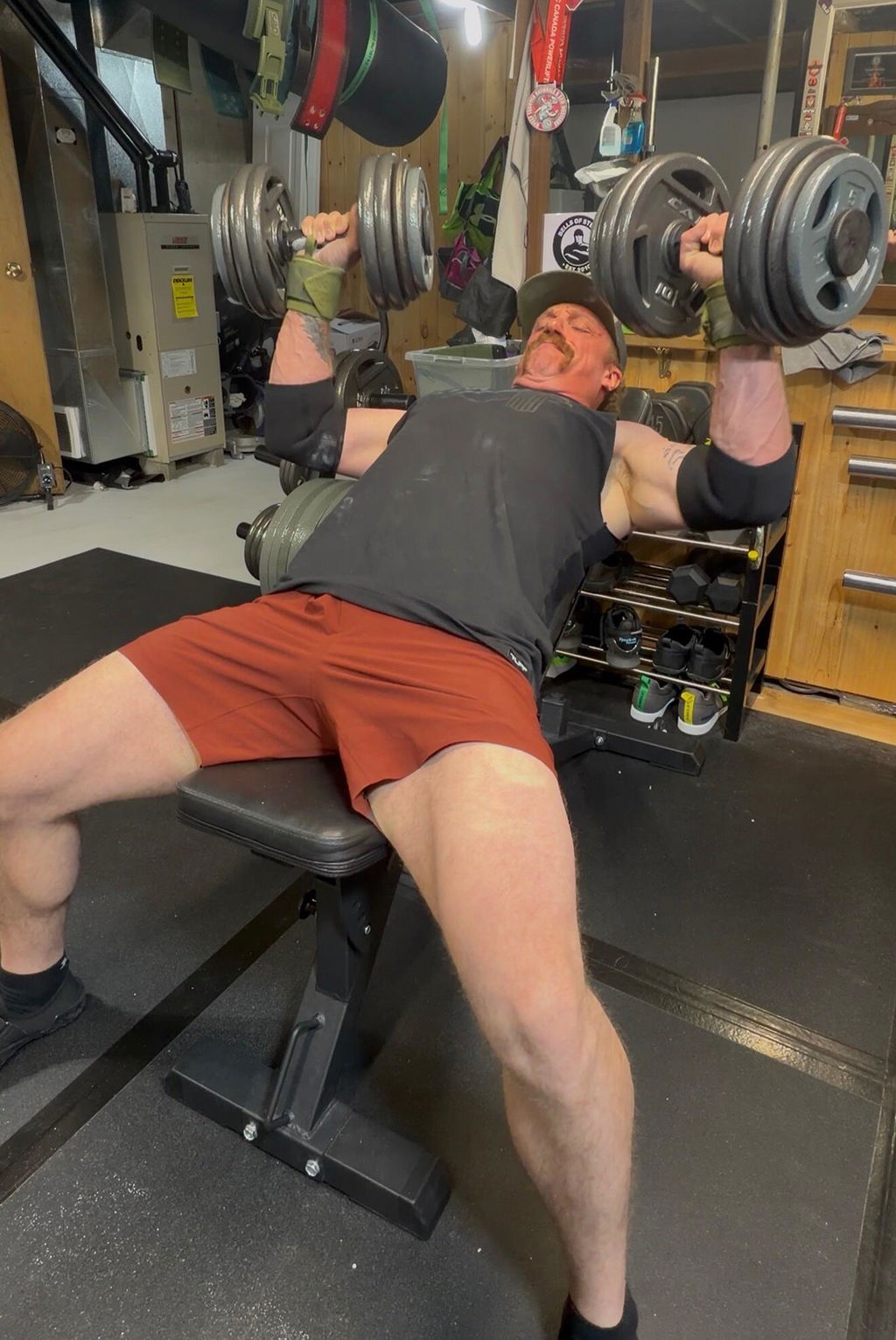
The product page carries 620 reviews as of this week. I read the recent ones, the four-star ones and the complaints, and three of them say what I would say.
"I can dial in the weight I want in precise increments for progressive overload, which the majority of other adjustable dumbbells simply can't. I will admit changing weights does take a bit of time compared to other DBs, but you'll get quicker the more you do it." Andrew N., five stars, verified buyer
"I am using it with cap standard plates and it comfortably allows for 3 plates or 60 lbs. Not as quick to change as I hoped. Grip feels good, thicker than twist lock dumbbells so getting used to it." Brian N., four stars, verified buyer
"I use it for 30-70 lbs, from shoulder presses, inclined presses, hammer curls, lateral raises, and bicep curls. The nylon feels super sturdy and the handle diameter feels perfect compared to my spinlocks which feels too thin." Gian M., five stars, verified buyer

Two things annoyed me and both show up in the reviews. The handle is thick, 34 mm on the PRO, which is fatter than a commercial dumbbell. I like it on presses and rows and it took a week to like it on curls. And if you crank the end cap down hard, there is not much to grip when you want it off again. One four-star reviewer needed pliers. The fix is not to crank it: finger tight holds the plates dead still, which is the part that surprised me most after years of spinlock rattle.
One thing the reviews do not cover is a limit worth knowing. The PRO's sleeve is 3.3 inches a side, so how many plates fit depends on how thick your plates are. Thin iron 10s get you to 70. Thick bumper plates run out of room sooner. If your stack is all rubber bumpers, budget for a few iron 10s, which is the only thing I would add to the $49.
How It Compares to the Sets I Bought
| Per pair | Kensui AdaptaBELL PRO | Bowflex SelectTech 552 | REP QuickDraw 60 | PowerBlock Elite USA 70 |
|---|---|---|---|---|
| Price | $49 | $479 | $575.99 | $668 |
| Top weight per hand | 70 lb | 52.5 lb | 60 lb | 70 lb |
| Smallest jump at the heavy end | 2.5 lb (any plate) | 5 lb | 5 lb | 2.5 lb with adders |
| Where extra pounds come from | Any 1 inch or 2 inch plate | Buy the next set | $40 brand add-ons | $199 brand kit |
| Weight change | 30 to 60 seconds | Under 5 seconds | Under 5 seconds | Under 5 seconds |
| Learn More |
Competitor prices read from bowflex.com, repfitness.com and powerblock.com on September 11, 2026.
The column that matters is the fourth row. Three of these sets make you buy your next pounds from the company that sold you the first ones. One of them lets you buy them from anyone, including whoever on Marketplace is clearing out a crate of iron plates.

Three Questions I Had Before Buying
- Will it take the plates I already own?
- If they are 1 inch standard plates or 2 inch Olympic plates, yes, and you can mix brands on the same handle. Iron, rubber-coated and vinyl all work. The one caveat is thickness: the PRO has 3.3 inches of loadable sleeve a side, so thick bumper plates run out of room before iron plates do.
- How heavy does it really go?
- The PRO is rated to 140 pounds across the pair, so 70 in each hand. That is the handle's rating, not a promise about your plates fitting. With standard iron 10s and a 5, I run 65 a hand comfortably.
- What if it does not suit me?
- Kensui's product page offers a 100 day risk-free trial. I would use the first month to find out whether the slower weight change bothers you, because that is the only real reason to send it back.
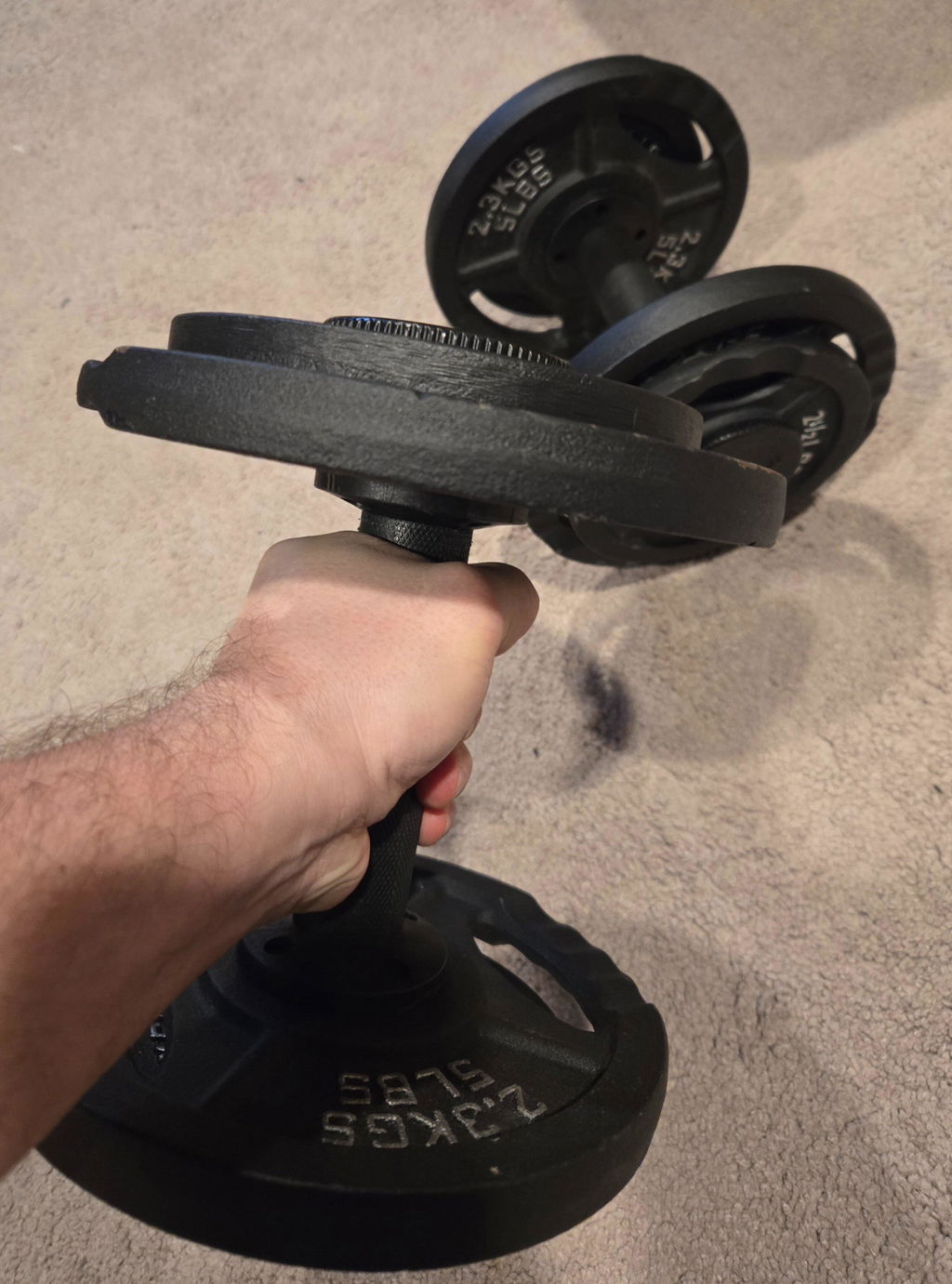
Six months on, the dial set is on the shelf for warm-ups and the hex 70s get used for carries. Everything else in the garage runs on two $49 handles and a stack of plates that were already there. The log is moving again, and for the first time since January, the next number in it does not have a price tag.
Stop Buying Ceilings
One pair of handles, the plates you own, and no next set to save up for. $49 a pair, 100 day trial.
15% off with code SGGDBVIP at checkout.
15% reader discount, applied automatically at checkout.
15% off with code SGGDBOCT at checkout, through October 10.
$8 off with code SGGDB8 at checkout.
