WEIGHTED VESTS · 8 MIN READ
Hailey Bieber And Oprah Have The Same Fat-Burning Secret. I Tried It For A Month And The Results Were Shocking.
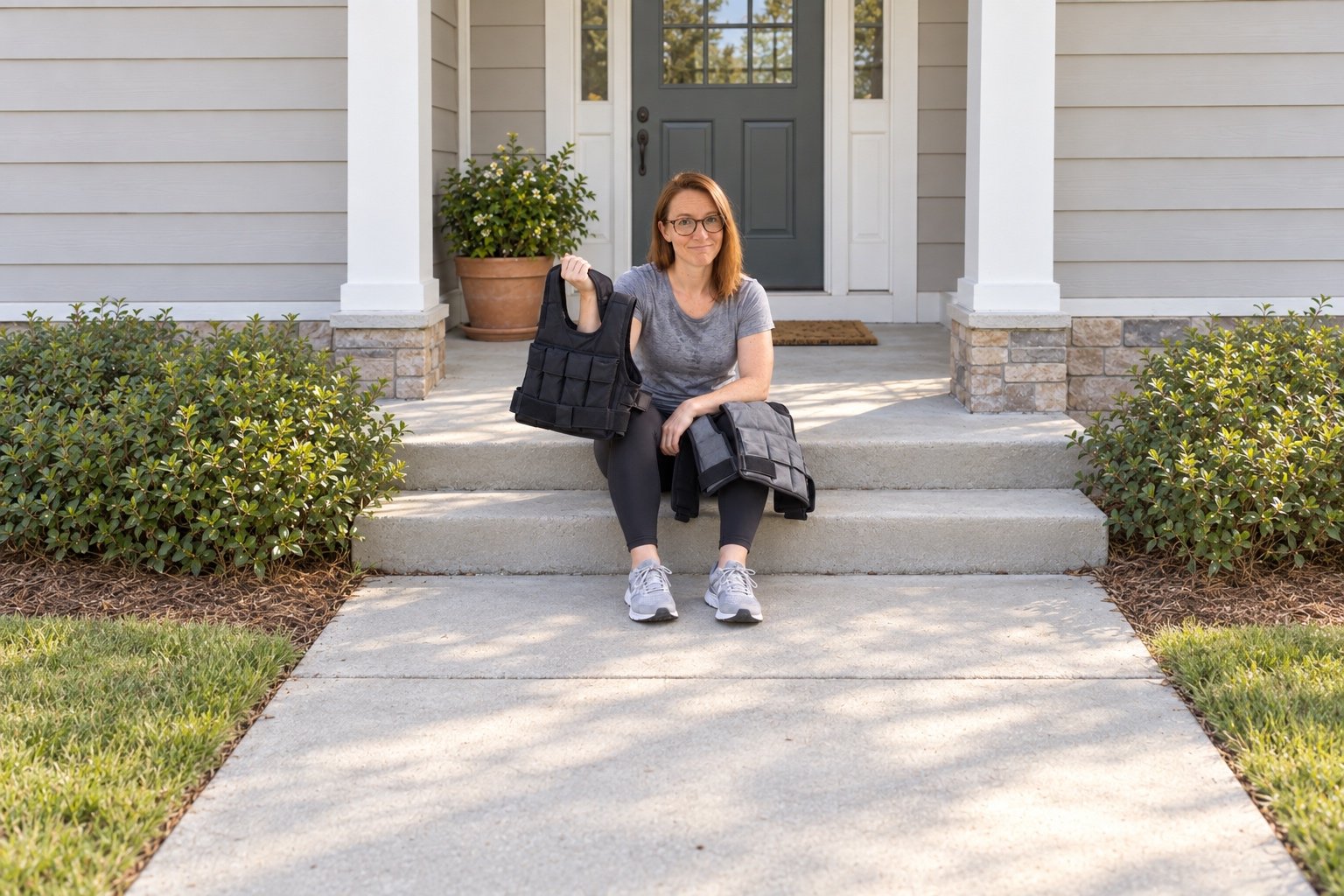
I bought the vest from Oprah's Favorite Things list in January and the one fans matched to Hailey Bieber's selfie in August. The secret is a weighted vest. The shocking part was how fast both of theirs stopped doing anything, because neither one can ever get heavier than the day it arrived. Here is what I wear now, and what each step up would have cost me.

Two famous vests, $52, and the same problem twice
The first one came from Oprah. Her 2025 Favorite Things list included an APEXUP weighted vest, with a note that Gayle's son Will swears by one. The list showed it at $29, which is the 5-pound size. I ordered it the week after New Year's.
The second came from Hailey Bieber. In late July she posted a sweaty post-workout selfie in a black weighted vest in her summer photo dump, and Marie Claire wrote it up on August 1: fans matched it to a 12-pound ZELUS vest on Amazon, marked down from $36.80 to $22.99. I had it two days later.
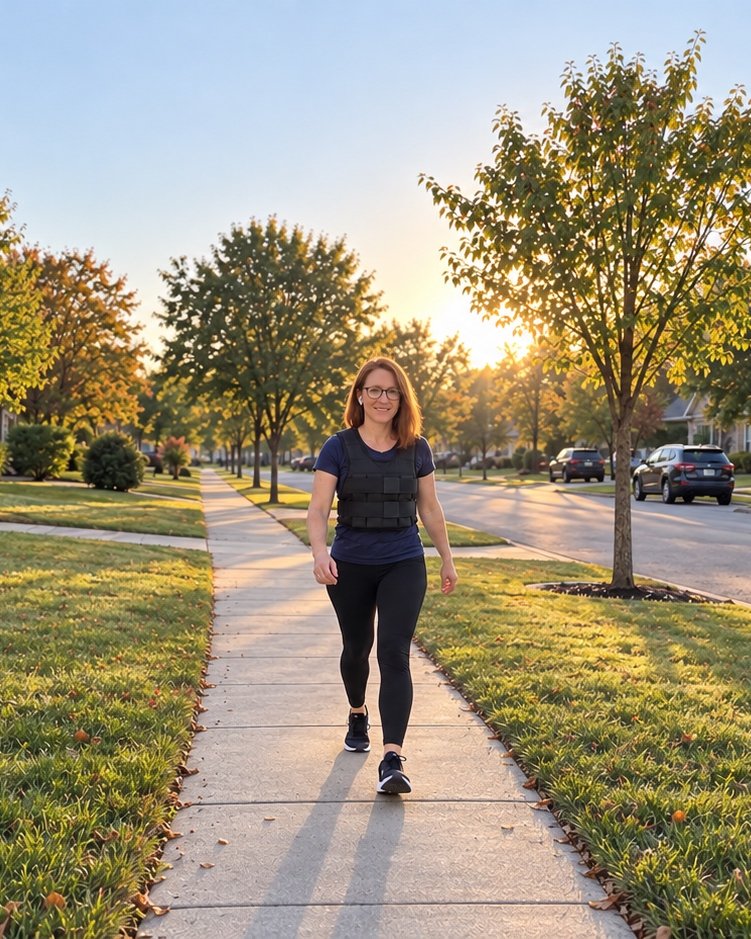
Both were lovely for about a month. Soft, slim, no buckles to fight. I wore them on my morning walk, 35 minutes around the neighborhood, and my legs knew about it on the hills. The weights were sensible, too. The physical therapist EatingWell quoted in January says to start at no more than 5 to 10 percent of your body weight, and Time's 2025 piece on the trend gives the same range. For a 150-pound woman that is 7.5 to 15 pounds.
Week five, the vest went quiet
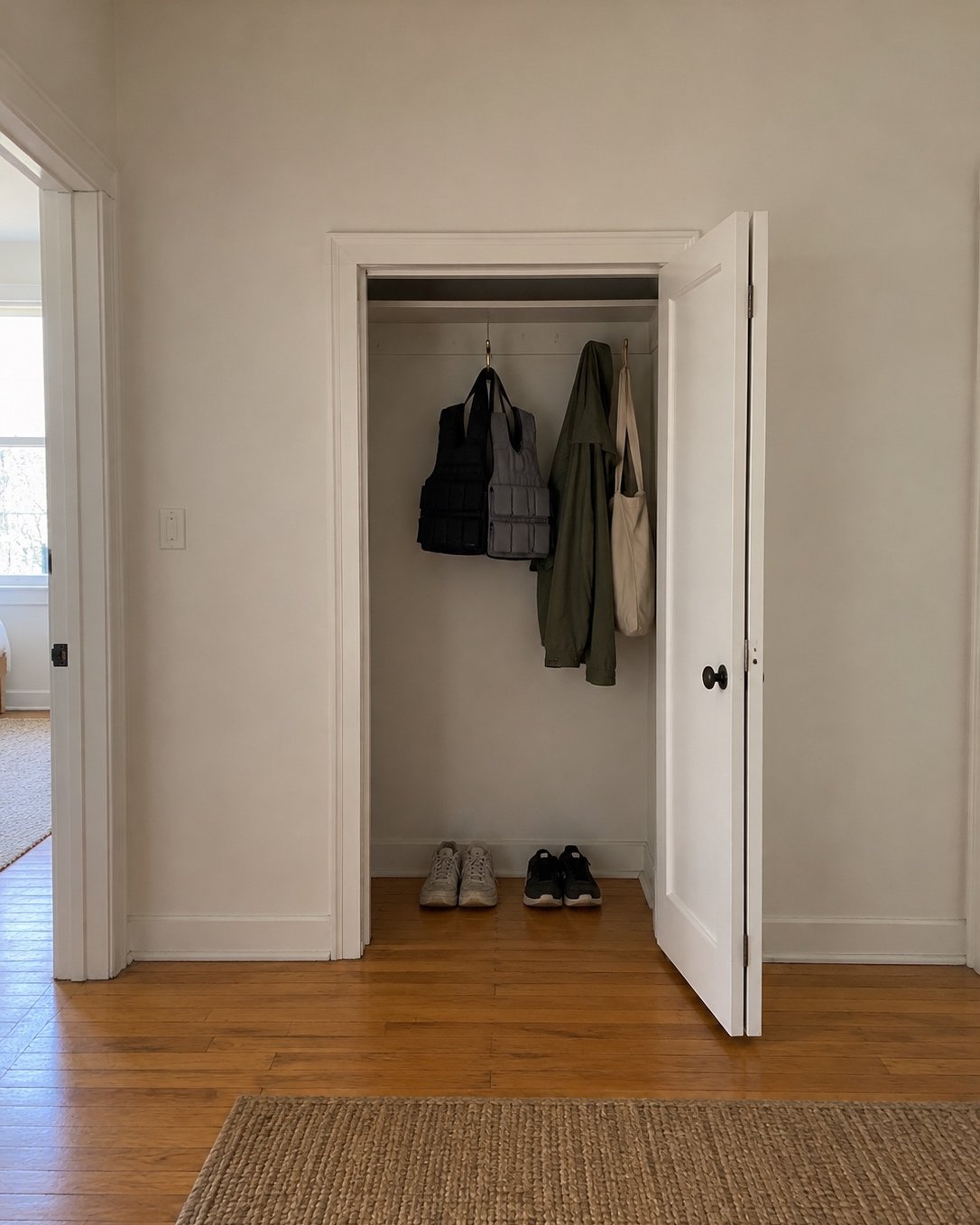
Then the hills stopped feeling like hills. By week five each vest was just a thing I was wearing. That is the whole point of training, and it is also the problem with a vest whose weight is sewn in. Both are filled with iron sand in stitched pockets, according to their Amazon listings. There is no pocket to open and no panel to add. More weight means a different vest.
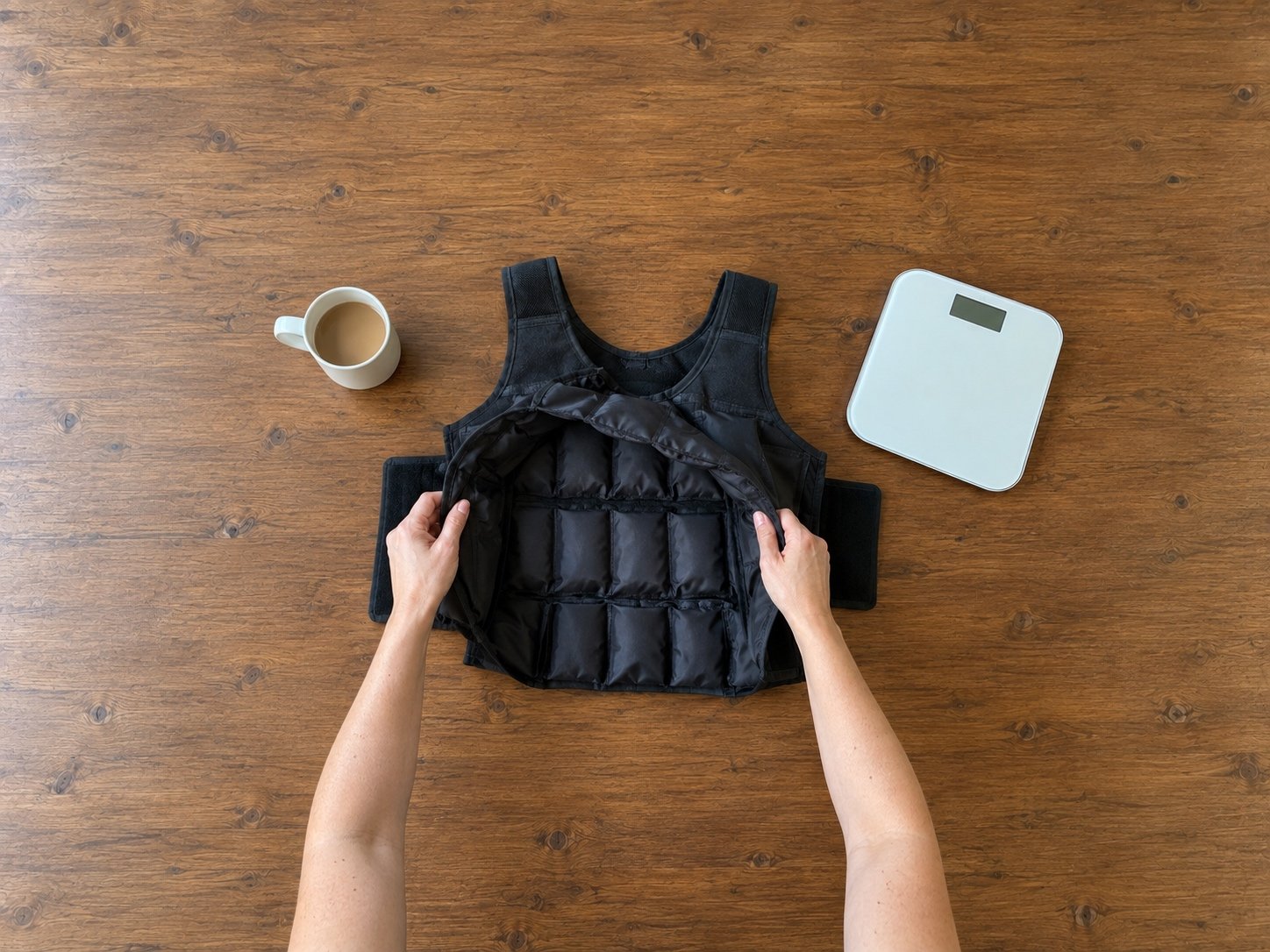
I am not the only one who noticed. A two-star review of a 12-pound Tone Fitness vest on Target says it plainly: "you cannot add weights to it after so that isn't great."
I also went looking for what the researchers used. The Swedish trial behind a lot of the vest talk, Ohlsson and colleagues in 2020, put adults with a BMI of 30 to 35, most of them women, in a heavy vest set at 11 percent of their own body weight, worn eight hours a day for three weeks. The heavy-vest group lost about 3.8 pounds of fat in those three weeks, against about half a pound for a group in a token light vest (Table 2 of the paper). On a 150-pound woman, 11 percent is 16.5 pounds. Neither of my vests could reach the study's starting weight.
One honest note before anyone emails me. Time was blunt about bones: the research on vests and bone health is small and mixed, and a 12-month trial of older adults found daily vest wear did not stop bone loss at the hip during weight loss. I wear a vest because it turns a walk I already take into training. I do not wear it as medicine, and a three-week trial is not a promise about your scale or your bones.
Three ways to go heavier, with prices
Buy the next size up. This is what the fixed-weight brands expect you to do. On APEXUP's own store the 10-pound vest is $44.99, the 15 is $54.99 and the 20 is $76.99. Climbing from Oprah's 5-pound vest to 20 pounds is four vests and $205.96, and a closet full of nylon. It wins on comfort at every single size. It loses the moment you get stronger.
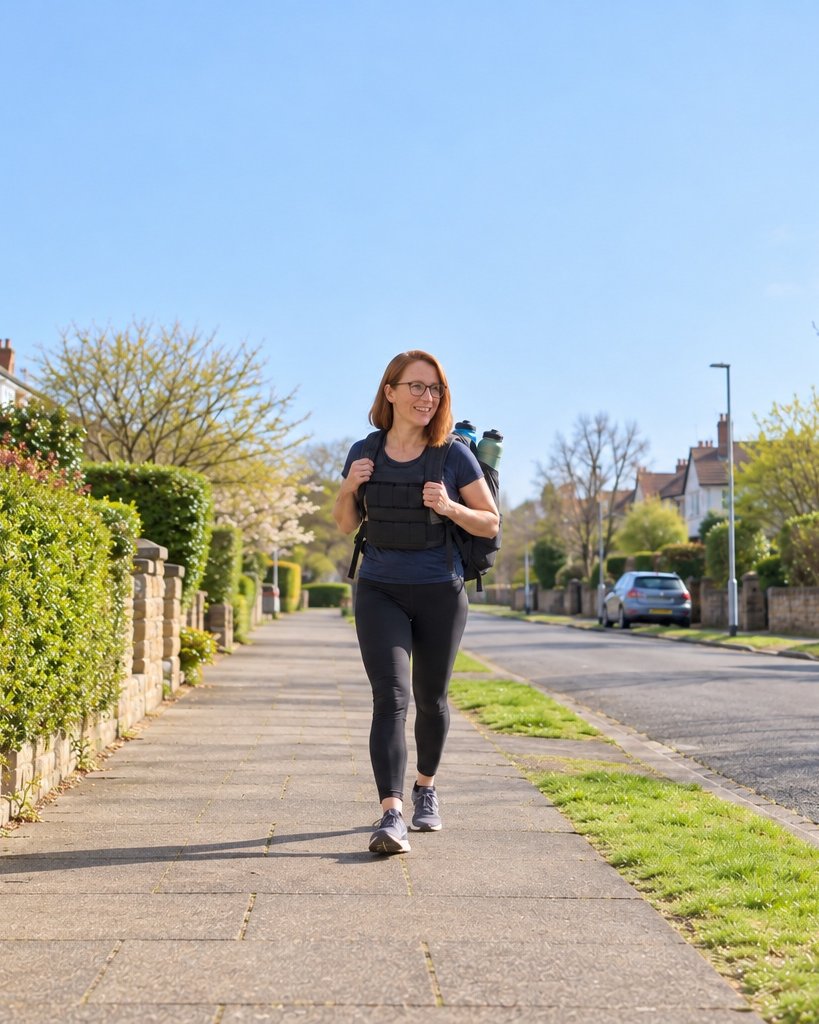
The free fix: a backpack over the vest. Two full water bottles in a small backpack, worn over the ZELUS. It added about four pounds and wins on cost outright, because it cost nothing. It also swung on every step and rubbed the same spot on my shoulder all week. That bounce is a classic cheap-vest complaint too. One two-star Target review of a ProsourceFit vest: "It bounces a lot if you're running or jumping with it."
Spend real money on an adjustable vest. In January, Oprah Daily's editors gave their 2026 Self-Care O-Ward for best weighted vest to the Omorpho G-Vest Icon. The women's version is $279 on Omorpho's site. It wins on fit for a woman's frame, hands down. It is also 6 pounds out of the box, and a $79 pack of snap-in panels takes it to 12. The Hyperwear Hyper Vest FIT, a vest built for women, is $114.99 with its weights and tops out at 10 pounds. So the expensive adjustable vests stop right where my cheap fixed ones did.
The most the vest you bought can ever weigh
APEXUP 5 lb$28.99, Oprah's list
Hyperwear FIT$114.99
ZELUS 12 lb$22.99, Bieber's
Omorpho G-Vest$279 + $79 pack
Top weight from each seller's own listing, October 5, 2026. Bars run to 80 pounds.
What the next vest had to do
Two vests and nine months gave me a short list. Any vest I bought next had to pass all four, or it was going to end up in the closet next to the first two.
- Add weight without a new vest. Small steps, a few pounds at a time, using weight I can buy anywhere.
- A top weight far past 12 pounds. Not because I will ever wear 80 on a walk, but because I never want to hit the ceiling again.
- High and tight, no bounce. The weight sits on the chest and upper back, not in a swinging pocket or a backpack.
- Under $100 for the vest. I had already spent $52 on two vests that were finished with me in a month each.
The $99 vest that takes plates instead of pockets
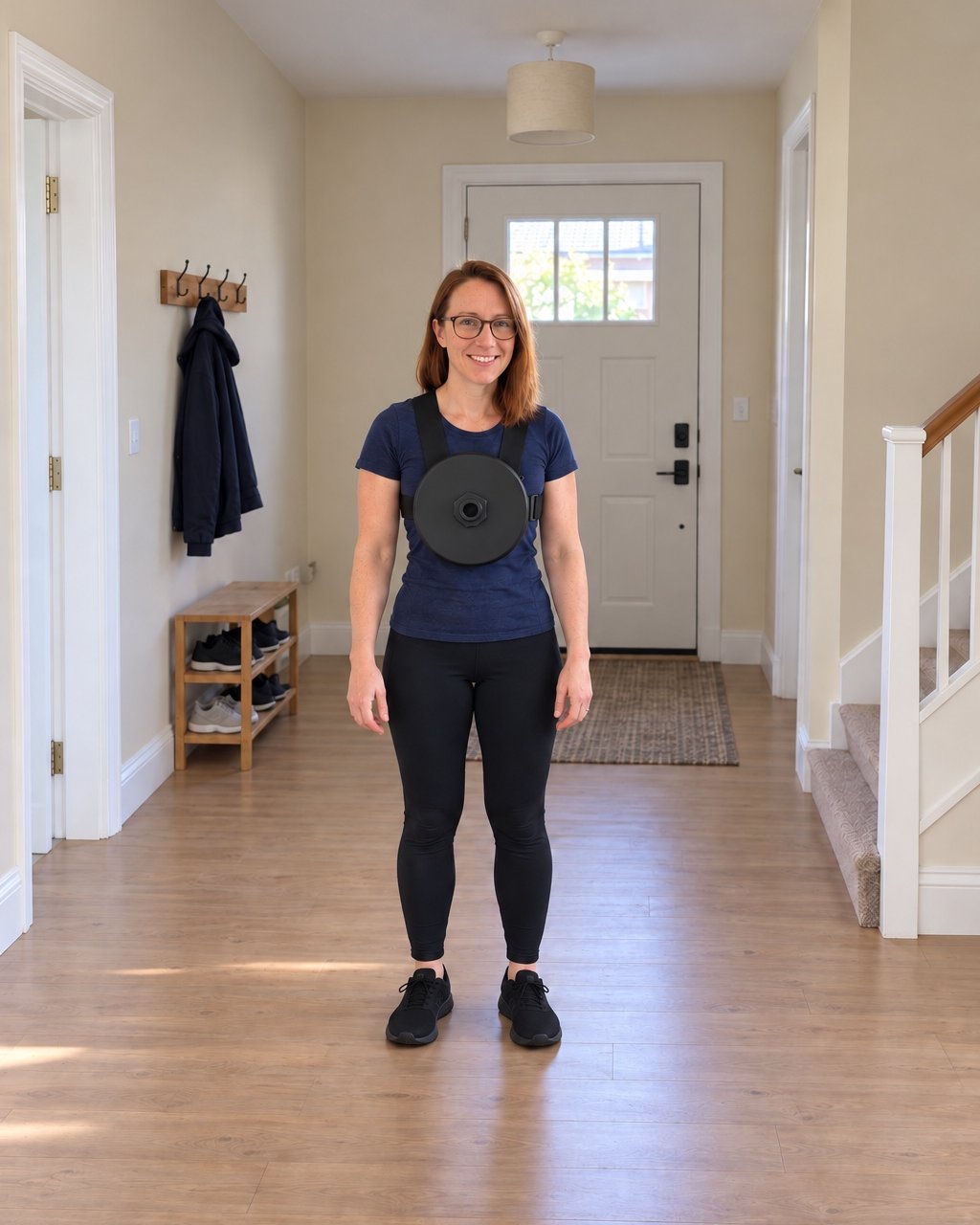
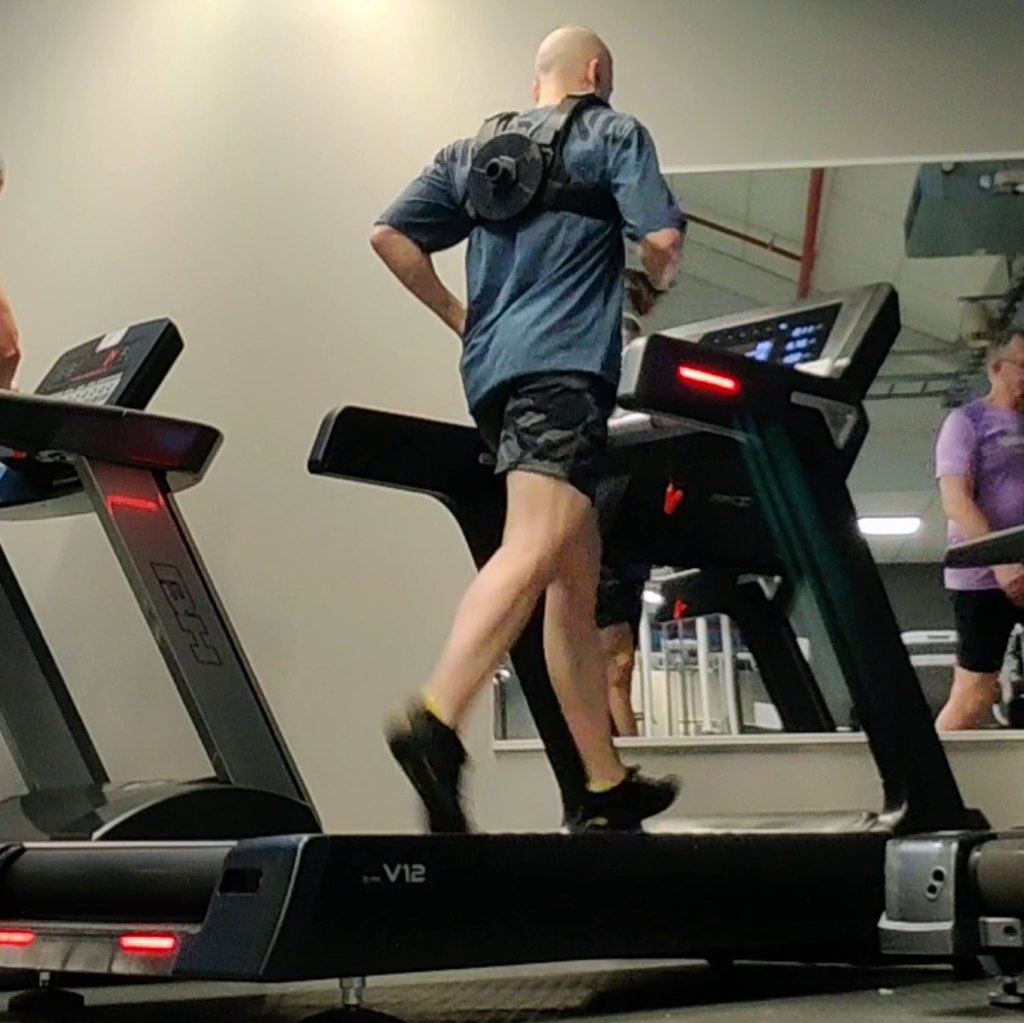
The one that passed all four is the Kensui EZ-VEST, in its lightest version, the Lite. It is not a sandbag vest. It is two flat shields on straps, one on the chest and one between the shoulder blades, each with a short post that takes a standard 2-inch Olympic weight plate. The weight is whatever plate you put on it, up to 80 pounds on the Lite.
The verdict
Kensui EZ-VEST Lite
★★★★★ 4.76 from 1,524 reviews on kensui.com
- $99 for the Lite, rated to 80 pounds of plates.
- Takes standard 2-inch Olympic plates on the chest and the back, so the weight goes up a few pounds at a time.
- The load sits high on the chest and upper back, strapped flat.
- 100 days money back, and it ships in 24 hours.
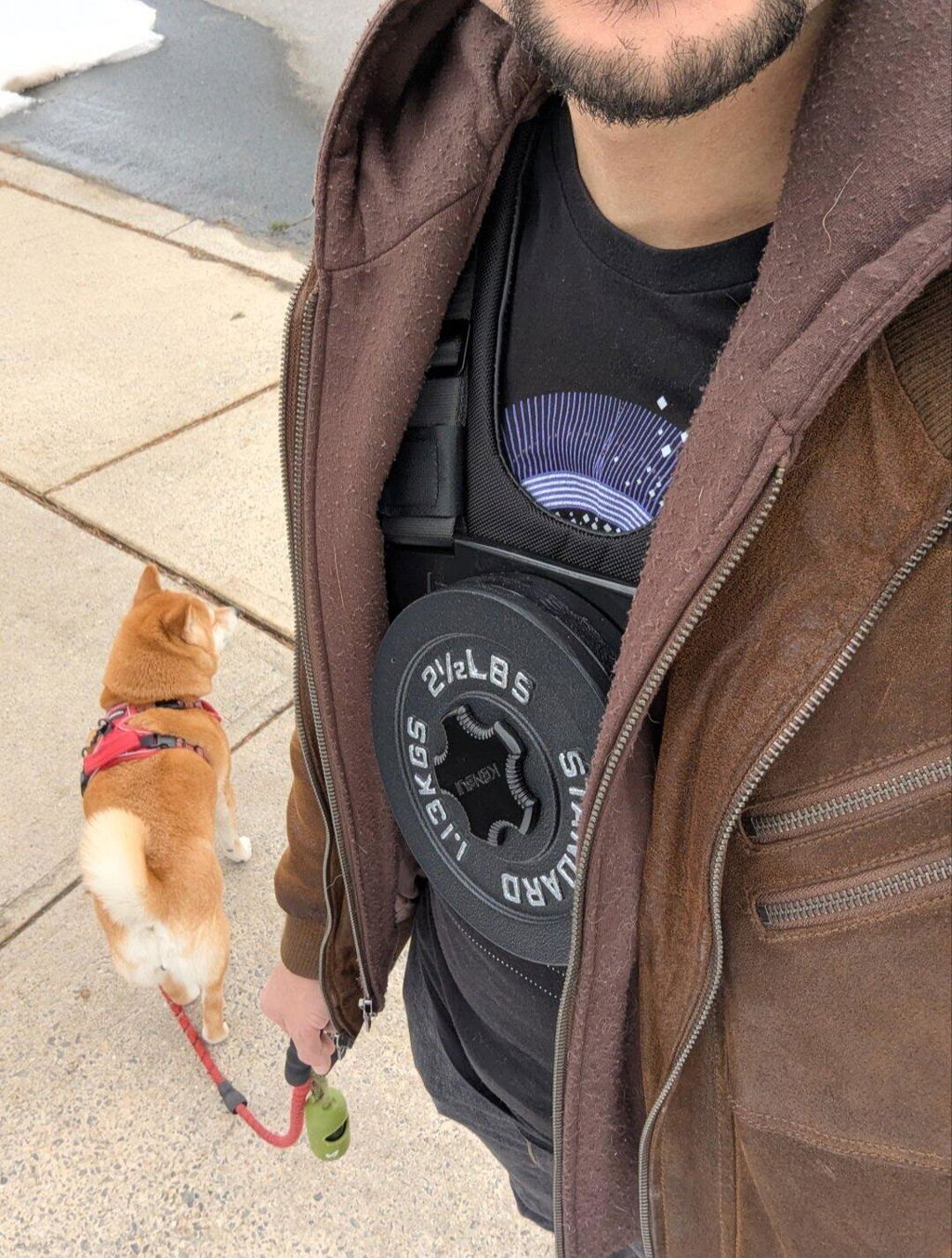
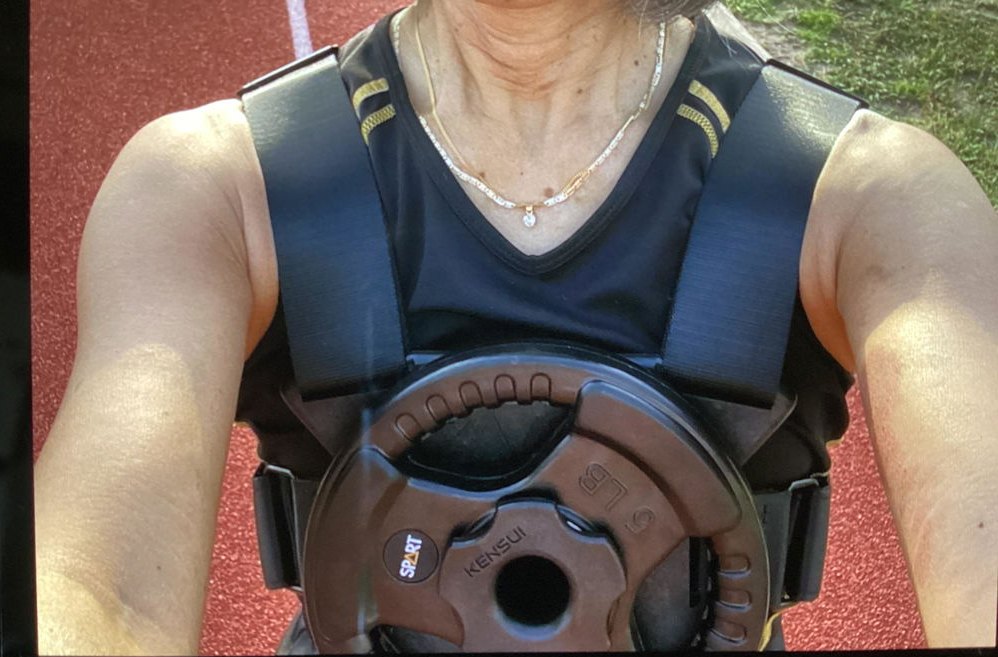
The plates are the honest part. The vest comes with no weight, and I owned none. I bought four 5-pound cast iron Olympic plates from CAP's own site for $22.99, and a set of six 2.5s for $15.99. That is $137.98 for the vest and 35 pounds of iron. Getting Oprah's vest to 20 pounds would have cost $205.96, and it would still stop at 20.
Two months in: the ramp, and the two things I'd change
I started at 10 pounds, one 5 on the front and one on the back, which is about what the cheap vests weigh. When the walk got easy I added a 2.5 to each side. By week eight I was at 20 pounds, two 5s on each post, and the hills were hills again. Each step cost me a plate, not a vest.
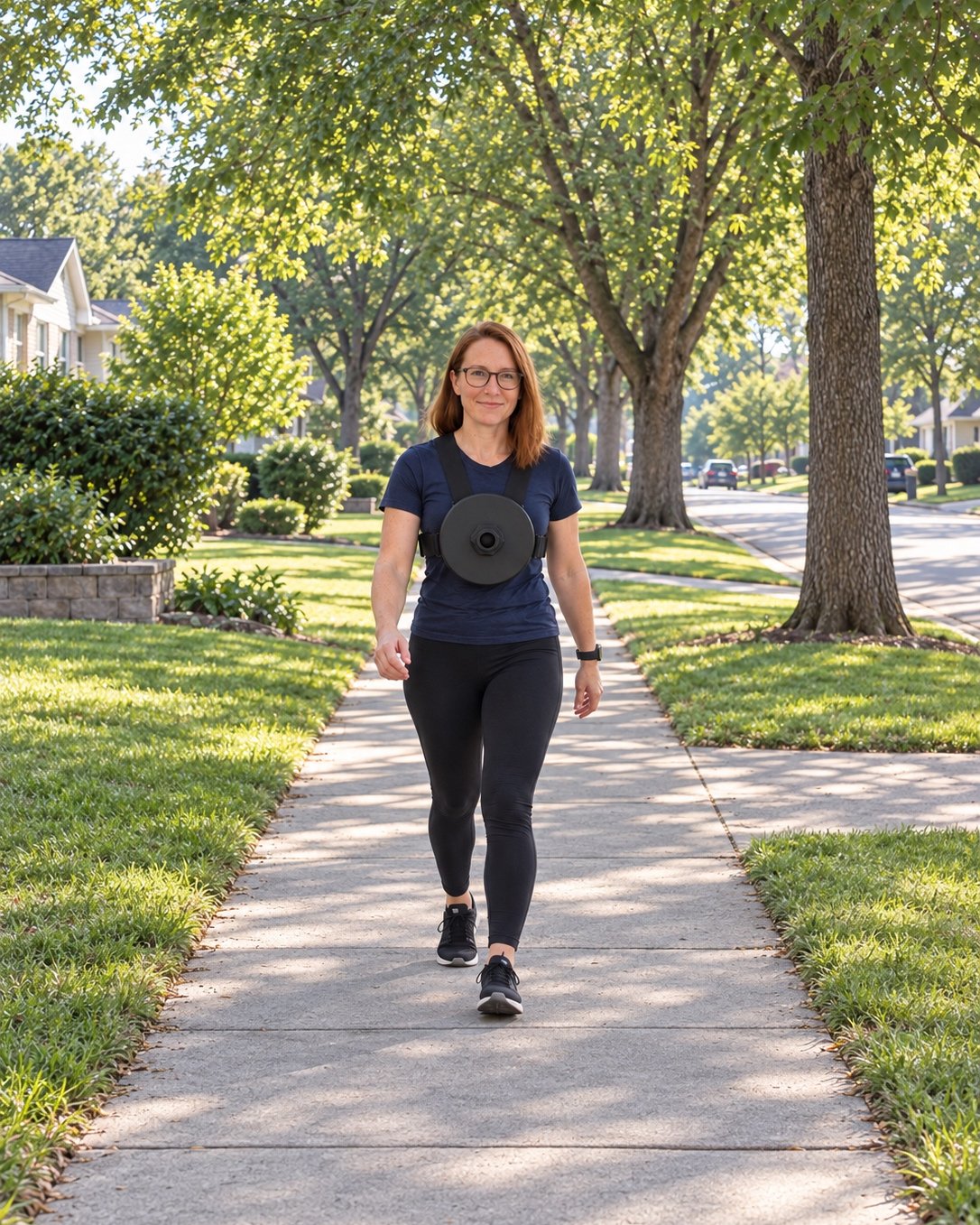
Owners who walk with it describe the same ramp. Two of them, from the reviews on the product page:
"Started rucking with 2x5 lbs, then 15 (5,10lbs) for 2 weeks, will be upping weight to 20lbs (10,10) next week."
★★★★★ Leona c., verified buyer
"Instead of buying a vest that I'll eventually outgrow, I can progressively add weight."
★★★★★ UNC F., verified buyer
Now the two things I would change. The Lite has no padding. The straps sit right on your shoulders, which is fine over a t-shirt at 10 to 20 pounds and is the reason the Pro version exists for people who go heavy. The second is the look. A black plate on your chest reads as gym gear, not a cute vest from a celebrity's photo dump. My neighbor asked if I was training for something. I said yes, the hill on Elm Street.
How the five vests compare
| Kensui EZ-VEST Lite | APEXUP | ZELUS 12 lb | Omorpho G-Vest Icon | Hyperwear Hyper Vest FIT | |
|---|---|---|---|---|---|
| Where I saw it | Here | Oprah's Favorite Things 2025 | Hailey Bieber's selfie | Oprah Daily's 2026 O-Wards | Sold as a women's vest |
| Price | $99 | $28.99 (5 lb) to $96.99 (30 lb) | $27.89 today | $279 women's | $114.99 with weights |
| Top weight | 80 lb | The size you bought | 12 lb | 12 lb | 10 lb |
| Add weight later | Yes, any 2-inch plate | No, buy the next vest | No, buy the next vest | Yes, a $79 pack, to 12 lb | Yes, to 10 lb |
| Weight included | No, plates sold separately | Yes | Yes | 6 lb | Yes |
| Learn More |
Prices and weights from each seller's own page or Amazon listing, checked October 5, 2026. Oprah's list showed the APEXUP at $29. Marie Claire reported the ZELUS at $22.99 on August 1, 2026.
The questions I had before I bought
Is 80 pounds too much for a walker? You will never put 80 on it for a walk. The number matters because it is the ceiling you will not hit. Start where the cheap vests start, at 5 to 10 percent of your body weight, and add a plate when the walk gets easy.
Do I need a gym to buy plates? No. Any 2-inch Olympic plate fits, new or used. Small 2.5 and 5-pound plates are the ones a walker actually uses.
What if it does not fit me? Kensui gives 100 days to send it back for a refund. I kept mine, but that window is why I tried it at all.
Buy the vest once, then buy plates
The celebrity vests are a good first month, and every step after it is another vest. The EZ-VEST Lite is $99, takes plates up to 80 pounds, and the next step up costs you a 2.5-pound plate instead of another vest.
Get the EZ-VEST