Tennis Conditioning · 12 min read
We Scored Every Tool Tennis Coaches Recommend For Serve Speed And Shoulder Health. A $75 Mace Beat The $170 Cord System.
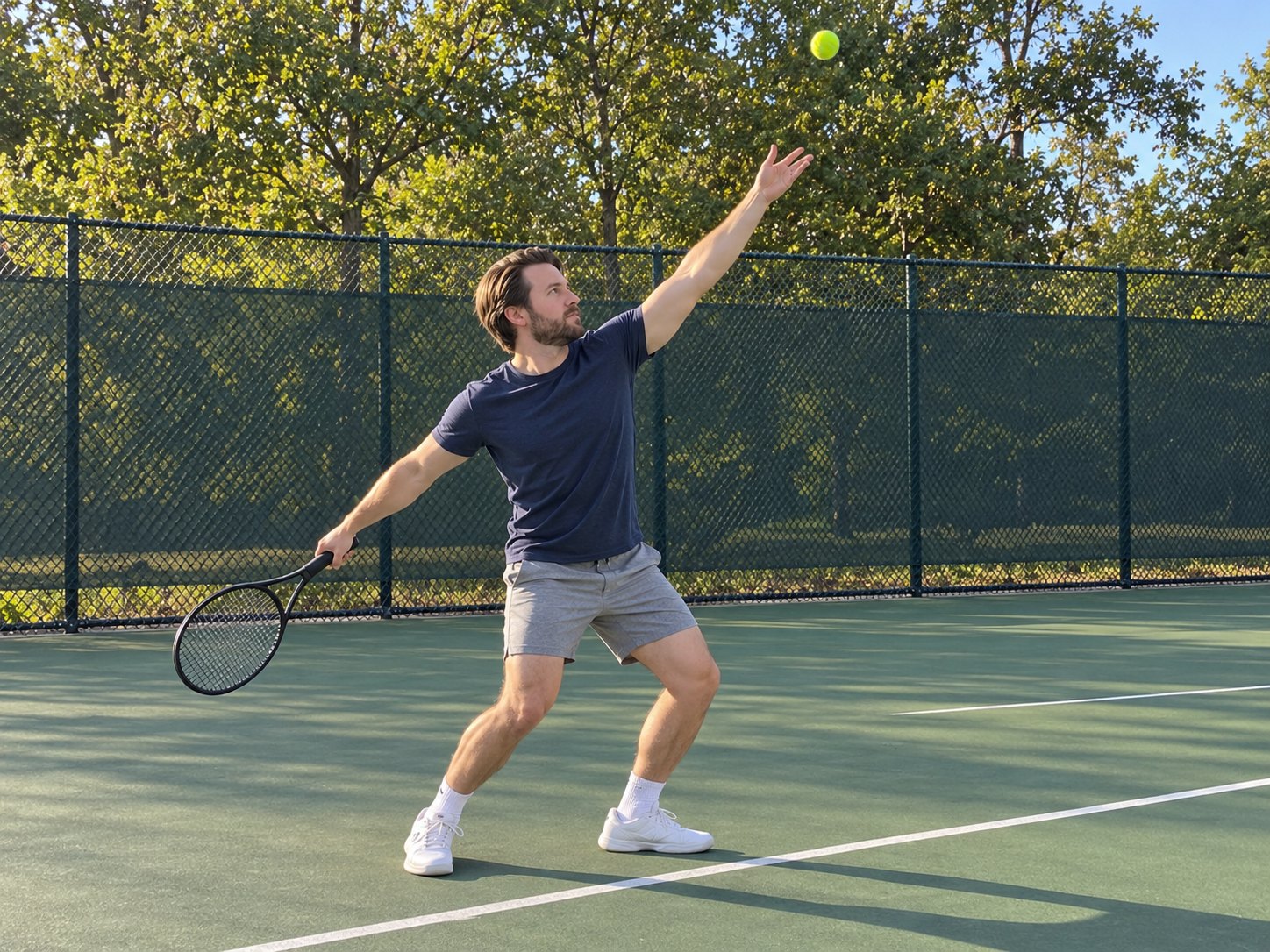
Ask a tennis coach what to do off the court for a faster serve and a shoulder that lasts the season, and you hear the same short list: a cord kit, a medicine ball, a pair of light clubs. We checked 20 of those tools and scored 11 on what the serve actually asks of your body. The $169 cord system scored 62 out of 100. A $75 wooden mace scored 85.

What a Serve Asks of Your Body
I play league tennis twice a week, and my off-court work was whatever the last coach handed me. One gave me a cord routine for the fence. Another had me throwing a medicine ball at a wall. A third swore by light wooden clubs. All three said it was for the serve and the shoulder.
They were all describing the same two jobs. Sports-medicine physician Ben Kibler estimated that the legs, hips and trunk produce roughly half of the energy in a serve, and motion capture of Olympic servers shows the upper body turning at about 870 degrees a second before the arm takes over. Then the shoulder has to carry the arm through a huge arc up and behind the head, and brake it after contact. Speed comes from the trunk. The shoulder has to survive it.
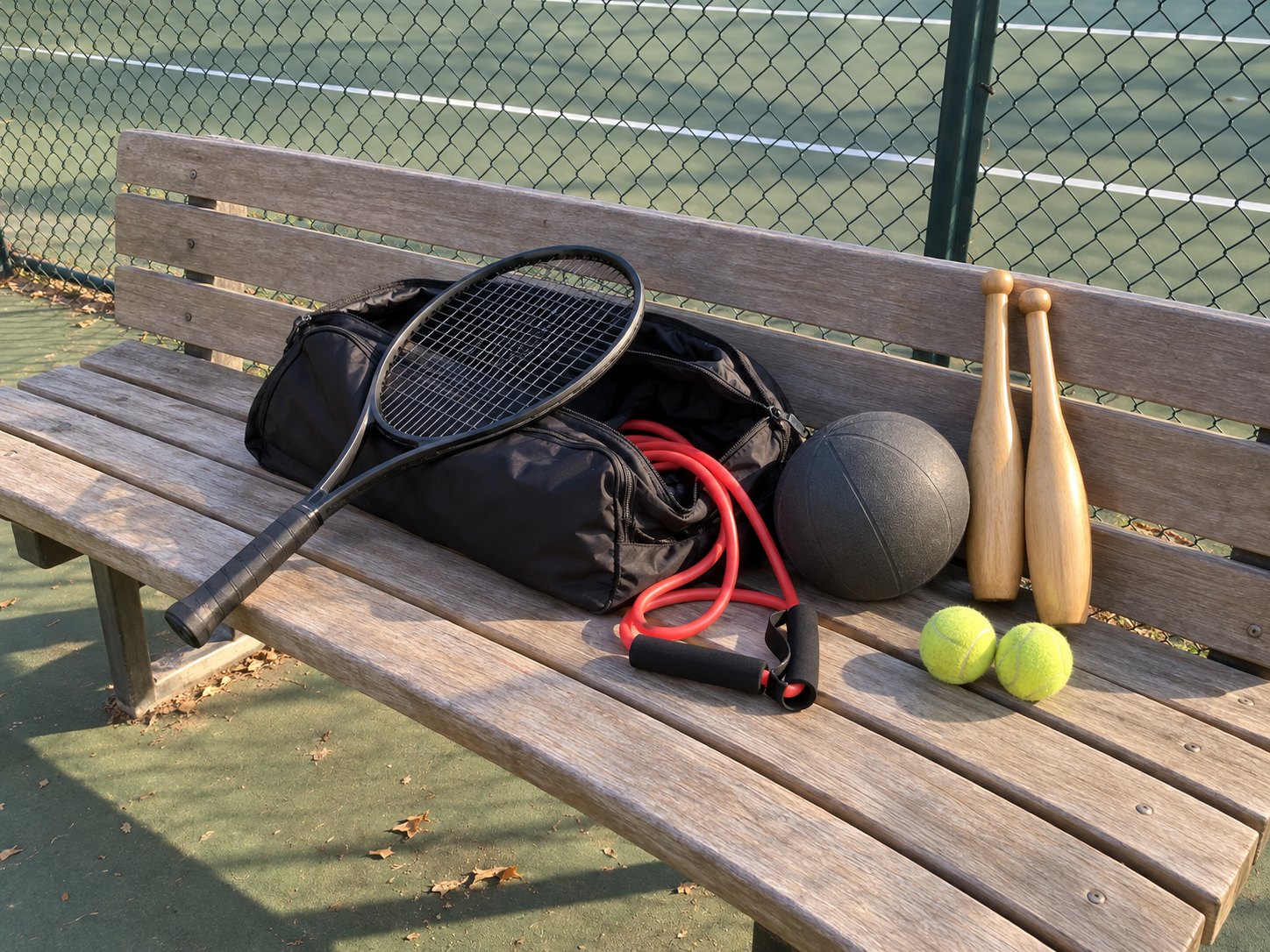
So I put every tool those coaches named on one floor and scored them on what a serve asks for. Price is one of the seven scores, because a tool you can load for years is a different purchase from one you outgrow in a month.
The seven scores, and what each is worth
Trunk rotation
A full turn of the hips and trunk against a load, like a throw or a chop, scores 20. A braced trunk holding against a swinging weight scores 12.
Overhead range
A weighted arc up and behind the head, the path the serve uses, scores 20. Overhead work that stops short of it scores 10.
The lever
Weight at the end of a handle at least 29 inches long, the longest racquet the rules allow, scores 15. 20 to 28 inches scores 10. Shorter, or a length the maker does not publish, scores 6. A weight in the hands scores 0.
Rotator cuff
Turning the arm against resistance with the elbow fixed at your side scores 10. Cuff work as part of a bigger swing or throw scores 5.
Starts light
10 at 3 lb or less, minus 1 for each pound above that, on the lightest version in stock. Bands and cords score 10, since you set the tension by where you stand. An unpublished weight scores 5.
Room to grow
Loading plates you already own scores 15. Three or more levels in the box scores 8, two scores 5, one fixed weight scores 3.
Price
10 at $50 or less, 8 up to $100, 6 up to $150, 4 up to $200, 2 above that.
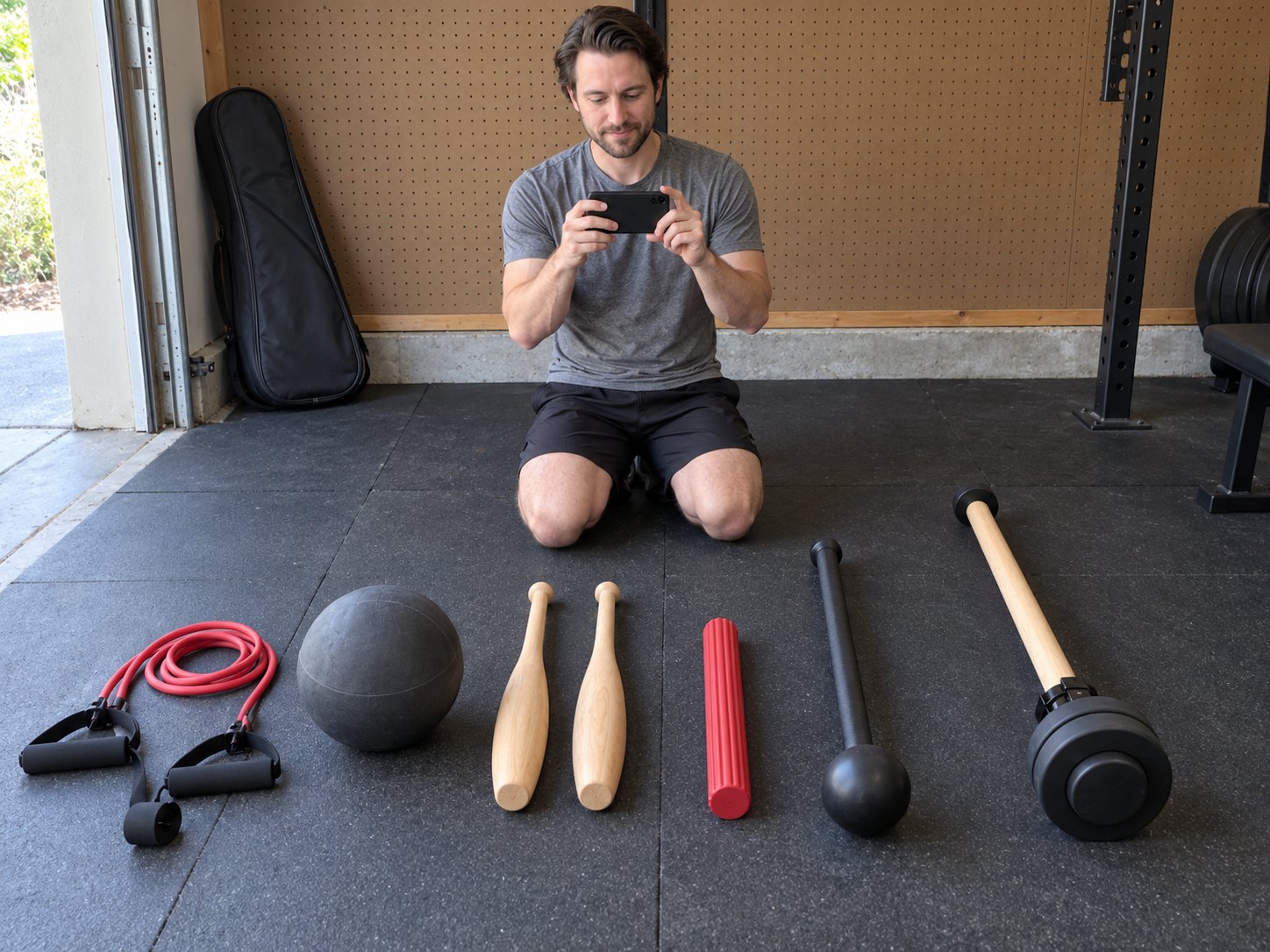
Every tool is scored on what it can do in a garage or at the club, priced on the exact version named in the tables. Published trials are not one of the scores, because almost none of these tools has been tested alone in tennis players. What the research does say is set out tool by tool below, and it favours the medicine ball. S is 75 points or more, A is 64 to 74, B is 60 to 63 and C is 50 to 59. Kensui’s wood PRO and steel MAX are scored as separate tools.
What the Scores Showed
The $169 Cord System Trains the Turn, Not the Arc
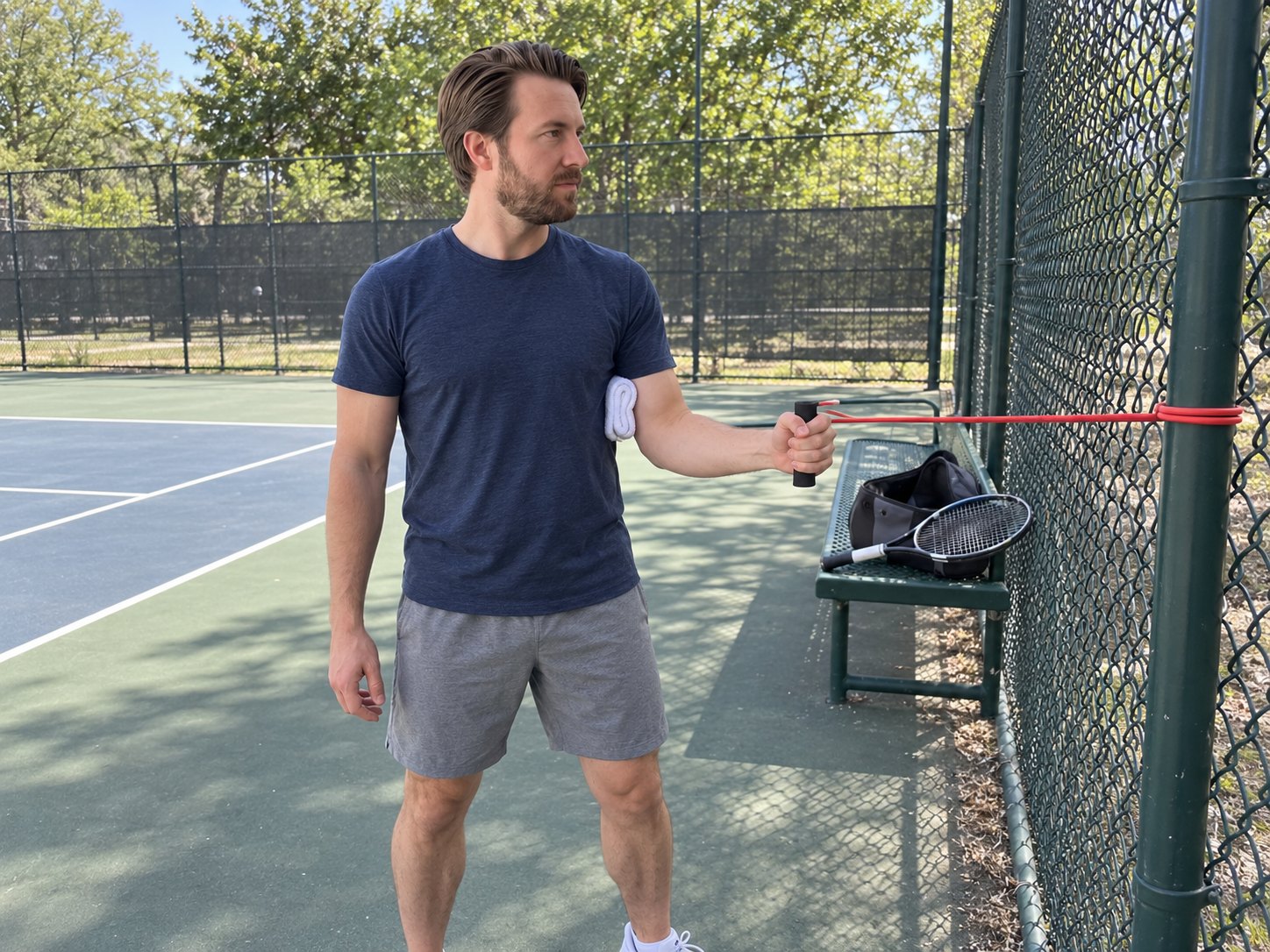
Crossover Symmetry sells the two cord kits a tennis player is most likely to be pointed at. The TORQ System is $169 for three bands, a handle, a rack strap and an online program, and its page names tennis among the sports it is built for. The Shoulder Package is $239, or $249 with wall anchors, for four cords and a 30-day shoulder program. TORQ’s own page calls it “a performance system, not a pain program” and sends anyone with shoulder pain to the Shoulder Package.
Both took full marks on rotation, the rotator cuff and starting light. A cord lets you chop hard across your body, and with the elbow pinned at your side it works the small muscles that turn the arm better than anything else here. They lose on everything a cord cannot carry: no weight on a lever, no load behind your head, a ceiling set by the bands in the box, and the price. TORQ scored 62 and the Shoulder Package 57. Free shipping only starts at $250, so a TORQ order pays shipping on top.
That is what the headline means by beat. On these seven scores the mace finished 23 points ahead of TORQ. It is not a better rotator cuff tool, and if a coach or a physio gave you cord work, keep doing it. In one small college trial, players who did four weeks of band and light dumbbell shoulder work served about 6% faster at peak, while the group that skipped it got slightly slower.
The Medicine Ball Has the Research, Not the Range
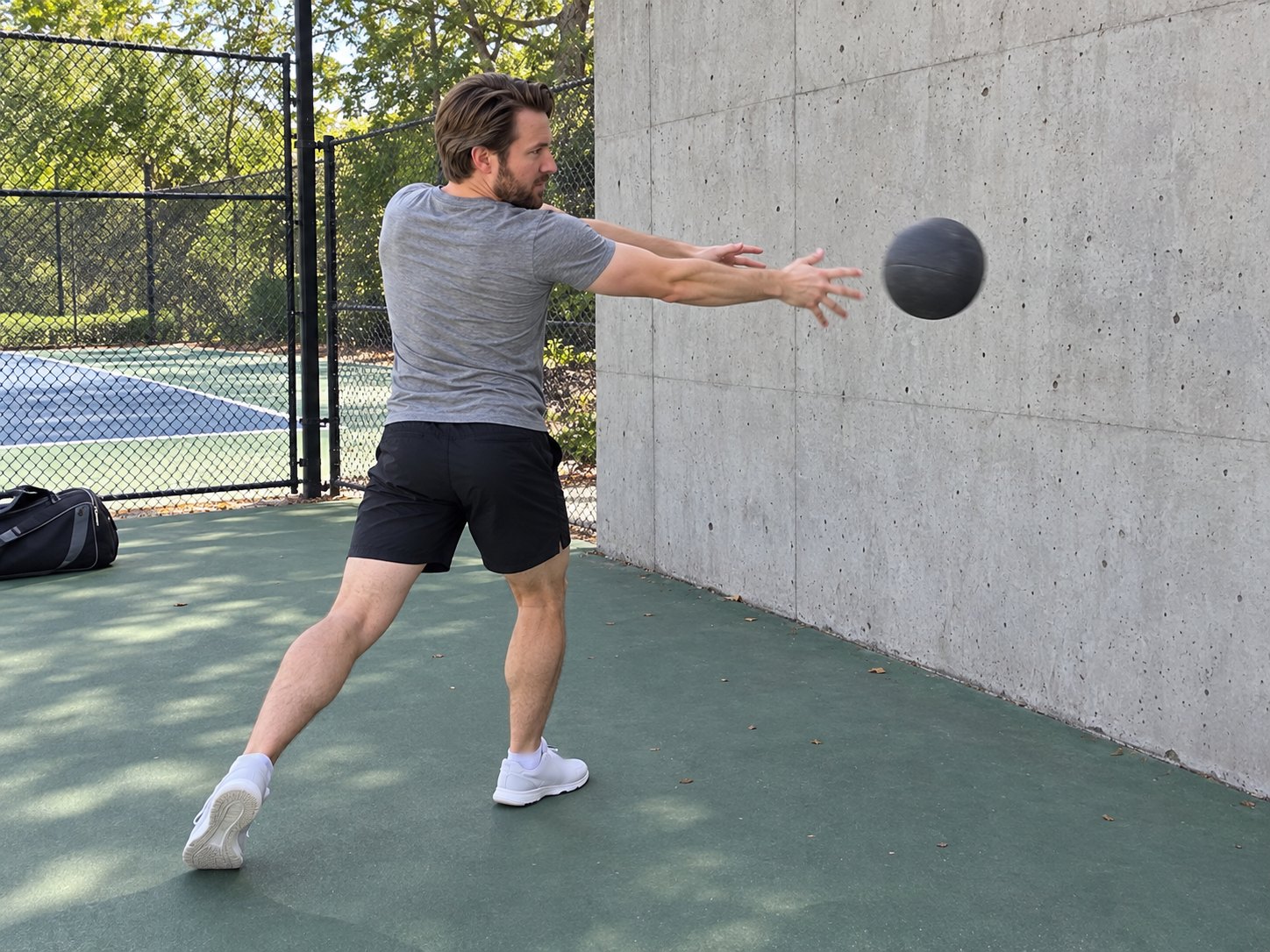
If you want the tool with the most tennis evidence behind it, this is the one. In a 2025 randomized trial of 47 junior players, eight weeks of medicine ball throws alone raised serve speed by 4.6 km/h with one session a week and 5.2 km/h with two, while the control group lost 0.8. In another, ranked boys of about 13 who added bands, core work and 2 kg ball throws for six weeks served about 7.6 km/h faster. Not every trial agrees. A 2017 Spanish study of a ball and band program found no significant change in serve speed.
REP’s Medicine Ball 2.0 is $59.99 in 4 lb and $64.99 in 6 lb, and its page names rotational throws. Dynamax’s 14 inch soft-shell ball is $100 for 4 lb. A ball took full marks for rotation and lost almost everywhere else. It is one weight, so every step up is another ball. It never goes behind your head with a load, and it has no lever. It scored 55.
A Racquet Is a Lever, So Train One
The rules of tennis cap a racquet at 29 inches long, and the weight that matters sits at the far end, in the head. Torque is weight times distance, so every inch the weight moves away from your hand adds to what your wrist, elbow and shoulder have to control. That is why Kensui’s own page warns that a loaded EZ-MACE feels much heavier than a fixed mace of the same weight.
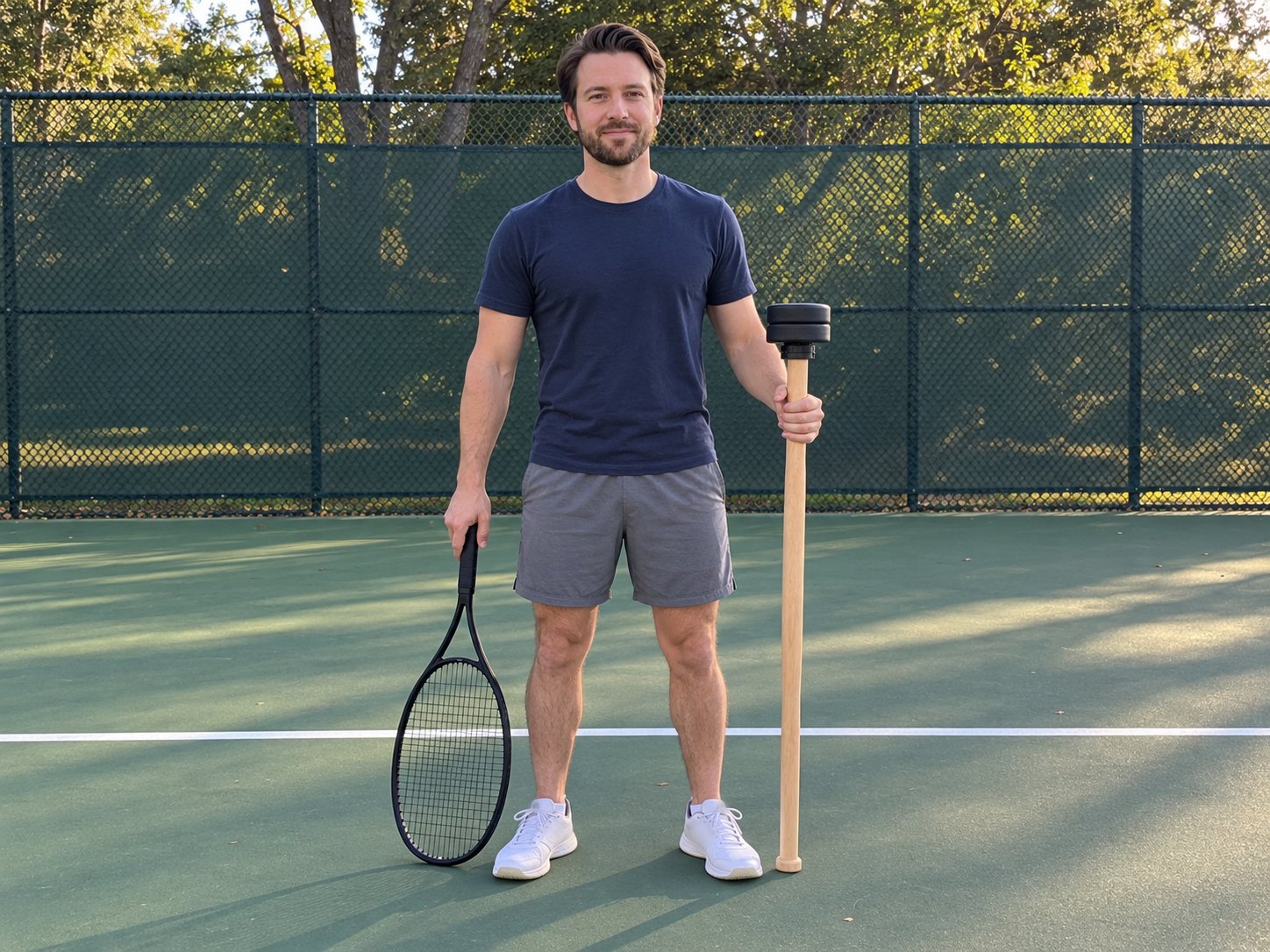
Only the maces and clubs here put their weight at the end of a handle. The EZ-MACE’s handle is 40 inches, 11 longer than the longest legal racquet. Maverick publishes no length for its steel mace, steel club or Indian clubs, and SpeedChain publishes none for its chain, so all four took the lowest lever mark for their type. The cords, the ball, the pulley and the landmine put the load in your hands and score nothing here.
Fixed Weights Start Heavy or Stay Light
Here is where each weighted tool starts: Maverick’s Indian clubs at 1 lb each, the EZ-MACE PRO at 2.0 lb, REP’s smallest ball at 4 lb, Maverick’s steel club at 5 lb, the EZ-MACE MAX at 5.0 or 6.5 lb and Maverick’s steel mace at 7 lb.
The catch with a fixed tool is the next step. Going from Maverick’s 7 lb steel mace to its 10 and 15 lb maces means buying all three, $175.97 in total. A 2 lb pair of Indian clubs is another $99. The EZ-MACE goes up a plate at a time with plates you already own, which is why both Kensui builds took full marks on room to grow. If you own no 2 inch plates, budget for a few small ones.
The Winner: EZ-MACE V2 PRO
S Tier · 85 / 100
EZ-MACE V2 PRO
$75 for the wood PRO · 2.0 lb empty, loads 2 inch Olympic plates
4.50 out of 5 from 418 reviews on kensui.com, a pool it shares with Kensui's club
- Full marks on the overhead arc and the lever, the two things only a long weighted handle can train
- 2.0 lb empty, so the first sessions can be the bare handle
- Gets harder a plate at a time with plates you already own, where a fixed tool means buying the next size
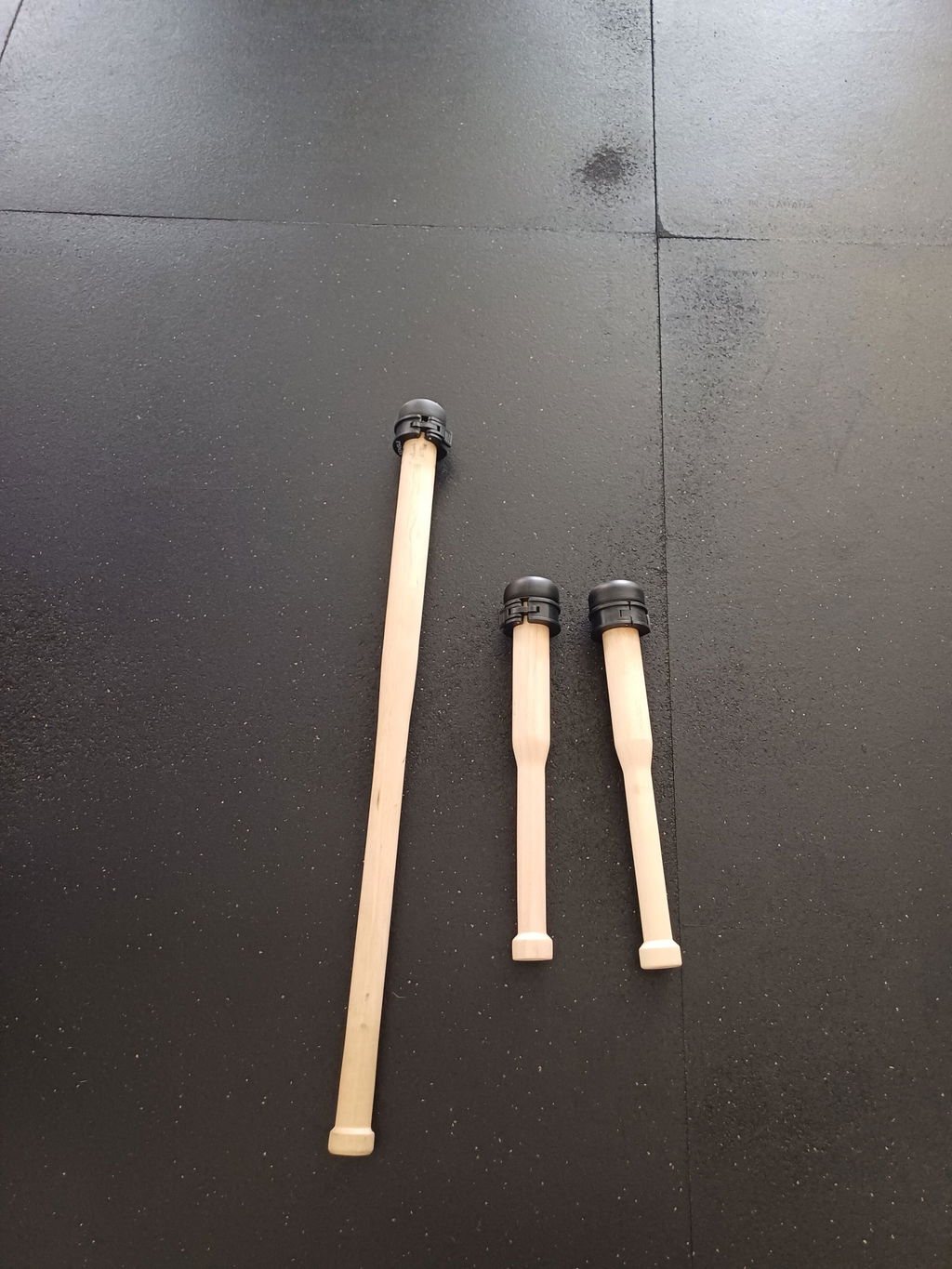
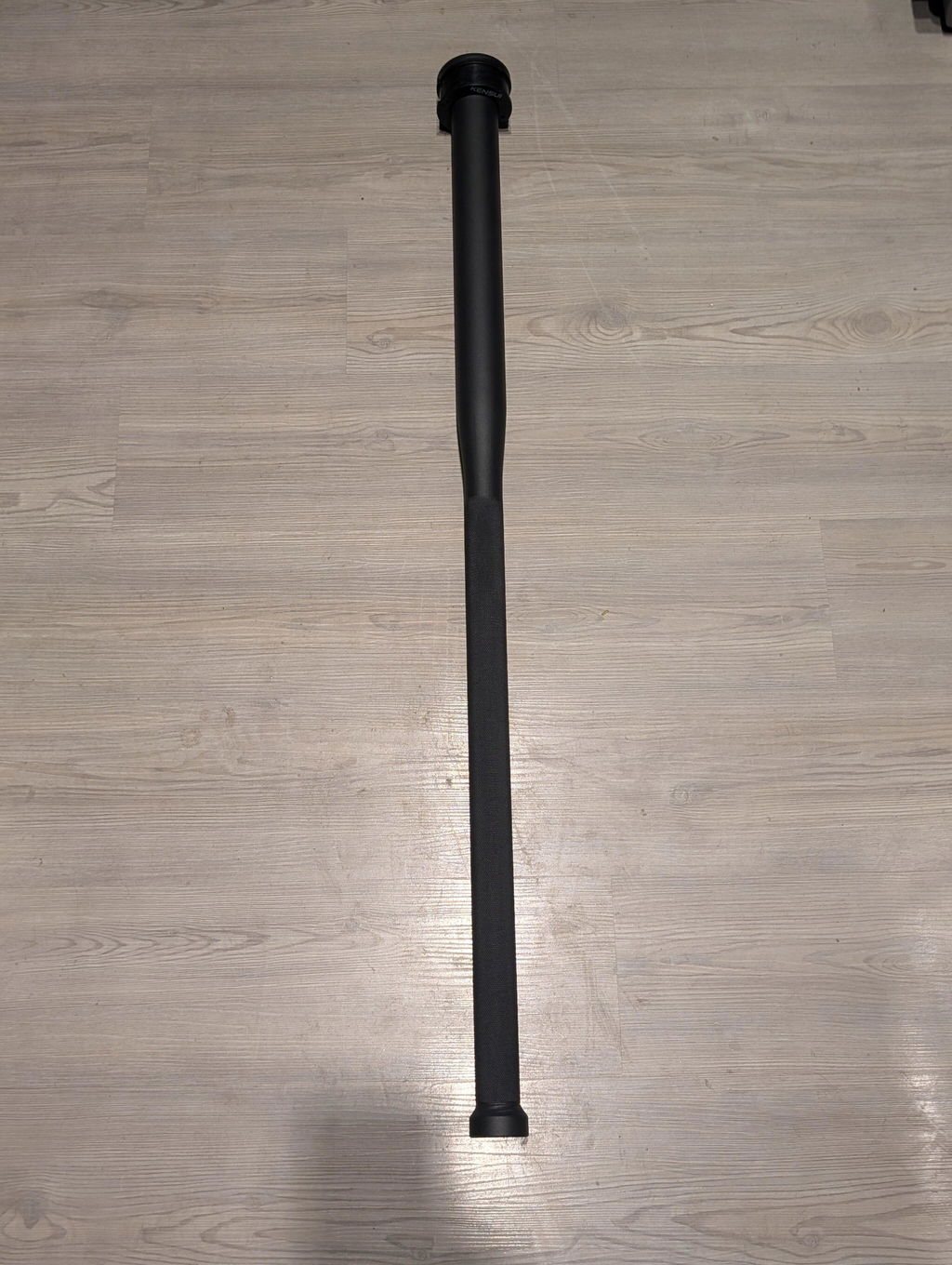
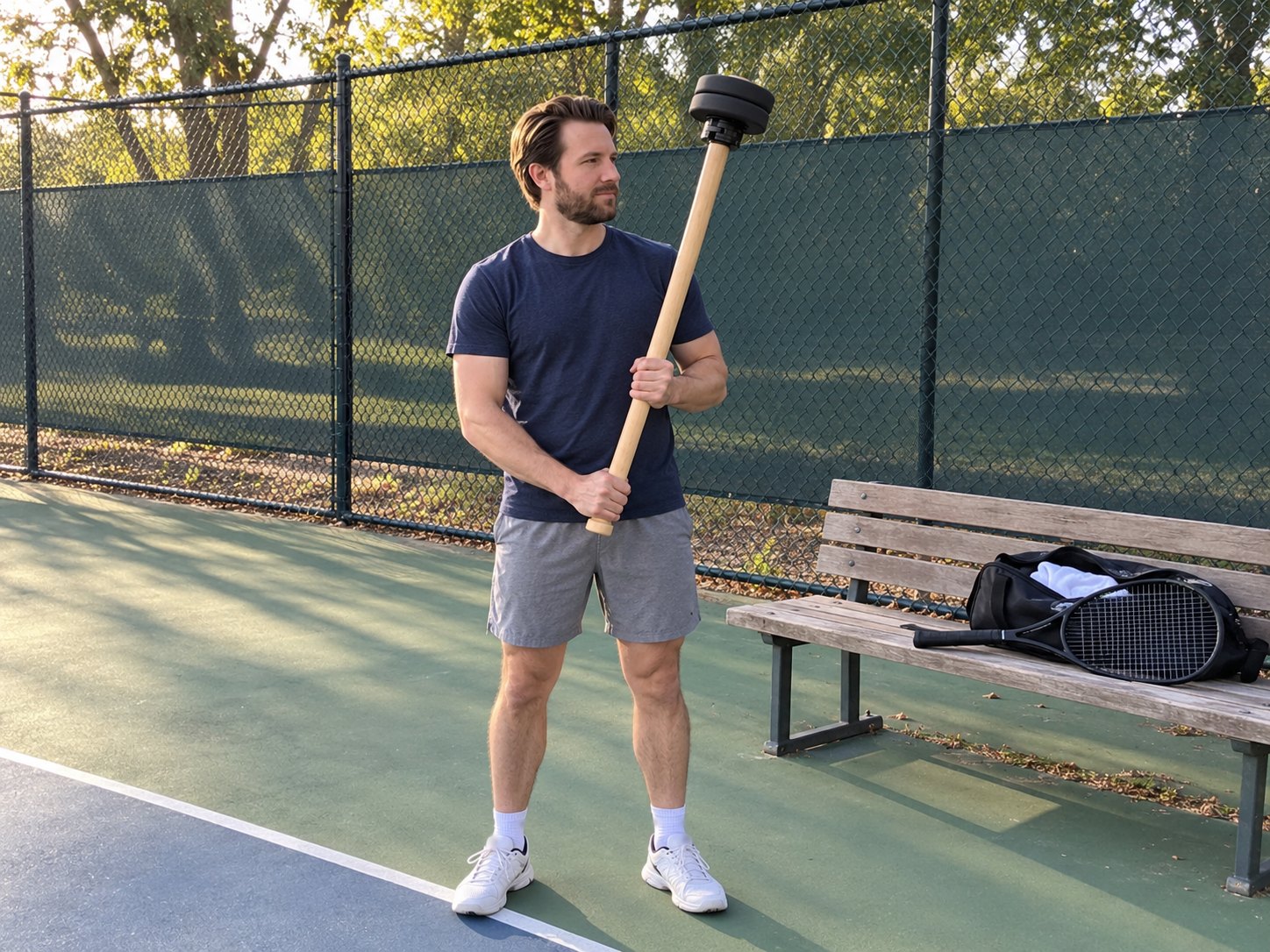
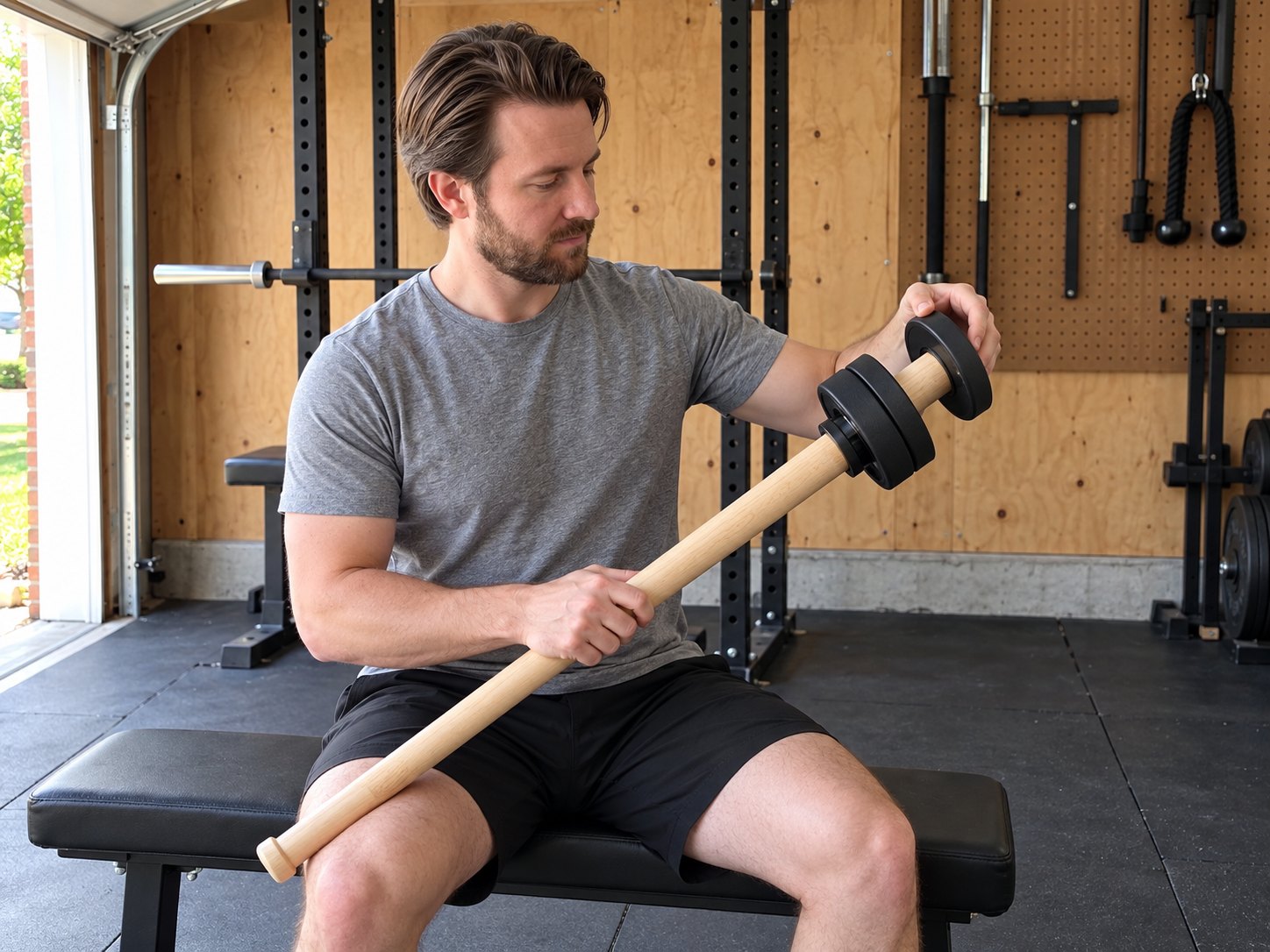
The EZ-MACE is a 40 inch handle with a loading sleeve and a lever collar at one end. Slide on the 2 inch Olympic plates you own, lock the collar, and it weighs whatever you loaded. The PRO is Malaysian rubber wood with a 40 mm grip, 2.0 lb before a plate goes on.
It won because it is the only tool here with full marks on the overhead arc, the lever, starting light and room to grow, the four things a long weighted handle is for. It dropped points on rotation, where a braced trunk is not a full turn, and on the cuff, which only works as part of the swing.
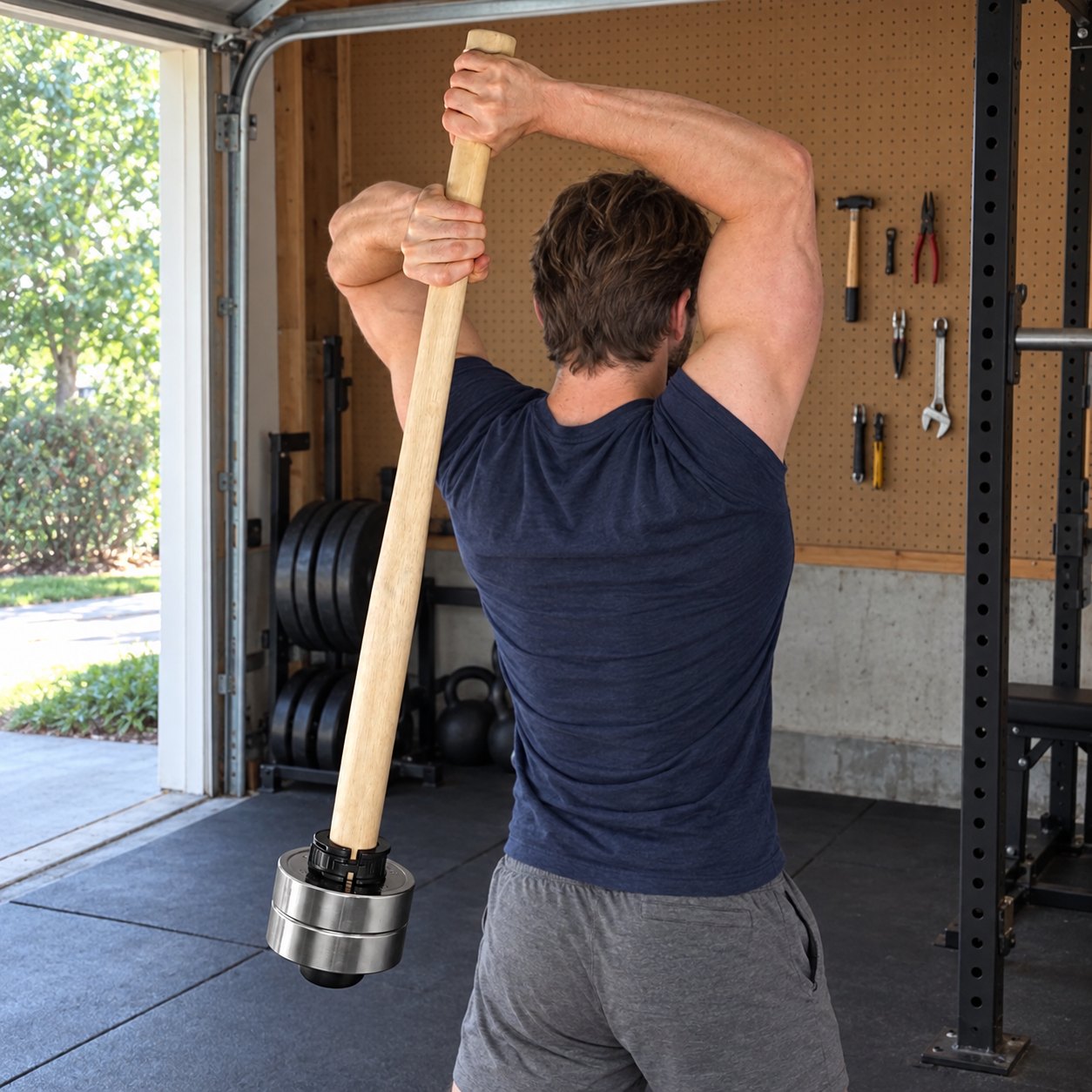
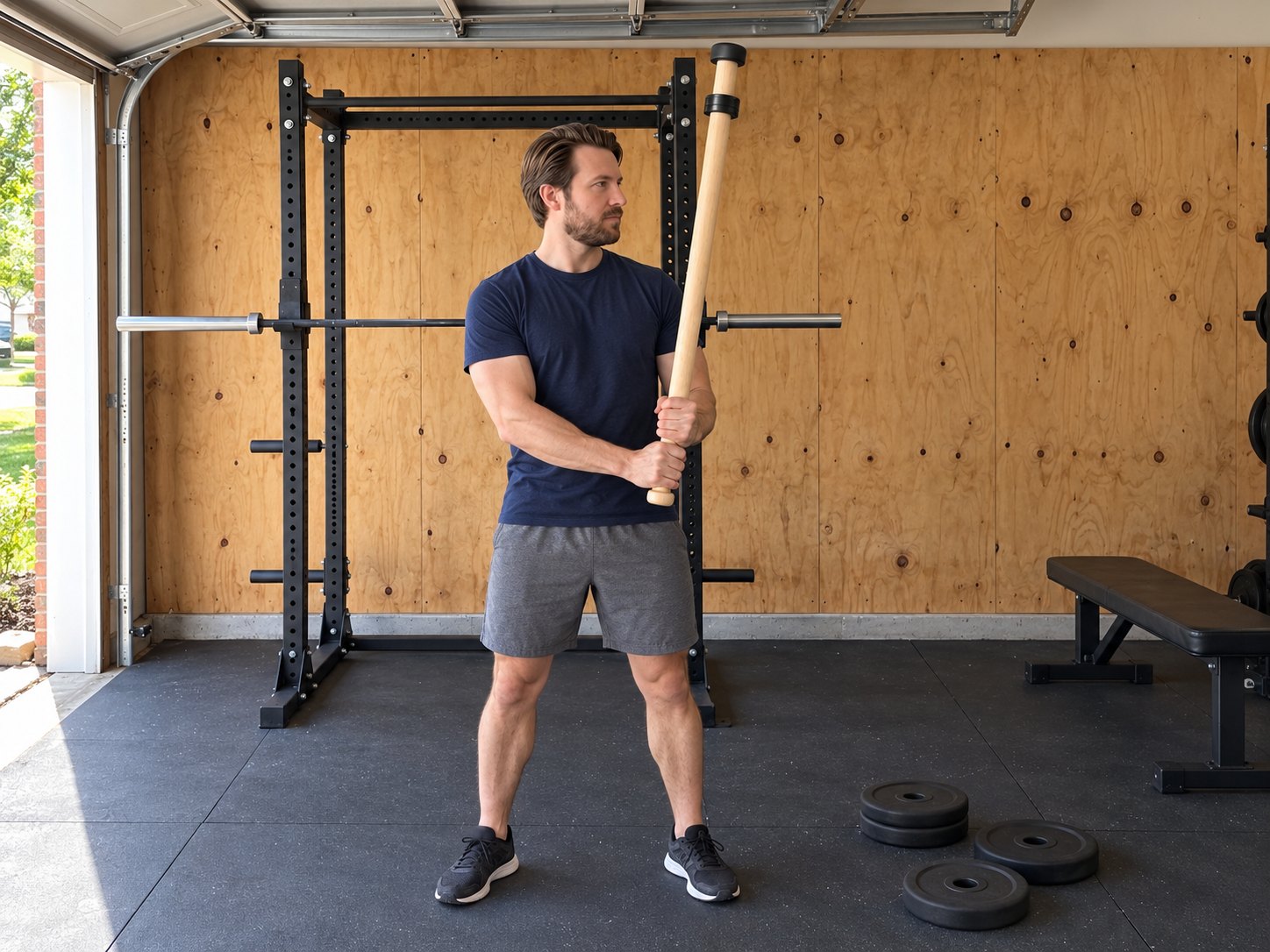
The overhead score is where it pulls away. A mace 360 swings the weight in a circle behind your head and back out in front, so the shoulder works through the up-and-back arc of the serve with the load pulling it further. The one controlled trial of mace training was not on tennis players. In 27 elite wrestlers, adding three 15-minute mace sessions a week for 12 weeks raised grip strength about 5% and shoulder rotation strength 3 to 8%, while the group that skipped the mace barely changed. Nobody measured a serve or a throw. Read it as a sign the shoulder work is real, not as proof of a faster serve.
The steel MAX is the second S entry, scored on its own. It costs $149, with a knurled 37.5 mm steel grip and 35 cm of sleeve, and it took 79. It gave back marks on price and starting weight: Kensui lists it at 5.0 lb empty in one place and 6.5 lb in another, and we scored the heavier figure. Buy it if you already swing something heavy.
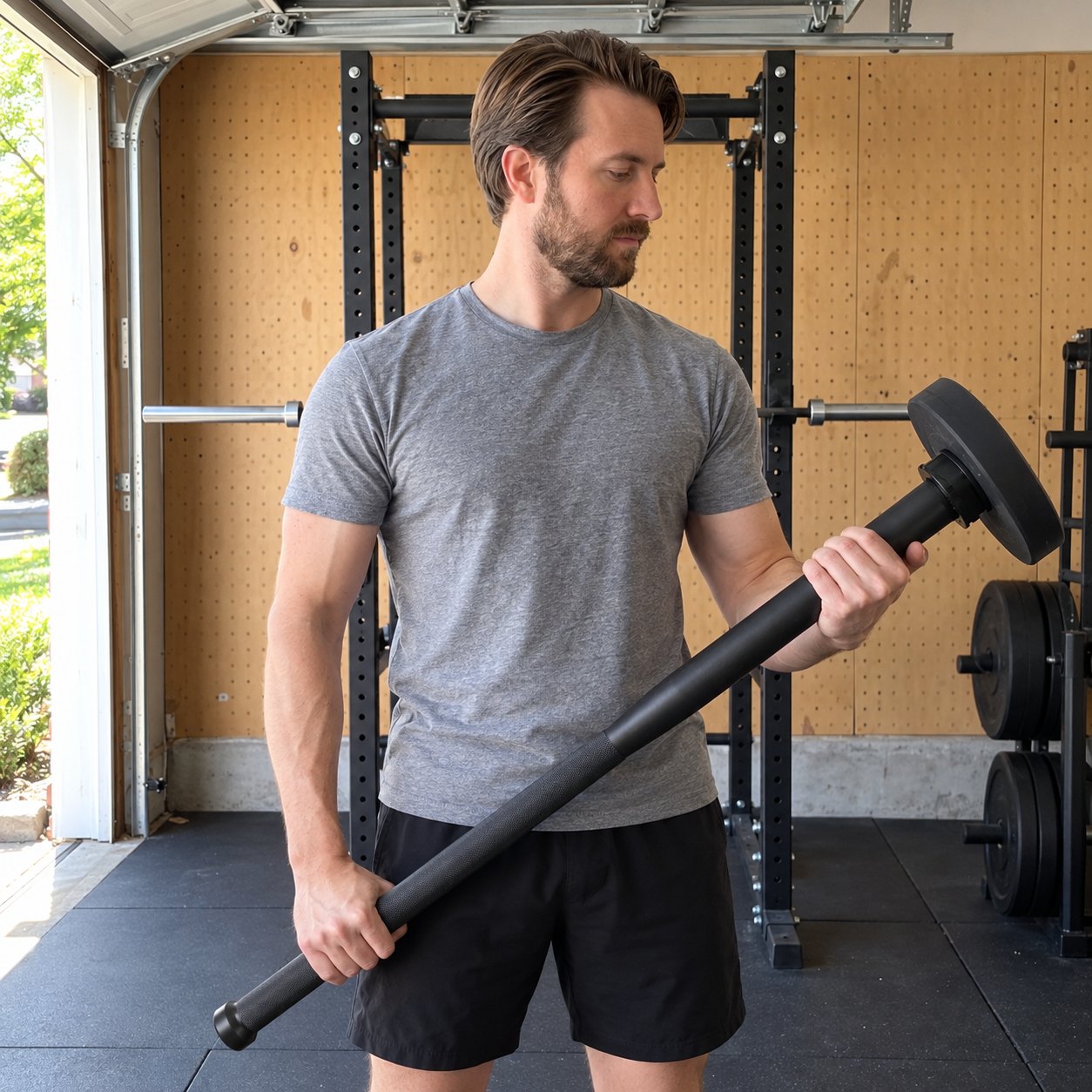
Now what it does not do. It does not isolate the rotator cuff the way a cord at your side does, and it is not the tool the serve-speed research tested. It needs plates, and the swing is a skill: your first sessions are about learning the path behind your head, not about load.
“Use it to warm up and loosen up my shoulders. Is a unique tool that works the shoulders in a way that is normally hard to work.”
George r., EZ-MACE V2, five stars
“These adjustamace’s are perfect for shoulder warmups. I can’t pass them in the gym without picking them up and using them.”
Shane A., EZ-MACE V2, five stars
“I mainly use it for 360s, 10-to-2s, and shoulder mobility work.”
Sergey D., EZ-MACE V2 MAX, five stars
$75 for the wood PRO · 100-day money-back guarantee
The Rest of the Field
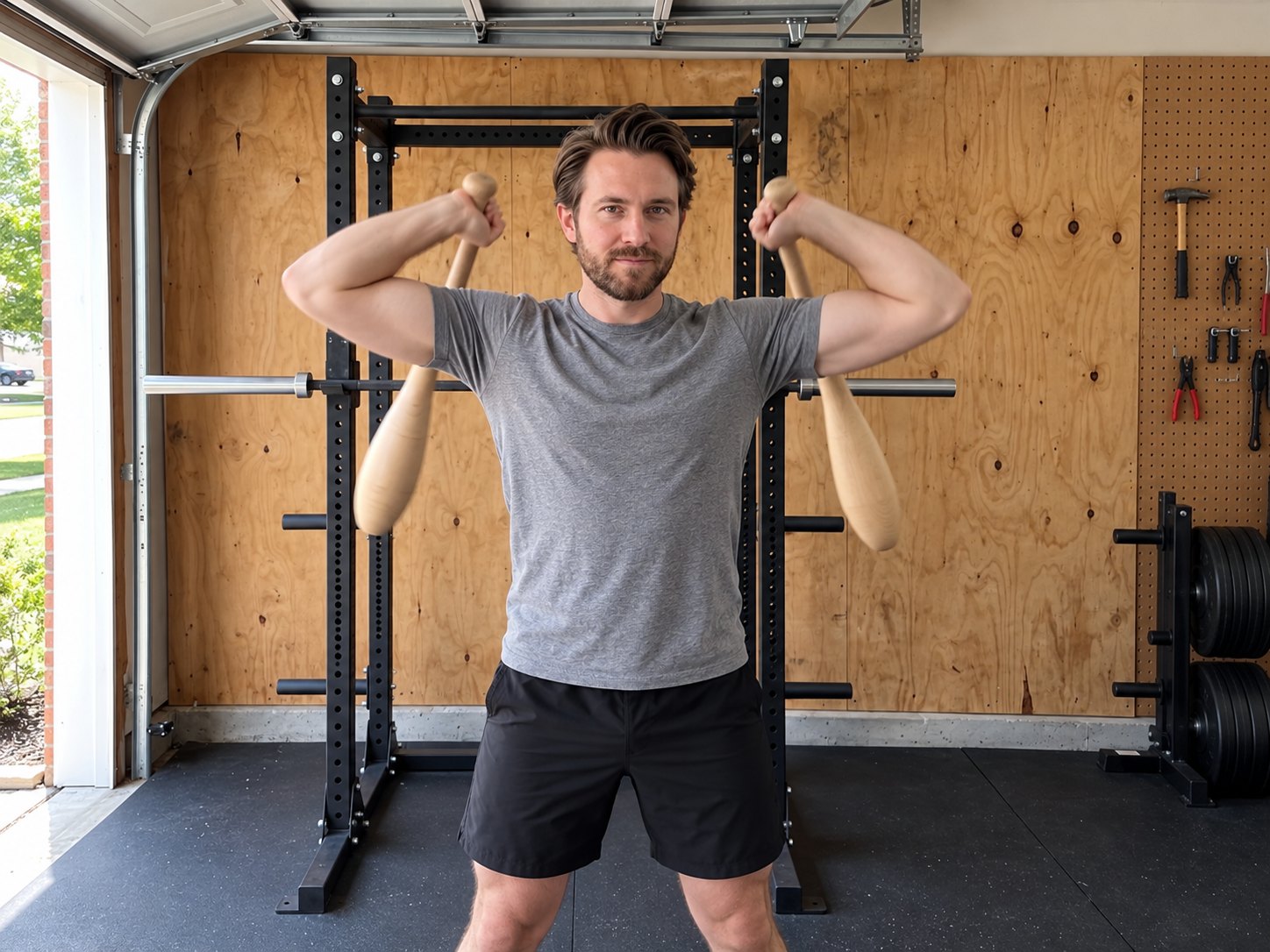
A Tier: Bells of Steel Pulley, Maverick Steel Club and Indian Clubs
The surprise of the scoring is the Bells of Steel Cable Pulley at $57.99. It clips to a rack or a pull-up bar and takes plates on a weight horn. It was the only tool with full marks on rotation, the rotator cuff and room to grow, and it scored 68. If you own a rack and plates, it is the best value here for the trunk and the cuff. It has no lever, nothing behind your head, and no published weight for the empty horn.
Maverick’s 5 lb steel club is the cheapest tool we scored at $29.99, and its 1 lb Indian clubs are the lightest start at $69 a pair. Both swing a real weight behind your head. Both are one weight, so each step up is another purchase. They tied on 64.
B Tier: SpeedChain, Maverick Steel Mace and Crossover TORQ
The SpeedChain Tennis trainer is the only tool here that loads the actual serve swing: a racquet-style handle on a chain whose links get bigger toward the end. It comes in four sizes from $159.95 to $199.95, each a separate purchase, and SpeedChain publishes no length or weight for it. It scored 63. Maverick’s 7 lb steel mace is the cheapest mace we scored at $39.99. A fixed weight and a 7 lb start held it to 62, level with Crossover’s TORQ.
C Tier: Crossover Shoulder Kit, REP Medicine Ball and REP Landmine
The Shoulder Package and the medicine ball are covered above. REP’s Free Standing Landmine at $99.99 is the only landmine we found that needs no rack, and it holds 500 lb of plates for heavy rotation. You start with the end of a barbell in your hands, though, and it does nothing for the rotator cuff. It scored 53.
Checked, Not Scored
Nine of the 20 tools we checked could not be scored.
- Discontinued (1): Onnit’s steel maces and clubs. Onnit still tops plenty of roundups, but its store now sells supplements only, and its help center says it has discontinued all fitness equipment.
- Price not readable on the maker’s site today (2): Jaeger Sports J-Bands, the classic thrower’s band, whose site refused every connection, and Rogue’s mace and club, whose store blocked our checks.
- Sold out in the light sizes (1): Ox and Plow’s 1 lb Indian clubs.
- Not a shoulder or trunk tool (2): TheraBand’s FlexBar, which trains the forearm and wrist, and Oncourt Offcourt’s Serve Doctor, a $49.95 pole for practising the contact point with no load at all.
- Near-copies of a scored tool (3): Dynamax’s 14 inch medicine ball ($100 for 4 lb), Oates Specialties’ TAP Bell Club ($32.95 for 1.5 kg) and Titan’s steel club, whose 5 lb size is sold out and whose lightest in stock is 10 lb for $74.97.
Every Score

| # | Tool | Price | Rot | Over | Lever | Cuff | Start | Grow | Price | Total | Tier |
|---|---|---|---|---|---|---|---|---|---|---|---|
| 1 | EZ-MACE V2 PRO | $75 | 12 | 20 | 15 | 5 | 10 | 15 | 8 | 85 | S |
| 2 | EZ-MACE V2 MAX | $149 | 12 | 20 | 15 | 5 | 6 | 15 | 6 | 79 | S |
| 3 | Bells of Steel Pulley | $57.99 | 20 | 10 | 0 | 10 | 5 | 15 | 8 | 68 | A |
| 4 | Maverick Steel Club | $29.99 | 12 | 20 | 6 | 5 | 8 | 3 | 10 | 64 | A |
| 5 | Maverick Indian Clubs | $69 | 12 | 20 | 6 | 5 | 10 | 3 | 8 | 64 | A |
| 6 | SpeedChain Tennis | $159.95 | 20 | 20 | 6 | 5 | 5 | 3 | 4 | 63 | B |
| 7 | Maverick Steel Mace | $39.99 | 12 | 20 | 6 | 5 | 6 | 3 | 10 | 62 | B |
| 8 | Crossover TORQ | $169 | 20 | 10 | 0 | 10 | 10 | 8 | 4 | 62 | B |
| 9 | Crossover Shoulder Kit | $239 | 20 | 10 | 0 | 10 | 10 | 5 | 2 | 57 | C |
| 10 | REP Medicine Ball | $59.99 | 20 | 10 | 0 | 5 | 9 | 3 | 8 | 55 | C |
| 11 | REP Landmine | $99.99 | 20 | 10 | 0 | 0 | 0 | 15 | 8 | 53 | C |
Columns: Rot is trunk rotation (20), Over is overhead range (20), Lever (15), Cuff is rotator cuff (10), Start is starts light (10), Grow is room to grow (15), Price (10). Scroll sideways for every column. Prices from each maker on 2 October 2026.
Side by Side
| Tool | EZ-MACE V2 PRO | EZ-MACE V2 MAX | Crossover TORQ | Bells of Steel Pulley | REP Medicine Ball |
|---|---|---|---|---|---|
| Price | $75 + plates | $149 + plates | $169 + shipping | $57.99 + rack and plates | $59.99 for 4 lb |
| Starts at | 2.0 lb | 5.0 or 6.5 lb | Band tension | Not published | 4 lb |
| Handle | 40 in, weight at the end | 40 in, weight at the end | On the bands | On the cable | None |
| Arc behind the head | Yes, loaded | Yes, loaded | No | No | No |
| Rotator cuff, elbow fixed | As part of the swing | As part of the swing | Yes | Yes | As part of the throw |
| Gets harder by | Adding plates | Adding plates | Three bands | Adding plates | Buying a heavier ball |
| Score | 85 / 100 | 79 / 100 | 62 / 100 | 68 / 100 | 55 / 100 |
| Learn More | Learn More |
Which One Fits You
One Tool for the Serve and the Shoulder
The EZ-MACE V2 PRO at $75. It is the only tool here that trains the arc behind your head and the lever, and it grows with your plates.
You Want the Tennis Research
A medicine ball. REP’s is $59.99 for 4 lb, and throws have the best serve-speed trials of anything on this list.
You Own a Rack and Plates
The Bells of Steel Cable Pulley at $57.99. It covers rotation and the rotator cuff, the two things a mace does least.
You Have a Cord Routine Already
Keep it. Cords are the best rotator cuff tool here, and a mace covers the parts they cannot reach.
What Weight Should I Start With?
The bare handle. Spend a week learning the 360 and the 10-to-2 swing with the PRO empty at 2.0 lb, then add one small plate. Kensui’s own page warns that a loaded EZ-MACE feels much heavier than a fixed mace of the same weight. Start lighter than you think.
Is There Research on Maces for Tennis?
Not on tennis players. The one controlled mace trial was on wrestlers and measured grip and shoulder strength, not a serve. For serve speed, the medicine ball has the best trials on this list.
Do I Need to Own Plates?
Yes. The EZ-MACE takes any plate with a 2 inch Olympic hole and will not fit 1 inch standard plates. Small plates, 2.5 and 5 lb, keep the head narrow and the swing clean.
PRO or MAX?
For a tennis player starting out, the PRO at $75. The $149 MAX is for people who already swing heavy and want a knurled steel grip.
Does Anyone Pay for This Ranking?
Strength Gear Guide earns a commission when a reader buys through a link on this page. It does not change a score, and every mark behind every score is in the tables above.
Sources: each maker’s own store, read on 2 October 2026 (kensui.com, crossoversymmetry.com, bellsofsteel.us, maverickmace.com, oatesspecialties.com, repfitness.com, medicineballs.com, titan.fitness, performancehealth.com, oncourtoffcourt.com, oxandplow.com, onnit.com). Racquet length: ITF Rules of Tennis, Appendix II. Serve research: Wang and Xu (2025), Fernandez-Fernandez et al. (2013), Treiber et al. (1998), Terraza-Rebollo et al. (2017). Kinetic chain: Kibler’s estimate as cited by Kovacs and Ellenbecker (2011), and Fleisig et al. (2003). Mace trial: Akaras et al. (2026). Product names belong to their makers.
The Lever Is What the Cord Kit Cannot Give You
Eleven tools, seven scores. The cords are still the best way to work the rotator cuff on its own, and the medicine ball still has the most tennis research behind it. Only one tool trained the arc behind your head and the lever, started at 2 lb and kept getting harder with plates you already own, and it costs $75. Kensui gives a full refund inside 100 days, and orders ship within 24 hours.
$75 for the wood PRO · 100-day money-back guarantee · ships in 24 hours
