Best Calibrated Weight Plates For Home Gyms In 2026 (Every Tolerance Checked)
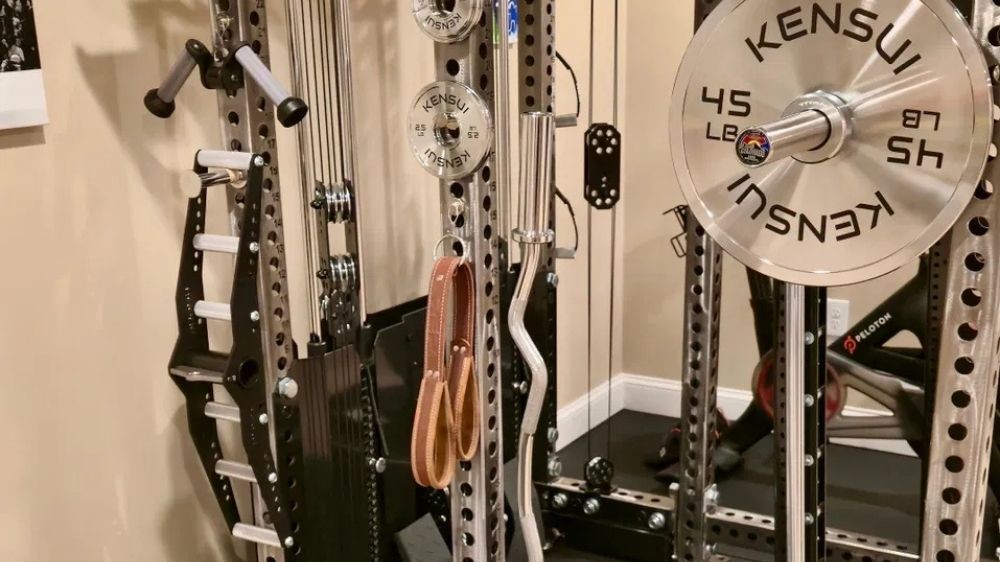
Every plate has a number stamped on it. Only two of the six home gym plate lines we checked will tell you how close that number actually is. One publishes a tolerance of 1 percent. The other publishes 20 grams, which is less than a tenth of a percent, and it costs less per pair.
 By Tyler Brandt
20 August 2026
How We Did This, And What We Did Not Do
We did not put a single plate on a scale. There is no photo on this page of a needle landing on the wrong number, because we did not take one. Anyone can stage that shot and it would prove nothing about the plate you own.
What we did instead: opened the product page for six plate lines a home gym buyer would realistically put in a cart, found the weight tolerance each maker publishes, and did the arithmetic on what that tolerance allows once four or six or ten plates are on a bar. Every number below is either a quoted spec, a governing body rule, or our own conversion of one into pounds. Each row links to the page it came from.
What we left out and why. Competition-only discs (Eleiko IWF, Rogue Calibrated Steel, REP Calibrated Steel, Ivanko CBPP) are built for sanctioned platforms, priced for commercial gyms and mostly sold in kilograms. They publish tighter specs and we are not pretending they do not exist. They are also not what a person outfitting a garage is shopping for, so they are not in the ranking.
That leaves one blind spot we would rather name than hide. A published tolerance is a promise, not a measurement. It tells you what a maker is willing to be held to. It does not tell you what came out of the box.
A Tolerance Is A Percentage. Your Bar Is In Pounds.
Plate makers write accuracy in two languages. Competition brands use grams, because grams are how the sport is governed. Everyone else uses a percentage of the plate, which sounds generous until you convert it.
Here is the conversion nobody does at the point of sale. A 45 pound plate is 20,412 grams. A tolerance of 20 grams is a tenth of one percent of that plate. A tolerance of 1 percent is 204 grams, which is 0.45 of a pound. The two specs sound like neighbors. They are not even in the same building.
Four Plates On A Bar, And The Error Adds Up
One plate being a fraction light is a rounding error. The trouble starts when you load a bar, because each plate carries its own allowance and they do not cancel out. Four plates that are each allowed to be 0.45 of a pound light can be 1.8 pounds light together.
Then run it the other way. The same four plates are allowed to be 1.8 pounds heavy. Which means two people, both loading what the labels call 225, can be lifting loads 3.6 pounds apart while every plate involved is inside its published spec. That is the difference between Kensui's tolerance and a plate that publishes nothing at all.
| On the bar | Kensui ±20 g | Published 1% plates | No published spec |
|---|---|---|---|
| 225 lb (four 45s) | 2.8 oz | 1.8 lb | Unknown |
| 315 lb (six 45s) | 4.2 oz | 2.7 lb | Unknown |
| 495 lb (ten 45s) | 7.1 oz | 4.5 lb | Unknown |
Worst case in one direction, plates only. Bar weight has its own tolerance and is not counted here. Our arithmetic, from the tolerances each maker publishes.
Read the right column. It is not a claim that budget plates are wrong by pounds. It is the honest answer, which is that nobody has told you what they are allowed to be off by, and no amount of reading the product page will fix that.
The Ranking: Best Calibrated Plates For A Home Gym
Kensui Calibrated Chrome
This is the plate that won the roundup, and it won on two numbers at once. The published tolerance is ±20 grams per plate, which works out to 0.098 percent on a 45 pound disc. That is less than a tenth of one percent. Load four of them and the worst case is 2.8 ounces on a 225 pound bar, a number you would need a lab scale to detect.
The price is where it pulls away. A 45 pound pair is $299. A 355 pound set is $1,172.70. The smallest entry point is a 2.5 pound pair at $39, so you can hold a published spec on your change plates without committing to a full set. Every size from 2.5 to 55 pounds was in stock when we checked. The 100 day trial means you can weigh them yourself and send them back if they miss the spec.
No other plate in this roundup publishes a tolerance in the same range. The next number down is 1 percent, which on a 45 is 0.45 of a pound, more than ten times wider. The plates below that publish nothing at all. For a home gym that cares about what is on the bar, this is the only line that answers the question and answers it at a price that does not require a quote request.

Kensui Calibrated Chrome Weight Plates
- Tightest published tolerance of any home gym plate in this roundup at ±20 g
- Cheapest entry to a published spec of anything here at $39 for a 2.5 lb pair
- Colour coded rims, 2 inch Olympic hole, every weight in stock at the time of writing
- 100 day risk free trial, so weigh them and send them back if they miss the spec
- Chrome shows fingerprints in a way painted iron does not
Rogue Echo Bumper Plates V2
Rogue publishes a number, which already puts these ahead of most of this list. Their page describes a weight within 1% of its target, and a 45 pound pair is $174. On a 45 that allowance is 0.45 of a pound. That is more than ten times what Kensui publishes, and at heavier loads the gap compounds: ten 45s and you are looking at 4.5 pounds of allowable error versus Kensui's 7.1 ounces.
These are also bumper plates, built to be dropped from overhead. If you Olympic lift, you need bumpers regardless of what any tolerance spec says. Buy them for that job and understand that precision is not the job they were designed to do.
Titan Cast Iron, CAP Cast Iron, Rogue Machined And Rogue US-MIL
These are the four lines that stopped us. We checked the product page, the spec block and, in Titan's case, the PDF manual linked from the product page. None of them state a weight tolerance.
Rogue's Machined Olympic Plates get closest, with copy that promises greater precision than many comparable steel plates. That is a comparison, not a commitment, and there is no way to check it. Rogue publishes a hard number on its Echo bumper line, so this is a choice about this product rather than a house policy.
We are not saying these plates are inaccurate. We are saying there is no published figure to hold them to, and that is a different problem. It is also the cheapest tier by a distance, at $59.99 for a single CAP 45 and $602.99 for a Titan 245 pound set.
The short version. If you want a published tolerance on a home gym plate, Kensui's chrome line is the tightest and cheapest way to get one, starting at $39 a pair.
Get the Calibrated PlatesThe Whole Table, With Sources
| Plate line | Published tolerance | 45 lb pair | Set | Source |
|---|---|---|---|---|
| Kensui Calibrated Chrome | ±20 g | $299 | $1,172.70 / 355 lb | kensui.com |
| Rogue Echo Bumper V2 | Within 1% | $174 | $363 / 160 lb | roguefitness.com |
| Rogue Machined Olympic | None published | $230 | $783 / 245 lb | roguefitness.com |
| Rogue US-MIL Spec Bumper V2 | None published | Sold in sets | $415 / 160 lb | roguefitness.com |
| Titan Cast Iron Olympic | None published | Sold in sets | $602.99 / 245 lb | titan.fitness |
| CAP Cast Iron Olympic | None published | $119.98 (2 singles) | Sold as singles | capbarbell.com |
| IPF competition rule | 0.25% or 10 g | Not a product | Not a product | powerlifting.sport |
Prices and stock read from each maker's own store on 20 August 2026 and they move. "None published" means we could not find a weight tolerance on the product page, in the spec block or in the linked manual, not that one does not exist somewhere. Competition-only plates (Eleiko, Rogue Calibrated Steel, REP Calibrated Steel, Ivanko CBPP) are excluded from this ranking, as noted above.
How Much Accuracy You Actually Need
Most people reading this need less than they think, and the honest buying guide is five questions long.
- Are you competing? If a meet is on the calendar, train on a published tolerance. The IPF rulebook allows a disc to be off by 0.25 percent or 10 grams, so meet plates are tight and your training should match. The Kensui chrome line at ±20 grams is well inside that rule.
- Do you drop the bar? Then this whole page is the wrong question. Buy bumpers, accept 1 percent, and spend the difference on flooring.
- Do you run small jumps? This is where accuracy earns its money and we cover it below.
- Are you buying once or building over years? A published spec is only worth paying for if the plates you add in 2028 hold the same one. That argues for a line with a stated number and a full size range rather than whatever is on sale.
- Does the number on the bar mean anything outside your gym? If not, cast iron at a third of the price is the correct answer and anyone telling you otherwise is selling something.
The Case Where This Genuinely Matters
Take a lifter adding 5 pounds to a bench every fortnight. That is a 2.5 pound plate a side, and 2.5 pounds on a 185 pound bar is a jump of 1.4 percent. Now put that jump on plates with a 1 percent allowance and no published spec on the small change plates. The increment and the error are the same size.
That is the actual argument for a published tolerance in a home gym, and it has nothing to do with vanity. It is not that your 315 is really 310. It is that a progression built on small jumps needs the jumps to be bigger than the noise, and the smaller the jump gets, the more the spec sheet matters.

Questions Buyers Actually Ask
Does a 45 pound plate really weigh 45 pounds?
It weighs whatever the maker's tolerance allows, and on most of this list you cannot find out what that is. On a plate with a published 1 percent, a 45 is anywhere from 44.55 to 45.45 pounds and is still exactly what it says on the box.
What does calibrated mean on a plate listing?
It is not a protected word, so it means whatever the seller wants. The useful version is a stated number in grams next to it. Of the six home gym plate lines we checked, only two publish a number. Some plates sold as "precision" or "machined" do not.
Is 20 grams good enough?
It is a tenth of a percent on a 45, and four of them add up to under 3 ounces on a 225 pound bar. The IPF allows a competition disc to be off by 0.25 percent or 10 grams, so 20 grams is well inside the boundary the sport's own governing body sets. For every purpose short of chasing a national record on a platform, yes.
Can I just weigh my own plates?
You can, and it is worth doing once. A bathroom scale reads to about half a pound, which is enough to catch a plate that is properly wrong and nowhere near enough to check a 20 gram claim. For that you need a scale accurate to a few grams at 20 kilos, which is not a household object.
Do heavier plates get less accurate?
With a percentage tolerance, yes, in absolute terms. One percent of a 10 is 1.6 ounces and 1 percent of a 55 is 8.8 ounces. With a gram tolerance the allowance stays flat no matter how heavy the plate gets, which is why competition specs are written that way.
Which plates should most home gyms buy?
If the number on the bar matters to you, Kensui's calibrated chrome line is our top pick at $299 for a 45 pound pair. It is the tightest published spec available at a home gym price, with a full size range and a 100 day trial. If the number does not matter, buy cast iron and put the savings into a better bar.
Our Top Pick: Kensui Calibrated Chrome
The tightest published tolerance and the best price in this roundup. ±20 grams across every size from 2.5 to 55 pounds. A tenth of a percent on a 45. Well inside the IPF competition rule. And $299 a pair for the 45s, with every size available individually from $39.
Get the Calibrated PlatesWill they fit my bar? Standard 2 inch Olympic hole, so any 50 mm sleeve.
Do I have to buy a whole set? No. Every size sells as a pair, from $39.
What if the plates are wrong? 100 day trial, so weigh them and send them back if they are.
Strength Gear Guide earns a commission on some links. It does not change what a spec sheet says, and every figure above is linked to the page it came from so you can check us.
