Adjustable Dumbbells vs Fixed Dumbbells: Which Type Is Right for Your Home Gym?
An honest breakdown of cost, space, durability, and training fit so you pick the right type for your setup.


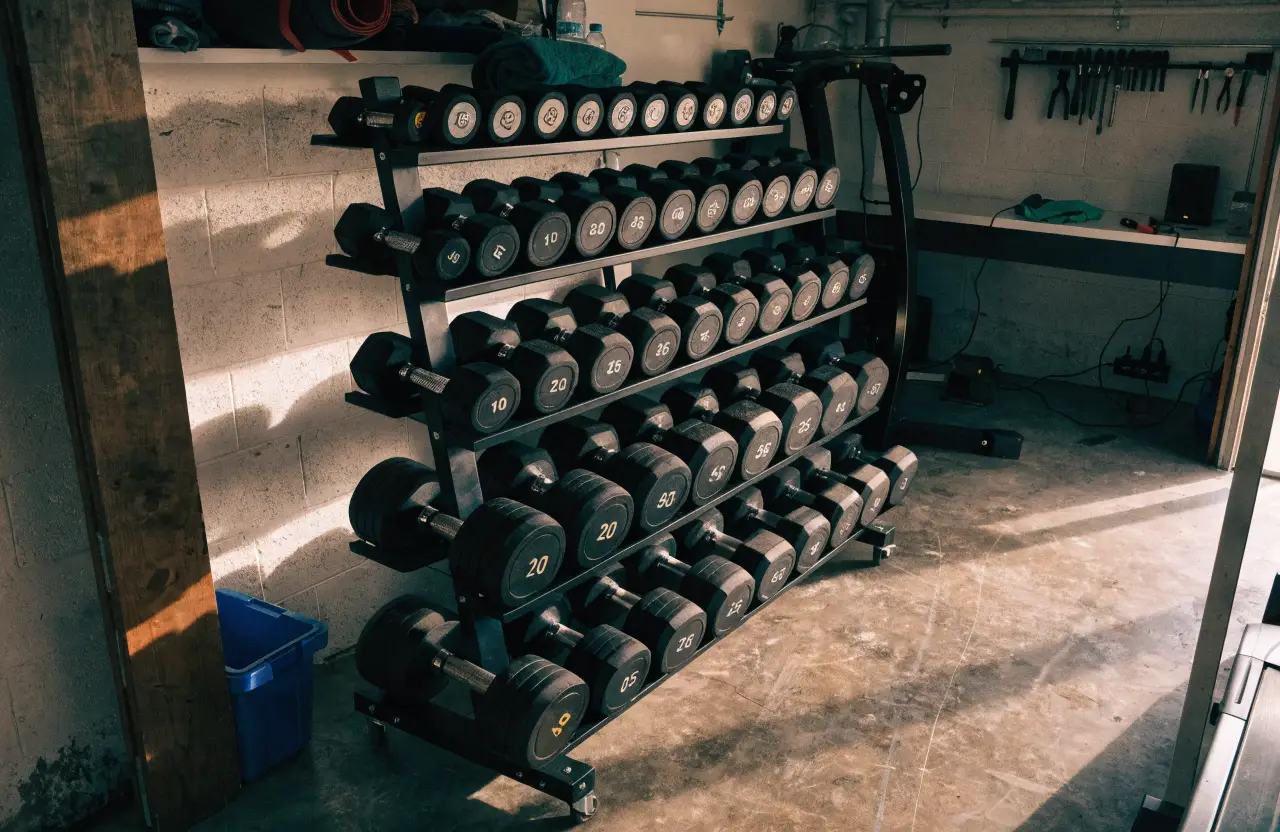
Walk into a commercial gym and you'll see a long rack of fixed dumbbells from 5 to 100+ pounds. Step into a home gym owner's garage and you'll often spot a single pair of adjustable dumbbells on a shelf. Both types build the same muscle. They just get there differently.
The adjustable vs fixed debate has been around for decades. It used to be simple: serious lifters bought fixed, budget-minded beginners went adjustable. That equation has changed. Modern adjustable dumbbells are faster to use, tougher to break, and available at every price point. But fixed dumbbells still hold clear advantages that no mechanism can replicate.
The price difference can top $800. The space difference can free up 10 square feet. And the training experience is noticeably different depending on which type you choose.
This guide covers the real trade-offs: cost, space, durability, feel, and training fit. No brand endorsements. Just the facts you should know before spending your money.
The Basics: Fixed vs Adjustable
Fixed dumbbells are one-piece units. A 30-pound dumbbell weighs 30 pounds today, tomorrow, and ten years from now. They're typically cast from iron, coated in rubber or urethane, and sold in pairs. A full home gym set usually covers 5 to 50 pounds in 5-pound steps. That's 10 pairs (20 individual dumbbells) weighing about 550 pounds combined.
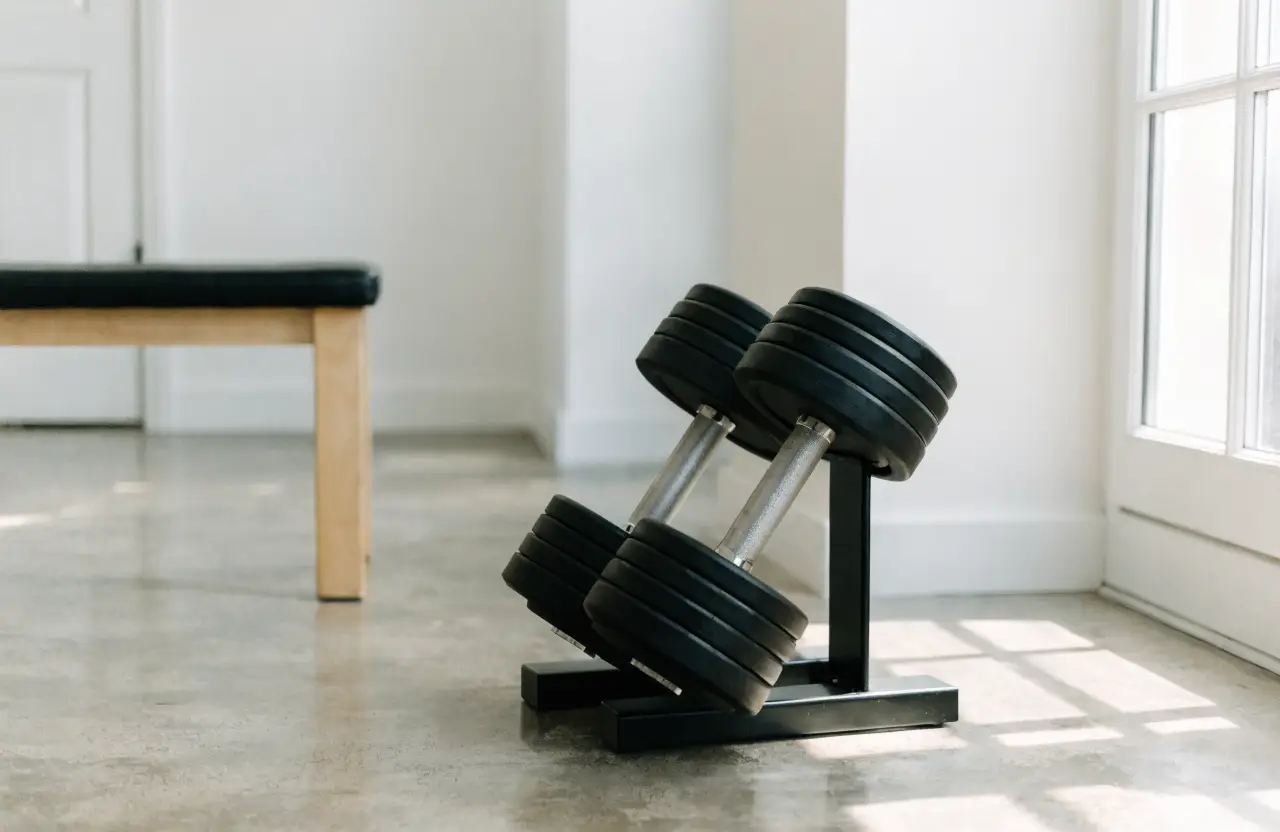
Adjustable dumbbells let you change the weight on a single pair of handles. Instead of buying 10 separate pairs, you own one pair that dials or snaps to different weights across the full range. How you change the weight depends on the design. Some use dials. Others use pins, collars, or clips.
Three Types of Adjustable Dumbbells
Not all adjustable dumbbells work the same way. Each type trades speed, cost, and maximum capacity differently.
Selectorized (Dial or Pin)
Turn a dial or slide a pin to pick your weight. The mechanism locks the correct number of internal plates to the handle. Changes take about 5 seconds, making these the fastest adjustable option. The downside: drop one from height and the internal mechanism can crack. Most models top out at 52.5 to 90 pounds per hand.
Spinlock
A threaded bar loaded with standard weight plates and secured by a twist-on collar. These are often the cheapest option, sometimes under $50 for a pair of handles. Changing weight takes 30 to 60 seconds per dumbbell since you're manually threading collars on and off. Durable but slow.
Plate-Loaded (Quick-Change)
A handle with a locking clip or pin that accepts Olympic or standard weight plates. Faster than spinlock, with the added benefit of sharing plates with your barbell. Many handles in this category support 100 to 300+ pounds per hand, making them the highest-capacity option by a wide margin.
Side-by-Side Comparison
Here's how the two types stack up across the factors that matter most for home gym owners.
| Factor | Fixed | Adjustable |
|---|---|---|
| Price (5-50 lb range) | $700 - $1,200 | $50 - $400 |
| Floor space needed | ~10 sq ft (with rack) | 1-3 sq ft |
| Weight change speed | Instant | 5-60 sec |
| Durability | Excellent | Good to excellent |
| Weight increments | 5 lb jumps | 2.5-5 lb jumps |
| Max weight per hand | 50-120 lbs typical | 50-300+ lbs |
| Feel and balance | Compact, consistent | Longer, varies by type |
| Can be dropped safely | Yes (rubber hex) | Only spinlock/plate-loaded |
The pattern here is clear: Fixed dumbbells win on speed and simplicity. Adjustable dumbbells win on cost, space, and flexibility. Neither type dominates every category.
Where Fixed Dumbbells Win
-
Zero setup time
Grab a pair and start lifting. No dials, no pins, no plates to swap between sets. For timed circuits and fast supersets, this is a genuine advantage. Those 10 to 30 seconds per weight change add up over a 45-minute workout.
-
Bulletproof durability
No moving parts means nothing can break. Quality rubber hex dumbbells handle drops from waist height thousands of times without flinching. The rubber coating wears eventually, but the core iron lasts forever.
-
Compact, balanced feel
Fixed dumbbells pack their weight tightly around the handle. They feel short, dense, and predictable at every weight. Adjustable models tend to be longer at the same load, which can bump your thighs during seated presses or feel awkward on curls.
-
No learning curve
Pick it up. Lift. Everyone from your 12-year-old kid to your training partner can use fixed dumbbells without reading a manual or watching a tutorial video.
Where Adjustable Dumbbells Win
-
Massive space savings
One pair of adjustable dumbbells replaces 10+ pairs of fixed ones. A selectorized set sits in a 2-square-foot cradle. Plate-loaded handles hang on your existing plate tree. In a small garage or apartment, reclaiming 8+ square feet of floor space is a big deal.
-
Lower cost per pound
A selectorized set covering 5 to 52.5 pounds runs $300 to $400. That same range in fixed dumbbells costs $700 to $1,200. Plate-loaded handles start at $30 to $150 for a pair and share plates you might already own from your barbell setup.
-
Smaller weight jumps
Many adjustable systems offer 2.5-pound steps instead of the standard 5-pound gaps on fixed dumbbells. Smaller jumps mean smoother progression, especially for pressing movements and smaller muscle groups like shoulders and biceps.
-
Grows with your strength
Hit the ceiling on fixed dumbbells and you need to buy expensive heavier pairs. With adjustable handles, you just add plates or move a dial. Some plate-loaded handles go up to 300 pounds per hand. You won't find a fixed dumbbell at that weight without paying a small fortune.
The Real Cost Breakdown
Numbers tell this story better than opinions. Here's what three common dumbbell setups actually cost for a home gym owner who wants a 5-to-50-pound range.
Scenario 1: Fixed dumbbells. Ten pairs of rubber hex dumbbells run $700 to $1,100 depending on brand and finish. Add a storage rack for $100 to $200. Total: $800 to $1,300. Floor space: roughly 10 square feet. You max out at 50 pounds unless you buy more pairs. Need 55, 60, and 70-pound pairs? Budget another $300 to $500.
Scenario 2: Selectorized adjustable. One pair with an included stand covering 5 to 52.5 pounds: $300 to $400. Total: $300 to $400. Floor space: about 2 square feet. Most models cap at 52.5 to 90 pounds per hand.
Scenario 3: Plate-loaded handles + Olympic plates. Handles for a pair: $50 to $150. Olympic plate set covering 2.5 to 45 pounds: $250 to $400. Total: $300 to $550. Floor space: minimal. Many handles support 100 to 300 pounds per hand.
The cost gap gets wider as your strength grows. Buying 55 to 80-pound fixed pairs adds another $400 or more to your total. Getting the same weight range with additional plates costs $50 to $100.
And here's a detail most comparisons miss: if you already own a barbell and Olympic plates, plate-loaded dumbbell handles become the runaway value pick. You're paying $50 to $150 for the handles alone, because the weight is already sitting in your garage.
A Note on Durability
This is where the two types diverge most.
Fixed dumbbells are nearly indestructible. Rubber hex models survive drops from waist height thousands of times without showing damage beyond cosmetic scuffs. Nothing wears out because nothing moves.
Selectorized adjustable dumbbells are more delicate. Internal dial mechanisms and plate selectors can crack or jam if dropped from height. Most manufacturers explicitly warn against dropping them. If you train to failure on heavy bench press and sometimes dump the weights, this is a real concern.
Spinlock and plate-loaded handles are much tougher. The handles are simple steel or aluminum bars with minimal moving parts. You might chip a collar or scuff a finish, but structural failure is rare. For most home trainers who rack their weights between sets, any adjustable type holds up fine over years of use.
Which Type Matches Your Training?
The right answer depends less on which type is "better" and more on how you actually use your gym.
Choose fixed dumbbells if you:
- Do circuit training or timed intervals where seconds between sets matter
- Train at the same 2 or 3 weights for most exercises and rarely need to change
- Have a dedicated gym space with room for a full dumbbell rack
- Share your gym with family who want to grab and go without learning a system
- Drop your dumbbells frequently after heavy sets
Choose adjustable dumbbells if you:
- Train in a small space like an apartment, bedroom, or compact garage
- Need maximum weight range per dollar spent
- Follow a progressive overload program that calls for small, steady weight increases
- Plan to get stronger past 50 pounds per hand and don't want to keep buying pairs
- Already own Olympic plates from a barbell setup
For most home gym owners who train 3 to 5 days a week, adjustable dumbbells deliver better value per dollar. The convenience gap between fixed and modern adjustable sets has narrowed significantly over the past decade. But if high-tempo training with lots of weight changes is your style, fixed dumbbells earn their premium.
The Bottom Line
There's no wrong answer here. Both types build muscle, and both types last.
Fixed dumbbells win on speed, feel, and toughness. Adjustable dumbbells win on cost, space, and versatility.
Go fixed if your budget and floor space can handle 10+ pairs on a rack, and your training rewards instant weight changes. Pick adjustable if your garage is tight, your wallet is practical, or you want one pair of handles that grows with you for years.
The best dumbbells are the ones you'll actually pick up and use consistently. Everything else is a detail.
Want More Honest Gear Breakdowns?
We test equipment for months before writing a single word. Browse our latest reviews and guides.
Browse All Reviews